In the world of true fine dining, luxury no longer announces itself with spectacle. It reveals itself in the precision of small decisions: the silent orchestration of service, the restraint in plating, the texture of a chair that invites you to linger. For discerning travelers, the most memorable tables are not simply the hardest to book—they are the ones that feel quietly inevitable, as though the entire experience has been designed around your presence. This is where modern gastronomy intersects with craft, architecture, and hospitality at the highest level.
Below, we explore five exclusive, often unspoken dimensions of contemporary fine dining that seasoned luxury travelers will recognize—and those entering this world will quickly come to expect.
1. The Architecture of Time: How Elite Restaurants Script Your Evening
At the highest echelon, a fine dining reservation is less an appointment and more a carefully choreographed sequence of time. The true luxury is not just what appears on the plate but how each minute of your evening is curated.
Service teams at top restaurants work from a meticulous timeline: greeting, seating, first pour, amuse-bouche, pacing of courses, timing of sommelier visits, even when bread is offered (or deliberately withheld). The aim is to create a rhythm that feels effortlessly natural, when in reality it is intensely rehearsed. A well-run dining room notes your body language as much as your spoken requests: the speed at which a couple moves through conversation, the way a business group leans in or sits back, the glances toward the kitchen or the bar.
For luxury travelers accustomed to precision in private aviation and bespoke travel planning, the finest restaurants mirror that same discipline. They stagger reservations to avoid bottlenecks in the kitchen, ensure quiet lanes for staff to move invisibly, and time key moments—the sommelier’s arrival, the presentation of a signature course, the dessert reveal—so they coincide with the natural arc of your evening. The ultimate signal of mastery: you never feel rushed, yet you never check the time.
2. Tailored Palates: The Discreet Power of Culinary Profiling
At the truly exceptional level, fine dining becomes a form of personalization that goes far beyond simple dietary preferences. The most forward-thinking restaurants now engage in what might be called “culinary profiling”—a discreet, highly detailed understanding of how you wish to experience flavor, temperature, and even tempo.
For frequent travelers, this begins long before you arrive. Notes from previous visits—your reaction to a particular vintage, your preference for brighter acidity over deeper umami, your tolerance for spice—are archived and quietly reintroduced on subsequent occasions. If you travel globally, certain properties and restaurant groups can now share elements of your profile across sister locations, allowing a chef in Tokyo or Paris to anticipate your preferences based on your last visit to New York.
This personal calibration often manifests in subtle ways: a sauce with a fraction more citrus because the team recalls you favor freshness; an off-menu course presented because the chef remembers your fascination with a particular ingredient; a slightly longer pause before dessert because your table tends to extend conversation. When executed well, culinary profiling never feels intrusive. Instead, it creates the sense that the restaurant has “met you before,” even when you are thousands of miles from home.
3. The Invisible Hand of the Sommelier: Beyond the Pairing Ritual
For many diners, wine pairing is the most visible expression of luxury. Yet for seasoned travelers, the true sophistication lies in what you do not see: the sommelier’s orchestration of your experience before a glass ever reaches the table.
In the finest programs, wine is treated less as an accessory and more as a narrative overlay. Rather than merely “matching” flavors, top sommeliers design arcs: a progression from clarity to complexity, from precision to comfort, or from tradition to the unexpected. The most skillful will note not only your stated preferences but your pace of drinking, your level of engagement with the wine, and whether your table is more interested in conversation or education.
Luxury travelers increasingly seek depth rather than ostentation in a cellar. Quietly rare growers in Champagne, under-the-radar Burgundy producers, serious non-alcoholic fermentations, and meticulously crafted tea or sake pairings now sit alongside the usual trophy labels. A great sommelier may reduce your total spend by gently guiding you away from status bottles toward expressive, character-driven wines that resonate more strongly with the menu and the moment.
The true hallmark of excellence: you leave feeling as though the wine elevated the evening without ever dominating it—and you discover at least one bottle (or producer) that feels like a personal secret rather than a public signifier.
4. Atmosphere as Craft: Sound, Light, and Texture in the Modern Dining Room
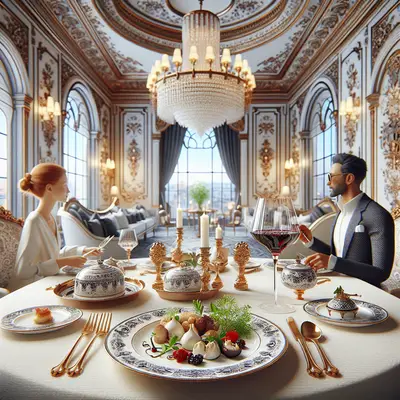
For the global luxury traveler, the days of gilded, echoing dining rooms as the default symbol of “fine dining” are largely over. Today, the most coveted tables are often found in rooms designed with the precision of a recording studio and the intimacy of a private residence.
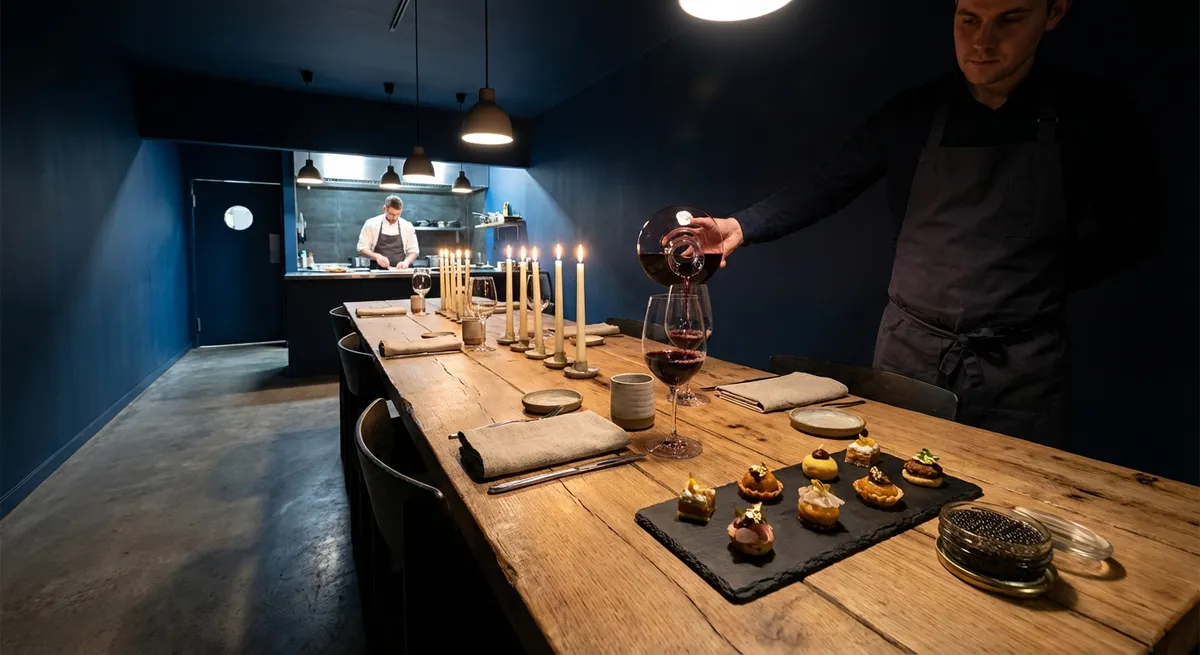
Acoustics have become a quiet obsession. Leading restaurants now collaborate with sound designers and architects to ensure conversations remain private, even in a full room. Surfaces are chosen not just for aesthetics, but for the way they diffuse sound; speaker placement is mapped to avoid hotspots of music or crowd noise. The result is a soft hum of life, without strain or intrusion.
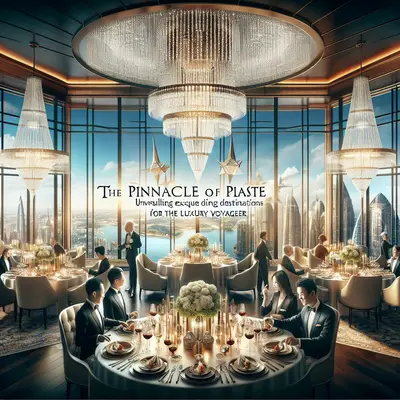
Lighting, too, has become more sophisticated. Rather than uniformly dimming the entire space, premium rooms layer light: cooler tones in transitional spaces such as entryways and bars; warmer, more flattering light at the table; delicate accent lighting on art, floral compositions, and architectural features. The most refined approach ensures that the table feels like a stage—your dishes illuminated with photographic clarity—while the rest of the room recedes into a gentle glow.
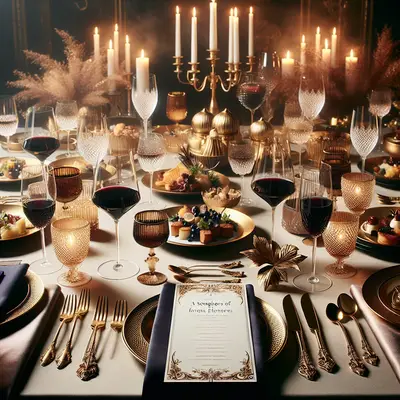
Then there are the textures: the give of a chair’s upholstery calibrated for a three-hour seating; the quiet glide of drawers containing cutlery; the feel of a handblown water glass or a subtly weighted dessert spoon. Each detail is a signal: you are meant to relax into this evening, not rush through it.
5. Beyond the Plate: How World-Class Restaurants Extend the Experience
For luxury travelers, the meal is increasingly just one chapter in a broader narrative. The most forward-thinking restaurants understand that their relationship with guests extends well beyond the final course—and they design touchpoints before and after service that feel as considered as the menu itself.
Prior to your arrival, this might take the form of discrete communication from the concierge or guest relations: suggestions for ideal arrival times given local traffic patterns, gentle recommendations for attire that reflect the restaurant’s aesthetic rather than rigid rules, and in some cases, coordination with your hotel or driver to ensure a seamless handover.
After the meal, the most refined establishments excel at what might be called “memory architecture.” This can range from a simple but beautifully composed follow-up note that references a specific moment of your evening, to curated digital content—recipes, behind-the-scenes footage, cellar notes—that allows you to revisit elements of the experience later. In some cases, exclusive pre-release access to limited wines, future collaborations, or special events is extended only to guests who have dined previously, turning a single evening into an ongoing relationship.
For the globally mobile guest, this continuity matters. It creates a sense that fine dining is not a series of isolated nights, but a connected constellation of experiences across cities and countries—each restaurant a point of light in a personal map of pleasure and craft.
Conclusion
At its peak, fine dining is no longer about theatrical excess or overt displays of luxury. It is about the refinement of attention: to time, to preference, to environment, to memory. The most coveted tables in the world are those where every element—service, flavor, sound, light, and follow-through—aligns with quiet precision around the guest.
For luxury travelers, understanding these subtler dimensions transforms dining from a singular event into an art form that can be appreciated, compared, and curated across continents. Once you become attuned to these nuances, you begin to recognize a certain shared language among the world’s finest restaurants—a language spoken softly, but with absolute clarity.
Sources
- [The World’s 50 Best Restaurants – Official List](https://www.theworlds50best.com) – Global ranking and profiles of leading fine dining restaurants, useful for understanding current trends and benchmarks in high-end gastronomy
- [Michelin Guide – Official Site](https://guide.michelin.com) – Authoritative resource on starred restaurants worldwide, with insights into service, atmosphere, and culinary standards
- [Harvard T.H. Chan School of Public Health – The Nutrition Source: Dining Out](https://www.hsph.harvard.edu/nutritionsource/healthy-eating-plate/dining-out/) – Context on how restaurant choices and menu design intersect with broader dining behaviors
- [Cornell University School of Hotel Administration – Hospitality Research](https://sha.cornell.edu/faculty-research/centers-institutes/chr/research/) – Academic research on hospitality management, guest experience, and service design in luxury environments
- [Forbes Travel Guide – Star-Rated Restaurants](https://www.forbestravelguide.com/restaurants) – Evaluations of top-tier restaurants worldwide, with emphasis on service precision, ambiance, and overall guest experience
Key Takeaway
The most important thing to remember from this article is that this information can change how you think about Fine Dining.