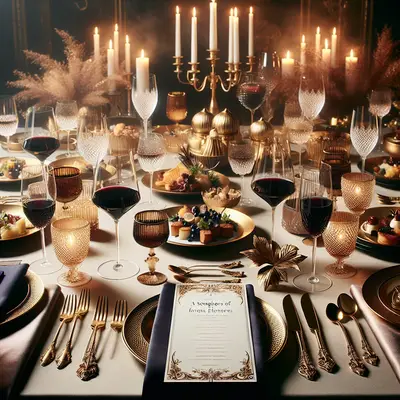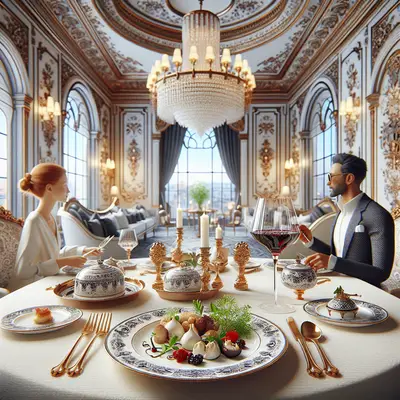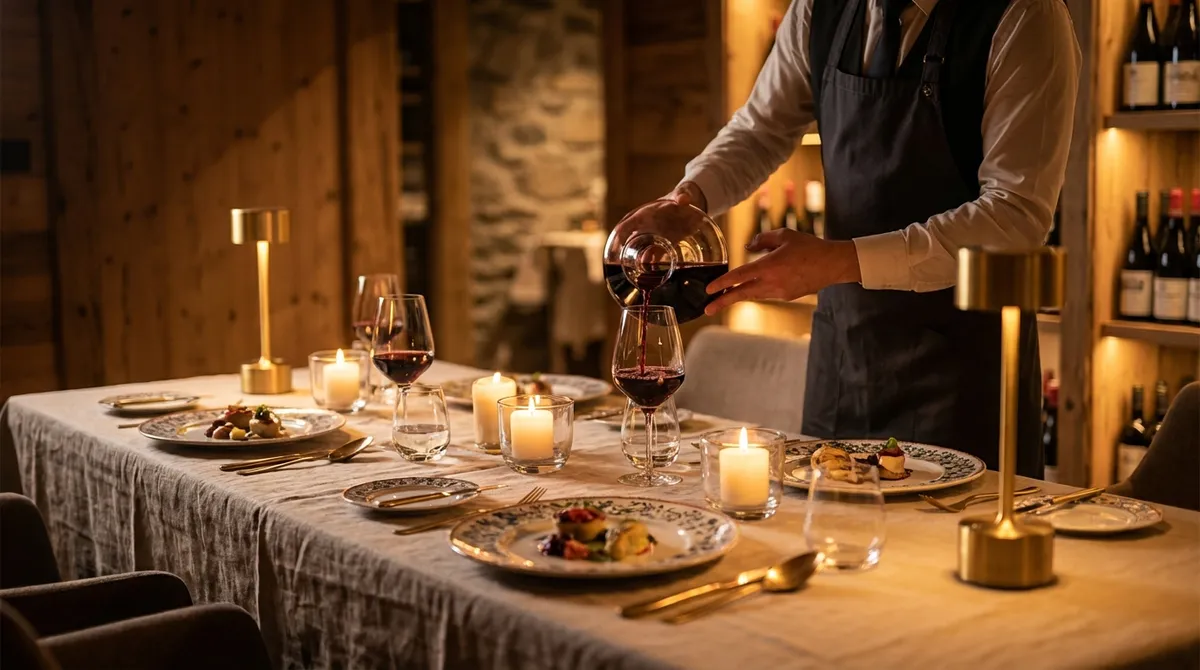
In the rarefied corners of global gastronomy, fine dining is no longer a sequence of courses—it is a private choreography of anticipation, restraint, and precision. For the luxury traveler, the most memorable meals unfold at the intersection of discretion and intent: where the room is tuned to your preferences before you arrive, the menu is written in your cadence rather than the chef’s alone, and the service is almost clairvoyant in its timing. This is not about spectacle; it is about control, calm, and the quiet knowledge that nothing has been left to chance.
Below are five exclusive, behind-the-velvet-rope insights that increasingly define how discerning travelers experience fine dining today—details that separate an excellent restaurant from an evening you will quietly measure future meals against.
1. The Silent Briefing: How Your Preferences Travel Ahead of You
At the most considered properties, the fine dining experience begins long before the first reservation is made. The best hotels and members’ clubs treat your culinary profile as a living document: taste history, intolerances, preferred pacing, preferred table positions, even how you like your water poured. Luxury travelers increasingly expect this data to travel with them—between sister properties, across continents, and over years.
When executed well, this manifests as an almost eerie precision. A sommelier suggests a producer you favored in Tokyo, now available in Paris. A pastry chef avoids textures you dislike without being reminded. A table is pre-set to accommodate left-handed cutlery placement. These are not coincidences; they are the result of internal “silent briefings” shared among maître d’s, head waiters, and sommeliers before you arrive.
For the traveler, the differentiator is subtle: you experience the evening as pleasantly frictionless. For the property, it reflects a philosophy that data is not merely operational—it is aesthetic. Luxury now resides in the feeling that the restaurant has been thinking about you, specifically, before you ever step into the room.
2. Off-Menu Precision: When the Real Meal Isn’t Printed
On the surface, curated tasting menus and chef’s counters seem to define contemporary fine dining. But luxury travelers know that some of the most memorable plates never appear on the printed menu. The true signal of a high-level operation is its off-menu precision: the ability to respond to a whispered request, a remembered favorite, or even a passing comment made at the bar the night before.
This doesn’t mean improvisation for its own sake. The most elevated kitchens maintain a quiet inventory of “shadow” preparations—stocks, sauces, doughs, and aging proteins—that allow them to craft bespoke dishes without disrupting their internal rhythm. A late seating might result in a spontaneous pasta built around a caviar tin opened earlier that evening; an extra course may appear to bridge the gap between two wines you’re particularly invested in.
For the traveler, the key is to communicate in a way that is both specific and open-ended: sharing broad preferences and inviting the kitchen to “work around them” rather than dictating a dish. The result, at the finest restaurants, is a menu that feels like it exists only for your table—ephemeral, unrepeatable, and therefore, deeply luxurious.
3. Time as a Service Element: Pacing, Gaps, and Quiet Intervals
Luxury in fine dining is often conflated with ingredients and décor, yet one of the most decisive elements is less visible: the architecture of time. How a restaurant handles pacing—micro-adjustments in minutes between courses, the timing of wine pours, the choreography of check-ins—signals its true level.
The most sophisticated rooms now treat time as a customizable service element. Some travelers want an unhurried, almost meditative evening; others, arriving from a late flight, prefer a concentrated experience that respects fatigue and jet lag. Elite service teams read your tempo in the first ten minutes: how quickly you make decisions, how much eye contact you invite, whether your conversation is exploratory or intense.
Behind this is a deeply rehearsed communication system—hand signals, discreet notes, silent recalibrations among the team. A kitchen may hold a course for a conversation that becomes animated, or accelerate when it senses the table leaning toward departure. What you experience is a natural flow; what’s actually happening is a series of carefully engineered pauses.
For the luxury traveler, it is worth articulating your temporal preferences—an expected departure time, a desired pace, a preference for a long interlude between savory and sweet. In the best dining rooms, these details are not burdensome—they are welcomed as design parameters.
4. The Glass as a Lens: Quietly Curated Pairings Beyond the List
To the untrained eye, an expansive wine list reads as generosity. To the seasoned traveler, its true value lies not in length but in how it can be made to bend around your palate and your evening. The most advanced wine programs are moving away from showpiece encyclopedias toward quietly curated, highly intentional cellars—and, crucially, toward a more conversational approach to pairing.
Rather than standard pairings attached to tasting menus, leading sommeliers now build “micro-journeys” around your personal vectors: regional preferences, comfort levels with natural or oxidative styles, tolerance for alcohol, or even your next-day commitments. A lightweight progression for an early business start; a more contemplative, layered selection for an unhurried weekend dinner.
Luxury increasingly reveals itself in the wines that are not on the list at all: tiny allocations, back-vintages from the restaurant’s direct relationships with growers, or bottles reserved for regulars and in-the-know guests. Asking, quietly, “What are you pouring that doesn’t appear on the list?” is often the key to unlocking this.
For travelers, the nuance lies in trust. The most rewarding pairings emerge when you describe not just grapes you enjoy but moods: “Something textural but not loud,” “a red that behaves like a white,” “a serious wine that doesn’t need to be discussed.” The best sommeliers understand this language implicitly—and respond in kind.
5. Atmosphere Engineering: Sound, Light, and the Texture of Privacy
While many restaurants invest in visible spectacle, the truly elevated rooms invest in what the luxury traveler tends to notice more: acoustic insulation, granular lighting control, and the subtle geometry of privacy. In this realm, fine dining becomes less about being seen and more about feeling imperceptibly protected—both socially and sensorially.
Advanced acoustics are a quiet hallmark of serious dining rooms. Materials, ceiling heights, and table spacing are calibrated so that the room feels alive but never overwhelming. Your conversation remains private without the space feeling empty. Lighting, too, is increasingly treated as a dynamic, rather than static, element. Slight shifts over the course of an evening—warmer tones as the night progresses, cooler accents highlighting a key course—shape your perception of time and intimacy.
Table selection is now part of the luxury vocabulary. Some properties maintain “acoustic sweet spots” or “privacy tables” that are held back for particular guests, where sightlines, distance from service stations, and proximity to entrances are all finely tuned. For travelers working through confidential matters—or simply seeking a dinner that feels sealed from the outside world—this matters as much as the menu itself.
In the end, the most advanced atmospheres are those you barely notice in real time. You simply leave with the sense that you were able to be fully present, without distraction or exposure. That is no accident—it is design masquerading as ease.
Conclusion
For the luxury traveler, fine dining is no longer about chasing the latest headline restaurant or most elaborate plating. It is about identifying those rare rooms where the entire ecosystem—data, menu flexibility, pacing, liquid program, and atmosphere—conspires quietly in your favor. The true premium experience now lives in the margin: in how a restaurant anticipates your needs, modulates time, curates what is not printed, and protects your privacy without ever announcing that fact.
When you next cross the threshold of a serious dining room, consider looking beyond the obvious signals of exclusivity. Ask what has been remembered about you, what can be created off the menu, how timing can be shaped, what lies behind the wine list, and how the room itself has been engineered for your comfort. In those answers, you will find the new contours of modern, refined dining—and the difference between a very good meal and an evening that quietly resets your expectations.
Sources
- World’s 50 Best Restaurants – Insights on Global Fine Dining Trends - Offers perspectives from leading chefs and restaurateurs on evolving luxury dining experiences
- The New York Times Food & Wine Section - Regular coverage on high-end restaurants, service innovations, and shifts in culinary culture
- Michelin Guide – About the Guide & Selection Criteria - Explains the standards and considerations behind Michelin recognition for top-tier restaurants
- Cornell University School of Hotel Administration – Hospitality Research - Academic insights into service design, guest experience, and luxury operations
- National Restaurant Association – Restaurant Industry Insights - Data and reports on broader industry trends that frame the context for fine dining evolution
Key Takeaway
The most important thing to remember from this article is that this information can change how you think about Fine Dining.