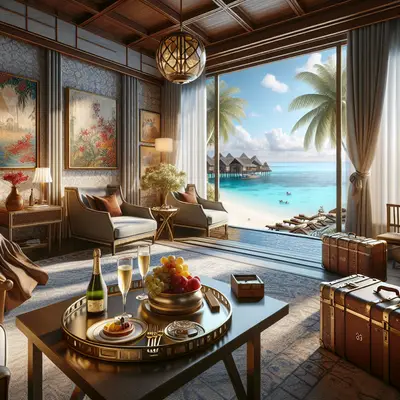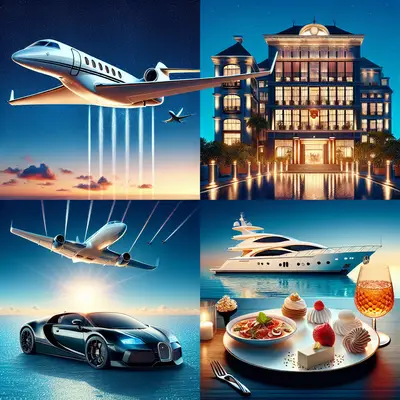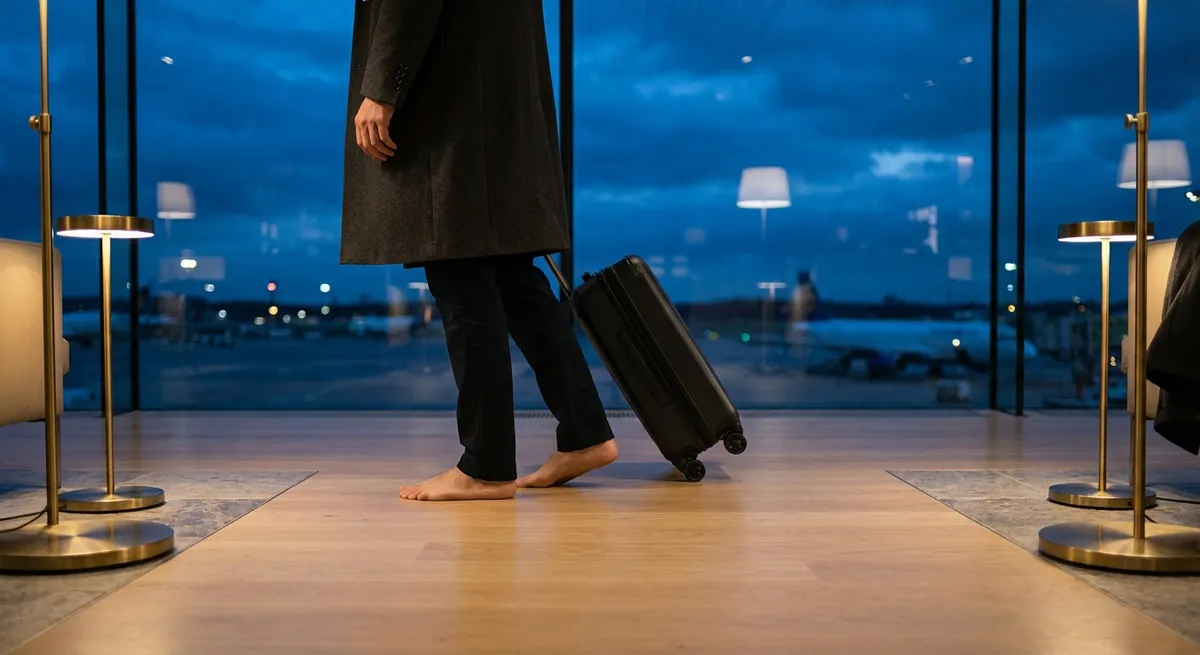
Luxury today is less about visible excess and more about the invisible engineering of ease. For the modern premium traveler, refinement is measured not only in thread counts or champagne labels, but in the way a journey feels choreographed—unhurried, hyper-considered, and personally resonant.
What follows are five exclusive, under‑discussed insights that serious luxury travelers quietly leverage. Individually, each is powerful. Together, they create a standard of travel that feels almost frictionless—an architecture of ease that extends from the first keystroke of planning to the final glide of a late checkout.
1. Curated Time, Not Just Curated Places
Most travelers curate destinations; discerning travelers curate tempo.
The true luxury is not in how much you can fit into an itinerary, but how much air and silence you can afford to leave around each experience. High-end concierges at flagship hotels and premium travel advisors increasingly design itineraries as if they were musical scores: a deliberate alternation of crescendos (a private gallery opening, a chef’s counter, a sunrise sail) and long rests (an empty afternoon, a spa without a prescribed schedule, an unstructured walk).
This approach turns “dead time” into designed time. A three-hour transfer becomes a tasting journey when paired with the right in-car amenities and contextual storytelling from a knowledgeable driver. An early arrival in a new city becomes an intentional decompression ritual—cold-pressed juice, aromatherapy, blackout drapes—rather than a limbo between flights and check-in.
Luxury travelers now brief their advisors less with bucket lists and more with personal thresholds: how many hosted interactions per day, how long they prefer to sit with a view, how they respond to jet lag. The result is an itinerary tuned to personal bandwidth, not generic recommendations.
2. The Power of Pre-Arranged Micro-Comforts
The most sophisticated travelers no longer leave comfort to chance; they script it, quietly, in advance.
Micro-comforts are the small but precise details that transform a stay from “impressive” to intimately correct: the exact pillow density, a room humidifier ready after a long-haul flight, your preferred plant-based milk stocked without asking, or the turntable already cued to a favorite genre upon arrival. These nuances require no grand gesture, but they create an immediate sense of being known.
Guests who travel frequently with flagship hotel groups or top-tier cards increasingly use pre-arrival questionnaires and dedicated lifestyle managers to lock in these micro-comforts. They maintain lightly edited preference profiles—lighting level, fragrance aversions, minibar philosophy (minimalist, wellness-focused, or indulgent), even ideal room orientation (courtyard quiet vs. city panorama).
The most refined approach is to treat each new property not as an unknown, but as a canvas: sharing a brief “comfort dossier” in advance. This discreet document might include sleeping preferences, food sensibilities, digital boundaries (no calls before 10 a.m., WhatsApp over email), and health rituals. When executed well, you never see the machinery behind it—only the feeling that every room you enter has been waiting for you.
3. Discreet Access: The New Currency of Privilege
The old symbols of status—visible logos, queue-jumping for its own sake—have given way to something quieter: precise, discreet access.
Premium travelers increasingly prioritize private or semi-private experiences that feel integrated rather than performative. Think: a closed-door fitting at an independent atelier after hours, a curator-guided visit to a normally closed archive, or a half-day on a working vineyard with the owner rather than a public tasting room.
This access is less about spectacle and more about removing friction and noise. Airport arrivals through dedicated fast-track services, transfers handled by trusted partners, and document handling (visas, formalities, medical requirements) managed in the background allow the traveler’s attention to stay on the substance of the journey.
Behind much of this is a network of relationships—global concierge services, private membership clubs, and long-standing connections with particular brands and properties. The most seasoned travelers cultivate a compact but potent ecosystem: a few key advisors, a handful of favored hotel groups, a select airline or alliance, a couple of membership-based spaces in major cities. The structure is invisible; the benefits are felt as a consistent, unhurried glide through environments where everyone else seems to be waiting.
4. Precision Health as a Travel Essential, Not a Nice-to-Have
High-end travel has quietly absorbed the language of performance and recovery. Jet lag, air quality, nutrition, and sleep are no longer afterthoughts; they are engineered variables in a premium journey.
Discerning travelers increasingly travel with their own health architecture: portable air purifiers for hotel rooms, blue-light blocking strategies for evening flights, hydration protocols, and sleep routines adjusted for time zone shifts. Many pair this with wearables that track biometrics and inform behavior—when to nap, when to eat, when to move.
On-property, wellness is shifting away from spa-as-amenity toward spa-as-pharmacy-of-precision. Tailored sleep programs, evidence-based recovery treatments (infrared saunas, contrast therapy, guided breathwork), circadian lighting systems, and nutrition-forward menus turn a hotel stay into a controlled environment for recalibration.
The premium traveler no longer sees wellness as indulgence; it is risk management. When a key trip involves investor meetings, a once-in-a-lifetime expedition, or a limited cultural event, the body becomes part of the logistics. Subtle but important choices—direct versus multi-stop flights, cabin humidity and air quality, lounge selection, meal timing—are considered with the same care as seat selection or suite category.
5. Narrative-Driven Travel: Collecting Stories, Not Stamps
The most refined itineraries are no longer just sequences of cities; they are narratives.
Luxury travelers increasingly commission or construct journeys that have a central question or theme: tracing a particular architect’s work across continents, following the evolution of regional cuisine from market to Michelin, mapping the historical layers of a single neighborhood across centuries. The trip becomes a storyline, and each destination is a chapter, not a checklist.
Advisors and high-end travel designers now act as quasi-curators, sourcing local scholars, chefs, artists, or historians who can add layers of meaning to each encounter. A city stop is no longer “two nights in Lisbon,” but “three movements in an ongoing study of Atlantic-facing cities: harbor, hillside, and cultural fringe.”
This narrative-driven approach also shifts how guests record and share their journeys. Beyond social media posts, there’s renewed interest in crafted documentation: bespoke printed travel journals, private digital archives of photos with metadata and context, or even short-form films produced by discreet travel videographers. The result is not a feed of highlights, but a coherent personal anthology—something that can be revisited, not just scrolled past.
Ultimately, the premium traveler is not collecting proof; they are collecting perspective. The journey’s value is measured by how it rearranges understanding, not how it performs online.
Conclusion
Premium travel today is defined less by what is seen and more by what is felt: the silence of a line you never stand in, the familiar weight of the right pillow on an unfamiliar continent, the way time seems to stretch exactly where you want it to.
Curated tempo, pre-arranged micro-comforts, discreet access, precision health, and narrative-driven itineraries share a common thread: intentionality. For those designing or refining a truly elevated travel life, the question is no longer “Where next?” but “How precisely do I want this to feel?”
Answer that clearly—and every journey, no matter how distant, begins to feel unmistakably, quietly, yours.
Sources
- [American Express Global Travel Trends Report](https://www.americanexpress.com/en-us/travel/discover/travel-trends/) – Insights into evolving premium travel preferences and experiential priorities
- [Virtuoso: Luxury Travel Trends](https://www.virtuoso.com/travel/articles/luxury-travel-trends) – Analysis from a leading network of luxury travel advisors on personalization and access
- [Four Seasons Private Jet Experience](https://www.fourseasons.com/privatejet/) – An example of how top-tier brands orchestrate seamless, highly curated journeys
- [Harvard Health Publishing – Healthy Sleep](https://www.health.harvard.edu/topics/healthy-sleep) – Evidence-based guidance on sleep, jet lag, and circadian health relevant to high-frequency travelers
- [World Travel & Tourism Council (WTTC) Reports](https://wttc.org/research/insights) – Data and insights on global travel trends, including premium and experiential segments
Key Takeaway
The most important thing to remember from this article is that this information can change how you think about Premium Lifestyle.