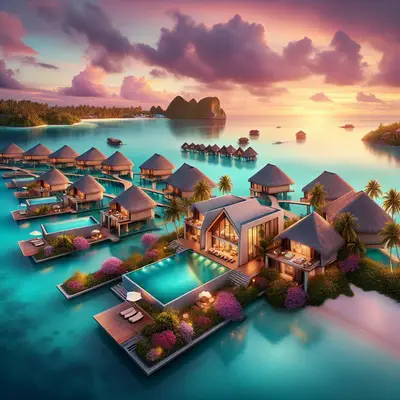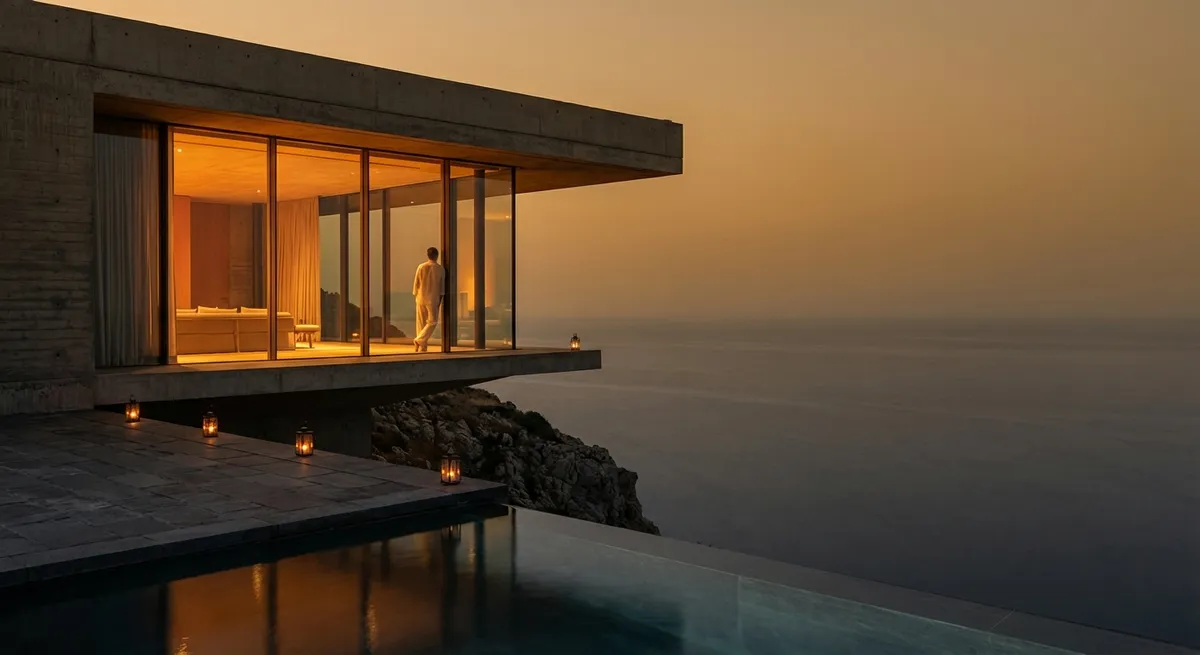
There is a tier of travel that exists beyond opulence and far from spectacle—a world where the most valuable amenity is not what you see, but what never has to be said. For those who move easily between capitals and continents, the question is no longer where to go, but how a place thinks. Exclusive resorts that truly understand this distinction are less “destinations” and more finely tuned instruments: calibrated to privacy, intuition, and unbroken ease.
What follows is not a directory, but a lens—five exclusive insights into how the most discerning travelers quietly evaluate, select, and inhabit the world’s most exceptional resorts.
1. The Resort as Operating System, Not Ornament
The contemporary ultra-luxury resort is no longer a lavish backdrop; it functions as an invisible operating system for your life in motion.
The most coveted properties behave less like hotels and more like private extensions of a guest’s own infrastructure. It begins before arrival: a pre-stay team that already knows your preferred room orientation, hydration habits after long-haul flights, and even how much interaction you want with staff. At this level, the notion of “check-in” becomes largely ceremonial—documents are handled days before, bags move directly from aircraft or car to suite, and the first interaction on property is often a moment of stillness, not administration.
In-resort, the operating system is felt through micro-adjustments rather than grand gestures: lighting pre-set to your preferred warmth upon return from dinner, wardrobe steaming completed on a schedule that mirrors your typical routine, wellness programs adjusted around your peak cognitive hours instead of generic spa slots. Transportation feels more like choreography than logistics—cars, buggies, or boats appear when needed, not when summoned.
The true test: if the resort disappears as a “service provider” and instead feels like an elegantly competent background process, quietly orchestrating your time, then you are in the realm of genuine exclusivity.
2. Privacy as Design Principle, Not Marketing Language
In the world of serious travel, privacy is not a promise on a website—it is a structural decision.
The most sophisticated resorts build seclusion into their blueprints rather than layering it on as an afterthought. Villa entrances are angled to avoid direct sightlines, pathways are routed to minimize incidental encounters, and public spaces are tiered so that guests can inhabit the same property without sharing the same experience. Landscaping becomes both aesthetic and strategic: dense foliage, elevation changes, and sightline breaks replace the clichéd “private” labels on doors and cabanas.
This extends to sound as much as sight. Acoustic insulation, discreet white-noise design around high-traffic zones, and thoughtful separation of family and adults-only areas preserve an atmosphere where conversations stay intimate and spaces feel personally held. Digital privacy is treated with equal care—resorts at this level avoid public-facing name displays, resist over-sharing guest images on social channels, and maintain disciplined discretion in their internal communications.
A subtle indicator: the most private resorts will often under-communicate their guest list, their design pedigree, and even their own amenities online. For those who understand, the silence is not a lack of content; it is a signal.
3. The New Definition of Service: Anticipation Without Proximity
For the modern luxury traveler, constant attention is no longer aspirational—it is intrusive. The finest resorts have shifted from highly visible service to highly attuned service: present, precise, and often physically distant.
Instead of someone appearing every time a glass is half-full, service arrives only when there is meaningful intent. Technology supports this without ever becoming the point: encrypted messaging to a dedicated butler team, invisible geofencing to note when you have left your villa, and subtle environmental sensors (think lighting and climate preferences) that adjust without requiring a request. Staff are trained not just in procedures, but in social calibration—the ability to read whether a guest is in a conversational, reflective, or purely transactional mode.
Anticipation becomes the highest expression of care. A car stocked not only with water, but with your preferred tea or electrolyte blend after a known workout; a room reset not just to “clean,” but to the precise arrangement of books, devices, and textiles you naturally create yourself. The goal is not performance; it is relief. The guest feels as if someone competent and invisible has already thought through every friction point—and removed it.
At this level, the greatest compliment a resort can receive is not effusive praise, but the quiet realization, mid-stay, that you have stopped planning, asking, or double-checking entirely.
4. Genuine Locality Without Performance
Discerning travelers today are increasingly allergic to the staged “local immersion” packages that clutter the mainstream luxury landscape. In the most rarefied resorts, connection to place is woven in, not performed.
Architecture responds to climate and culture rather than trend: indigenous materials used for their inherent logic, not just their Instagram appeal; vernacular building techniques updated with modern engineering; breezeways and courtyards that echo regional forms while quietly enhancing comfort and airflow. Art collections are not generic “regional crafts” but carefully curated works from respected local or national artists, often with provenance and context available on request rather than shouted at every turn.
Culinary programs move beyond “imported chef with a signature menu” toward serious engagement with local producers, fisheries, and growers. Menus shift subtly with what the region yields that week or that morning, and guests who care to ask are rewarded with granular narratives: a particular olive grove, a specific elevation where coffee thrives, a nearshore reef where mollusks are sustainably farmed.
Most importantly, local culture is allowed to remain itself. The finest resorts resist appropriative theatrics, instead offering guests the ability to observe or participate in existing traditions in a manner that respects both hosts and visitors. Authenticity here is not a performance laid on for guests; it is an ecosystem the guest is permitted to briefly, gently enter.
5. Time as the Ultimate Luxury Asset
For travelers accustomed to private aviation, priority lines, and executive assistance, the only asset that remains truly scarce is time—and the best exclusive resorts understand themselves as custodians of it.
This custody begins pre-arrival, with teams that absorb complexity: paperwork pre-cleared where possible, ground transfers sequenced to minimize waiting, meals and wellness treatments softly structured around jet lag patterns rather than rigid time slots. It continues in how the resort handles decisions. Instead of bombarding you with endless options, the property curates a small number of high-quality, context-aware suggestions based on what it already knows about you: your energy level, travel purpose, and tolerance for social environments.
The most insightful resorts also create architectures for unclaimed time—spaces and programs designed not to fill your schedule, but to gently decelerate it. Reading terraces with perfectly calibrated light and shade, walking paths that are neither too long nor too short, in-villa experiences that feel substantial yet non-demanding: a massage that flows naturally into a nap, a tasting that doesn’t require performance or conversation.
Ultimately, the guest leaves with a sense not of “having done a great deal,” but of having briefly stepped outside the usual compression of hours and expectations. When a stay alters your internal tempo—not just your external schedule—that resort has grasped what true exclusivity means in a world where almost anything can be purchased, but almost nothing can slow down.
Conclusion
At the highest levels of travel, the difference between expensive and exceptional is measured in subtleties: how a property handles your silence, the depth of its discretion, the intelligence with which it spends your time on your behalf. Exclusive resorts that resonate with serious travelers are not defined by how loudly they declare their luxury, but by how completely they allow you to exhale—mentally, physically, and socially.
For those who live much of their lives in transit, the rarest experience is not spectacle, but alignment: a place that thinks the way you do, moves at the pace you need, and holds your privacy as carefully as you hold your own. In that quiet alignment, the resort ceases to feel like an escape and instead becomes something far more valuable: a temporary restoration of how life could feel, if everything were as considered.
Sources
- [World Tourism Organization (UN Tourism) – Luxury Tourism Overview](https://www.unwto.org/luxury-tourism) – High-level insights into evolving expectations and behaviors in luxury travel
- [McKinsey & Company – The Case for Luxury Travel in a Post‑Pandemic World](https://www.mckinsey.com/industries/travel-logistics-and-infrastructure/our-insights/the-case-for-luxury-travel-in-a-post-pandemic-world) – Analysis of how high-end travelers’ preferences around privacy, time, and experience design are shifting
- [Forbes – How Ultra-Luxury Hotels Are Redefining Personalized Service](https://www.forbes.com/sites/forbesbusinesscouncil/2022/06/01/how-ultra-luxury-hotels-are-redefining-personalized-service/) – Discussion of anticipation-based service and hyper-personalization in top-tier hospitality
- [Cornell University School of Hotel Administration – Hospitality Research](https://sha.cornell.edu/faculty-research/research/centers-institutes/center-hospitality-research/) – Ongoing academic research into service design, guest satisfaction, and experiential hospitality
- [Aman Resorts – Brand Philosophy](https://www.aman.com/about-aman) – An example of how a leading ultra-luxury brand articulates its focus on privacy, space, and understated service
Key Takeaway
The most important thing to remember from this article is that this information can change how you think about Exclusive Resorts.