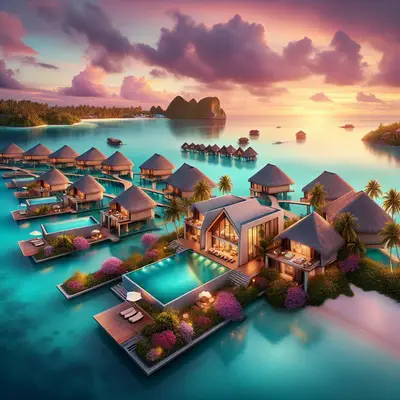
There is a tier of travel that lives far beyond glossy brochures and searchable hashtags—a realm where every gesture is premeditated, every silence intentional, and every view feels as if it were composed solely for you. These are not merely “nice resorts.” They are carefully orchestrated environments where privacy becomes a design principle and time behaves differently. For the traveler who measures value not in square footage but in serenity, context, and discretion, the modern exclusive resort is less a destination and more a finely tuned instrument of escape.
When Privacy Becomes a Design Material
At the highest level of hospitality, privacy is no longer a feature; it is a structural element, embedded into architecture, landscaping, and even the choreography of staff movement.
Villas are often angled to avoid direct sightlines, with infinity pools positioned so that neighbors simply do not exist. Pathways meander rather than cut straight across, the curves ensuring that nothing feels exposed or accidental. In ultra-private properties, staff circulation often occurs through concealed service corridors, allowing your world to be meticulously maintained yet seemingly untouched.
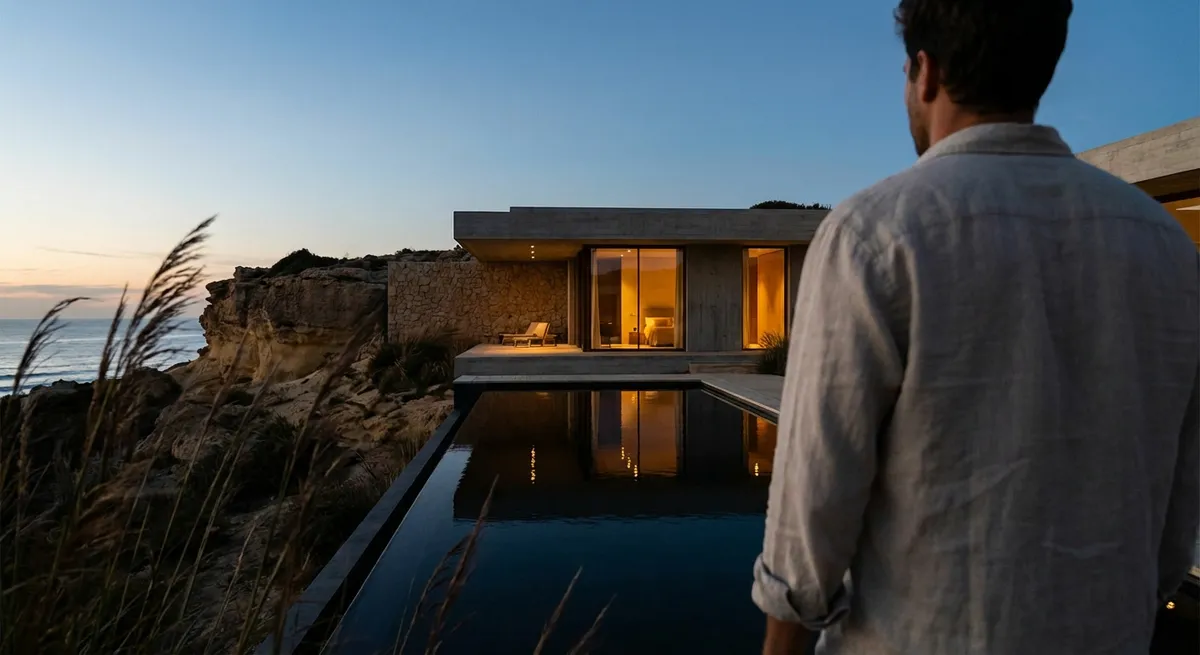
The choices are subtle but intentional: floor-to-ceiling glass that faces only open water or dense foliage; staggered terraces so that no balcony overlooks another; architectural overhangs that protect from drone lines of sight without feeling fortified. This is privacy as a felt experience, not just a promise in the brochure—delivered through thoughtful geometry, elevation, and topography.
Sensing the Invisible Hand: Bespoke Service Without Performance
Luxury travelers today increasingly seek presence without performance—a staff that anticipates needs without hovering, that knows your name without making a spectacle of it.
In top-tier resorts, guest profiling has become an art form. Preferences are logged and shared quietly among departments long before you arrive: your favored pillow density, your usual pre-dinner drink, whether you prefer your workout at sunrise or late evening. This isn’t mass personalization; it’s precise, almost forensic attention to who you are and how you move through a day.
The finest properties train staff not just in service standards, but in observational skills and timing. The ability to read body language becomes as important as silver service. A housekeeper learns your rhythm and adjusts turndown accordingly; a butler subtly adjusts the lighting and music when you return from dinner, calibrating the room to your likely state of mind. The result is a sense of being exquisitely looked after without ever feeling watched.
The Geography of Seclusion: Location as a Curated Filter
Selecting an exclusive resort is less about finding a place on the map and more about choosing a very specific relationship to the outside world.
Some retreats use remoteness as a luxury in itself—accessible only by seaplane, private tender, or helicopter. The journey becomes a ritual of shedding: first the city, then the highway, then even the concept of infrastructure. These locations deliver a profound quiet, where the absence of ambient noise is as valuable as any amenity.
Others practice “concealed centrality”: hidden in plain sight, often close to major hubs yet acoustically and visually insulated. You land at a major airport, and within an hour you’re on a hillside or private bay where the skyline has been swapped for horizon lines. For the global traveler who moves frequently between capitals, this ability to escape without substantial time loss becomes a form of luxury in itself.
In both cases, geography is curated as a filter—of noise, crowds, visual clutter, and, in many instances, even digital intrusion. It’s not just where the property is, but what it deliberately edits out of your field of experience.
Curated Rarity: Experiences You Cannot Simply Book
At the pinnacle of exclusive hospitality, the resort is not just a place to stay; it is a portal to experiences that exist only because the property does.
Think private access to a normally off-limits archaeological site at dawn, accompanied by a museum curator rather than a generic guide. Or a chef’s table that takes place not in a restaurant, but in a remote vineyard, a desert mesa, or on a sandbank that appears only at low tide. Some properties negotiate with local communities, conservationists, or cultural institutions to unlock moments that are not advertised, not replicable, and not available through conventional channels.
These experiences are rarely marketed aggressively; they are revealed in conversation, once the property understands your interests. For the right guest, a day on a research vessel with marine biologists, or a private recital in a centuries-old chapel, is more compelling than any standard “exclusive tour.” The true luxury is not simply access, but the feeling that you are being admitted to a world normally kept closed.
Time as the Ultimate Amenity
For those who have everything except a surplus of hours, the most exclusive resorts treat time management with the same care others reserve for spa menus.
Transfers are orchestrated to reduce friction at every juncture—fast-track immigration, private lounges, seamless luggage handling, and in some cases, direct tarmac access. On property, scheduling is handled with a light but expert touch: spa treatments shift slightly to accommodate a sunset that arrived earlier than expected, late checkouts are quietly arranged around your jet’s departure slot rather than a rigid hotel policy.
Technology is used not for spectacle but for efficiency. Pre-arrival digital concierges gather preferences so that decisions are largely made before you touch down. Menus are sent in advance when appropriate, allowing chefs to tailor your stay around dietary needs and cravings rather than default offerings. The underlying philosophy is simple but rare: your hours on property should never feel consumed by administration.
In these environments, time slows perceptibly not because the clock changes, but because the logistics of life recede. You are given the rarest sensation of all for the modern traveler: unbroken attention—your own, reclaimed.
Conclusion
The finest exclusive resorts are not defined by price tags, celebrity guests, or ostentatious design. They are defined by what they remove—noise, intrusion, friction—and what they quietly construct in its place: privacy as architecture, service as intuition, geography as curation, experiences as rare access, and time as a carefully protected asset.
For the discerning traveler, choosing such a retreat is less about indulgence and more about alignment—finding the places in the world where everything conspires, unobtrusively, to let you inhabit your life at its most considered pace.
Sources
- [Forbes Travel Guide: What Makes a Hotel Truly Luxurious](https://www.forbestravelguide.com/about/forbes-travel-guide) - Overview of global luxury hospitality standards and evaluation criteria
- [Virtuoso: Trends in Luxury Travel](https://www.virtuoso.com/travel/articles/luxury-travel-trends) - Insights into evolving preferences among high-end travelers
- [Aman Resorts Official Website](https://www.aman.com) - Examples of design-led privacy, remote locations, and exclusive experiences in resort settings
- [Four Seasons Private Retreats](https://www.fourseasons.com/private_retreats/) - Illustrates how villas and residences are designed for privacy, service, and extended stays
- [Condé Nast Traveler: The Future of Luxury Travel](https://www.cntraveler.com/story/the-future-of-luxury-travel) - Discusses shifts toward personalization, privacy, and unique access in luxury tourism
Key Takeaway
The most important thing to remember from this article is that this information can change how you think about Exclusive Resorts.