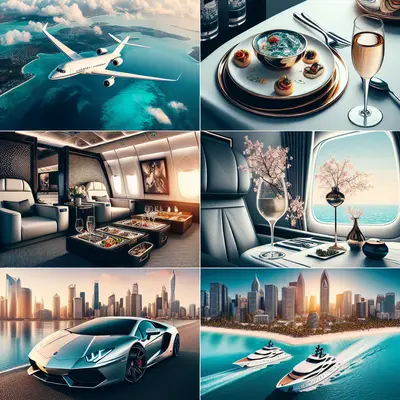
Luxury travel today is no longer defined by obvious opulence or visible excess. The most discerning travelers are curating experiences that feel precisely calibrated rather than loudly proclaimed—quietly elevated journeys where every touchpoint, from the first email confirmation to the final car door closing at home, has been considered. This is the new architecture of luxury: invisible seams, immaculate timing, and a sense that everything has been arranged just a few seconds before you realized you needed it.
Below are five exclusive, under-the-radar shifts that can quietly transform a “very good” trip into an impeccably orchestrated one.
1. Treat Lead Time as a Luxury Asset, Not an Afterthought
For truly elevated travel, lead time is not just a practical detail; it is an instrument of design. Planning six to nine months in advance for complex itineraries allows your advisor or concierge network to secure room categories that never appear online, arrange private access before public opening hours, and align your stay with seasonal moments that locals actually cherish rather than those that merely photograph well.
With premium properties and first-class cabins operating on yield and loyalty algorithms, the traveler who confirms early often unlocks a different tier of possibility: unlisted suites, preferred villa placements, or guaranteed late checkouts that are “subject to availability” for everyone else. Lead time also enables careful sequencing: ensuring that your long-haul arrival coincides with spa availability, that your departure day includes quiet hours instead of meetings, and that weather, regional festivals, and restaurant bookings are woven together into a cohesive rhythm.
In the upper tiers of luxury, spontaneity can be delightful—but it tends to work best when the framework beneath it has been meticulously pre-arranged. The rarest luxury is not the room upgrade; it is a calendar without friction.
2. Curate Your Transit as Carefully as Your Destination
Most travelers obsess over the hotel and then treat everything between home and check-in as an inconvenience to be endured. Discerning travelers know that the transit itself can be refined into a sanctuary.
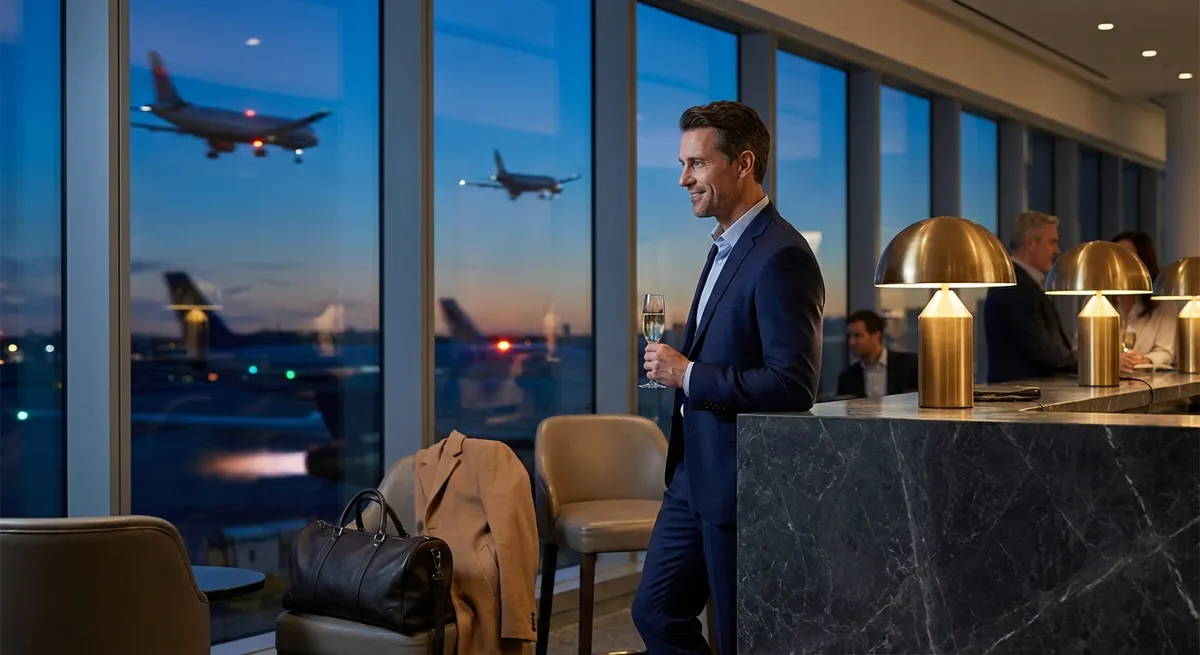
This begins well before departure. Pre-selecting quieter flight times—midweek departures, mid-morning long-hauls—can dramatically reduce crowd density in lounges and at security. Pair that with expedited airport services: trusted traveler programs, VIP meet-and-assist, and private terminal access where available. The effect is twofold: you move with less visible effort, and your energy on arrival is exponentially higher.
In-flight, refine comfort beyond seat selection. Consider aircraft type and cabin layout, not just airline brand. Long-haul specialists with stable premium products and consistent crews often deliver a more seamless experience than flashier, inconsistent options. On board, your own micro-upgrades—noise-cancelling headphones, a curated sleep kit, your preferred teas or light snacks—create continuity between flights, lounges, and hotels. The message to yourself is clear: every stage of the journey deserves to be as considered as the destination’s most coveted restaurant.
By the time you arrive, you are not recovering from transit—you are already traveling.
3. Use Data Quietly: The Subtle Power of a Personal Travel Dossier
The most sophisticated travelers treat their preferences as an evolving, well-maintained dossier rather than a series of last-minute requests. This is not about ostentation; it is about discretion and continuity.
A personal travel profile—maintained either by a trusted advisor or in a secure document you can share selectively—can capture details that transform a stay: preferred mattress firmness, floral sensitivities, favorite fruits, whether you want housekeeping once or twice daily, and how you like your minibar curated (or if you prefer it cleared entirely). The difference between a standard welcome amenity and one that feels engineered for you is often a few lines of information shared in advance.
Across airlines, hotels, and on-the-ground services, this dossier creates a tapestry of recognition: the late-night arrival where a light, cold meal is waiting in your suite because the property knows you never eat heavy after a long-haul; the driver who has still water without prompting; the restaurant that already knows you prefer low-intervention wines by the glass.
The key is restraint. You are not broadcasting demands; you are offering just enough information to enable a quietly bespoke experience. Over time, the dossier becomes a private asset: a living, breathing record of how you prefer to move through the world.
4. Elevate Access: Private Time Over Private Things
In the current era of luxury, access has eclipsed possession. The most rarefied experiences are not defined by what you can buy, but by when and how you can be present.
This means thinking in terms of temporal exclusivity rather than purely spatial privacy. Private early-morning or after-hours museum visits, architect-led site tours before opening time, uncrowded vineyard walks arranged during the winemaker’s quietest season—these are moments where the value lies in unshared time, not just in gated locations.
High-level access often requires more than financial readiness; it demands trusted intermediaries and respectful behavior. Local partners, seasoned travel advisors, or membership-based networks can open conversations with institutions that would not respond to direct cold outreach. But once you are inside, conduct matters: no photography in sensitive spaces, no posting in real-time when it compromises security or confidentiality, and no expectation that access equates to control.
When done well, this approach allows you to inhabit destinations in a way that feels closer to stewardship than consumption. Your travel becomes less about accumulation of experiences and more about calibration of presence.
5. Design Recovery as Intentionally as Adventure
Luxury itineraries often fail not in their ambition, but in their pacing. The most exquisite hotel suite or singular restaurant means little if you arrive depleted. The quietly sophisticated traveler designs recovery as an explicit, considered element of the journey—not an afterthought.
This begins on day one. Instead of an over-programmed arrival, plan a “soft landing”: a light, local meal; a brief walk in natural light to re-sync your circadian rhythm; a short, restorative spa treatment rather than a lengthy ritual that demands endurance. Aligning with local time through strategically timed sleep, daylight, hydration, and movement can do more for your experience than any single amenity.
Throughout the trip, alternate intensity with intentional stillness. A day of guided exploration followed by a half-day of unstructured time at the property’s quietest pool, library, or garden; a late-night culinary experience buffered by a morning with no commitments beyond breakfast. Use in-room amenities—proper blackout curtains, humidifiers, bath rituals, or meditation tools—as an extension of wellness rather than decoration.
On departure, resist the temptation to “use every minute.” Build in a final hour simply to close the circle: pack without hurry, review your itinerary for anything that needs follow-up, and transition your mind back toward home. The rarest luxury is to return with energy not just intact, but deepened.
Conclusion
The future of luxury travel is not louder, brighter, or more visibly exclusive. It is increasingly defined by nuance: the choreography of timing, the subtlety of data used well, the preference for access over acquisition, and a reverence for your own bandwidth. When you treat lead time, transit, preferences, access, and recovery as design elements rather than variables to endure, your journeys begin to feel less like a series of bookings and more like a coherent, composed narrative.
In this quiet architecture of luxury, the experience does not need to announce itself. It only needs to fit you so precisely that, for a moment, the world feels unusually well-arranged.
Sources
- [U.S. Department of State – Traveler’s Checklist](https://travel.state.gov/content/travel/en/international-travel/before-you-go/travelers-checklist.html) – Official guidance on advance planning, documentation, and safety considerations
- [U.S. Customs and Border Protection – Global Entry](https://www.cbp.gov/travel/trusted-traveler-programs/global-entry) – Details on expedited airport entry programs that refine the transit experience
- [Harvard Medical School – Understanding and Treating Jet Lag](https://www.health.harvard.edu/diseases-and-conditions/understanding-and-treating-jet-lag) – Evidence-based strategies for managing circadian disruption on long-haul travel
- [International Air Transport Association (IATA)](https://www.iata.org/en/publications/economics/) – Industry data and analysis on global premium travel trends and capacity
- [UNESCO World Heritage Centre](https://whc.unesco.org/en/list/) – Authoritative information on culturally and historically significant sites often included in high-end itineraries
Key Takeaway
The most important thing to remember from this article is that this information can change how you think about Luxury Travel.