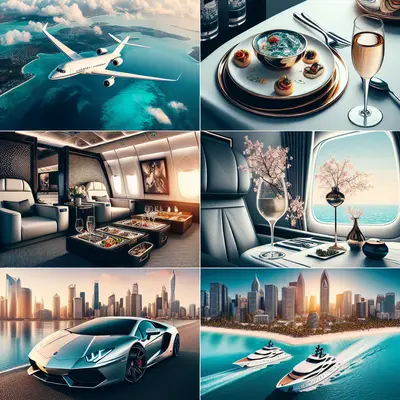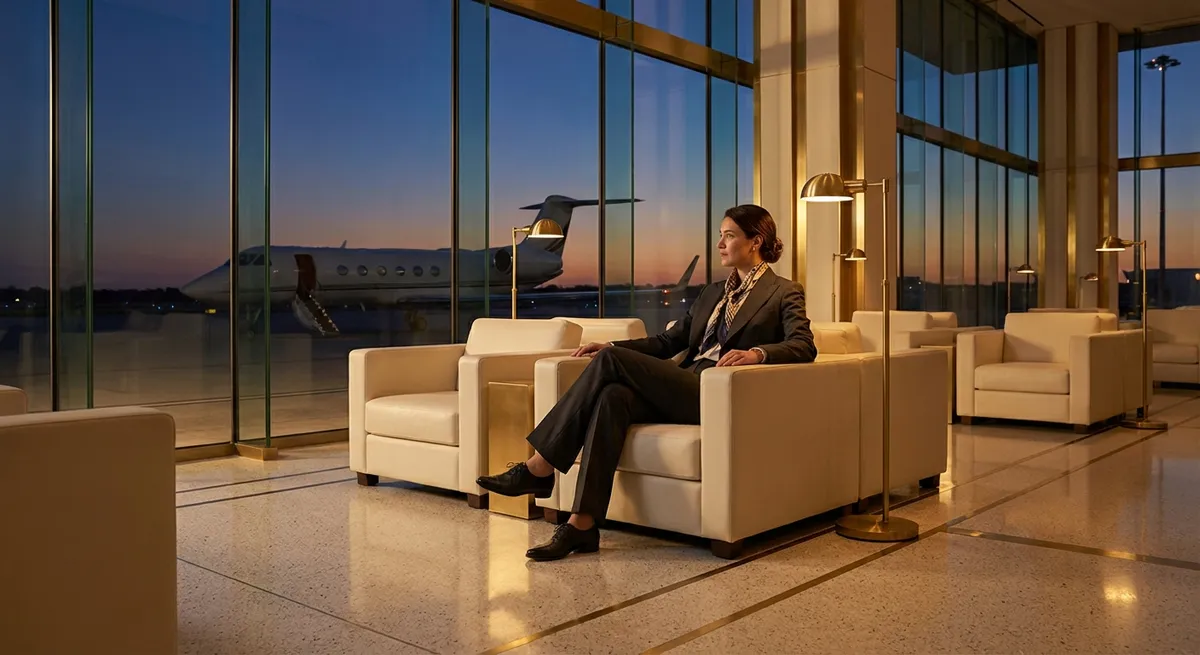
There is a version of travel that never appears on booking engines or banner ads. It is not defined by room size, thread count, or the logo on the key card, but by the way a journey is orchestrated around you—almost imperceptibly—until even the act of moving through the world feels effortless. This is the quiet architecture of contemporary luxury travel: measured not in excess, but in calibration. For those who live in motion, the journey has become a private operating system—subtle, anticipatory, and meticulously attuned to nuance.
Below, five discreet but decisive insights shaping how the most discerning travelers now design their time away from home.
1. Time Has Replaced Status as the Ultimate Travel Currency
In the upper tiers of travel, status symbols have largely given way to something less visible and more valuable: reclaimed time. The most coveted itineraries are no longer about how much you can fit in, but how much you can opt out of.
For frequent travelers, the true differentiation now lies in frictionless transitions—private airport transfers coordinated to the minute, pre-cleared immigration services where available, and itineraries structured so that “dead time” all but disappears. This is why many high-net-worth travelers increasingly prioritize carriers and routes based not on price or even brand loyalty, but on schedule integrity, on-time performance, and the security of well-managed disruptions.
Luxury here is manifested in soft corridors of time: the extra hour of sleep protected by a late checkout arranged before arrival; the unhurried morning secured by an in-suite breakfast that appears without choreography; the dedicated concierge who quietly restructures your day when a meeting overruns. The emphasis is less on spectacle and more on the removal of small frictions that accumulate into fatigue.
In this paradigm, the most astute travelers treat their calendar as their most guarded asset. It is curated with the same precision as a private art collection: selectively, deliberately, and with an awareness that every “yes” requires an equally intentional “no” elsewhere.
2. Destination Choice Is Now a Study in Discretion
Where one goes has become as much a statement of value as how one travels. The traditional circuit of high-profile destinations remains alive, but many seasoned travelers are quietly editing their maps, leaning into locations that offer depth over display and privacy over proximity.
These travelers often favor countries and regions with strong infrastructure, high safety indices, and sophisticated hospitality ecosystems that remain understated. Think discreet coastal enclaves, design-forward alpine villages outside the obvious resorts, or secondary cities whose culinary and cultural scenes rival their capital counterparts—without the glare of overt tourism.
Discretion also extends to timing. Savvy travelers are more likely to invert the standard seasonality calendar: booking shoulder-season stays at marquee destinations to reclaim space, or scheduling city breaks midweek when restaurants, galleries, and local experiences feel more intimate. This allows access to world-class environments without the dilution of overcrowding.
Increasingly, destination selection is also informed by alignment with personal values: environmental stewardship that goes beyond marketing, meaningful community engagement, and policies that respect cultural heritage rather than commodifying it. Luxury, in this sense, becomes not only about how elevated the experience feels, but how ethically calibrated it is beneath the surface.
3. Service Has Shifted from Polished Performance to Subtle Intelligence
In the past, premium service often announced itself—visible, formal, and heavily stylized. Today, the most sophisticated travelers look for something more nuanced: staff who read context faster than they recite scripts, and properties where service is driven by quiet intelligence rather than choreography.
What distinguishes truly elevated hospitality now is its ability to modulate itself. The guest who arrives with a laptop open and a clipped tone may prefer expedited check-in completed en route from the airport. The guest who lingers in the lobby bar, on the other hand, may welcome a conversation that becomes an unhurried introduction to the city’s emerging designers or local winemakers.
Discerning travelers notice details: the way a property seems to anticipate a second visit—remembering a preferred mattress topper, the exact roast level of coffee, or even the temperature at which you like your room pre-cooled after evening turndown. They recognize the difference between generic upgrades and meaningful personalization; between being “managed” and being quietly understood.
Crucially, the best service cultures are now built on discretion. Names are used judiciously, personal information is handled with visible gravity, and staff understand when to vanish from view. In an era where so much of life is documented, the rarest luxury is often being unobserved—except by those whose job is to make your day run precisely as you would have designed it yourself.
4. Privacy Is Being Redefined as Controlled Visibility
Once, privacy in travel meant remoteness: villas at the farthest end of a peninsula, suites high above the city. While seclusion remains desirable, the modern expression of privacy is more complex—it is about controlling when and how you are visible, not simply removing yourself from view.
For high-profile and high-sensitivity travelers, this means favoring properties and experiences that offer multiple layers of access: private entrances and exits, secure but unobtrusive security protocols, and the ability to move through public spaces without fanfare. The ideal hotel now offers both: a lobby with a discernible social hum for the evenings you choose to see and be seen, and discreet pathways that allow you to bypass it entirely when you do not.
On the digital side, the most trusted partners are those transparent about how they protect guest data, manage reservations, and handle special requests. Privacy now extends to reservation systems, communication platforms, and even onboard connectivity choices. The ability to work, communicate, or simply browse from 35,000 feet with strong encryption and thoughtfully designed cabin layouts is no longer a fringe expectation.
Ultimately, modern privacy is about agency. The most refined journeys are those where you are never pushed into the foreground—only invited, and always with the option to decline.
5. Design and Wellbeing Are Converging Into a Single Standard
A decade ago, “wellness” in luxury travel often meant a spa menu and a fitness center with extended hours. Today, the bar has risen considerably. For sophisticated travelers, the question is not whether wellbeing is accommodated, but how seamlessly it is embedded into the fabric of the experience.
Thoughtful design now serves as the first line of wellbeing: natural light that aligns with circadian rhythms, acoustically insulated rooms that genuinely silence the corridor, intelligent climate control that doesn’t require an engineering degree to adjust. Bedding is curated not as décor, but as recovery equipment—ergonomic mattresses, hypoallergenic materials, and options that account for the realities of jet lag and back-to-back flights.
Nutrition has undergone a similar evolution. Menus at the upper end of hospitality increasingly accommodate specific dietary philosophies not with apology, but with confidence—plant-forward tasting menus, low-sugar options that do not sacrifice flavor, and late-night room service that goes beyond the traditional club sandwich. For frequent travelers managing demanding schedules, this level of intentionality is not indulgent; it is essential.
The most forward-thinking properties also recognize that wellness is as much mental as physical. This is reflected in micro-sanctuaries: a quiet corner with well-curated books, a rooftop with space to think rather than perform, city hotels that carve out true silence in the middle of urban density. The result is a form of travel that restores as much as it stimulates—calculated not only in miles flown, but in how you feel when you return.
Conclusion
The contemporary language of luxury travel is quieter than before—but also more exacting. It is less about grand gestures and more about precision: of timing, of personalization, of privacy, of design. For those who move frequently and decisively, the true privilege is no longer access alone, but the ability to shape one’s experience of the world with subtlety.
As expectations evolve, the most compelling journeys will belong to those who understand this shift: travelers who value discretion over display, depth over noise, and who recognize that, at its highest expression, luxury travel is not a spectacle to be admired, but an environment so perfectly attuned to you that it feels almost invisible.
Sources
- World Travel & Tourism Council – High Net Worth Traveller Report - Analysis of evolving expectations and behaviors among high-net-worth travelers
- McKinsey & Company – The Age of the Next-Generation Traveler - Insight into how premium and luxury travelers are reshaping travel demand
- Cornell University School of Hotel Administration – Center for Hospitality Research - Research on hospitality trends, service design, and guest experience in luxury settings
- Forbes Travel Guide – Luxury Hospitality Insights - Ongoing coverage of standards, service innovation, and design in five-star travel
- World Tourism Organization (UNWTO) - Global tourism data and trends, including high-end and premium travel segments
Key Takeaway
The most important thing to remember from this article is that this information can change how you think about Luxury Travel.