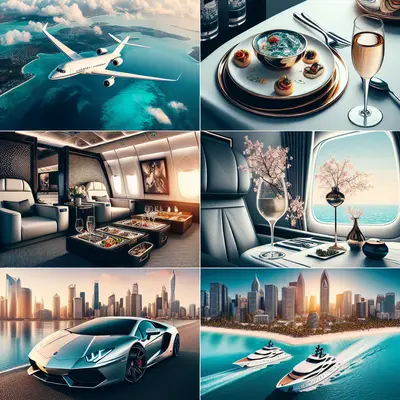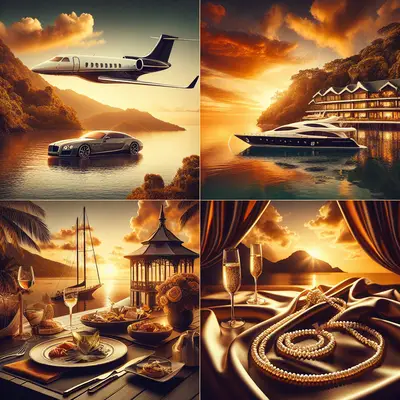
Luxury travel is no longer a glossy performance of excess; it’s an edited, deeply personal choreography of time, comfort, and discretion. The most discerning travelers are not asking, “Where should I go?” but “How do I want to feel when I arrive—and after I leave?”
In this world, luxury is not louder; it is quieter, more intentional, and exquisitely precise. Below, five exclusive insights shaping how refined travelers are re‑writing the rules of movement, comfort, and access.
1. The Arrival Is the Experience, Not the Prologue
For travelers who measure journeys by their subtlety, the true benchmark of a premium itinerary is how it feels to arrive.
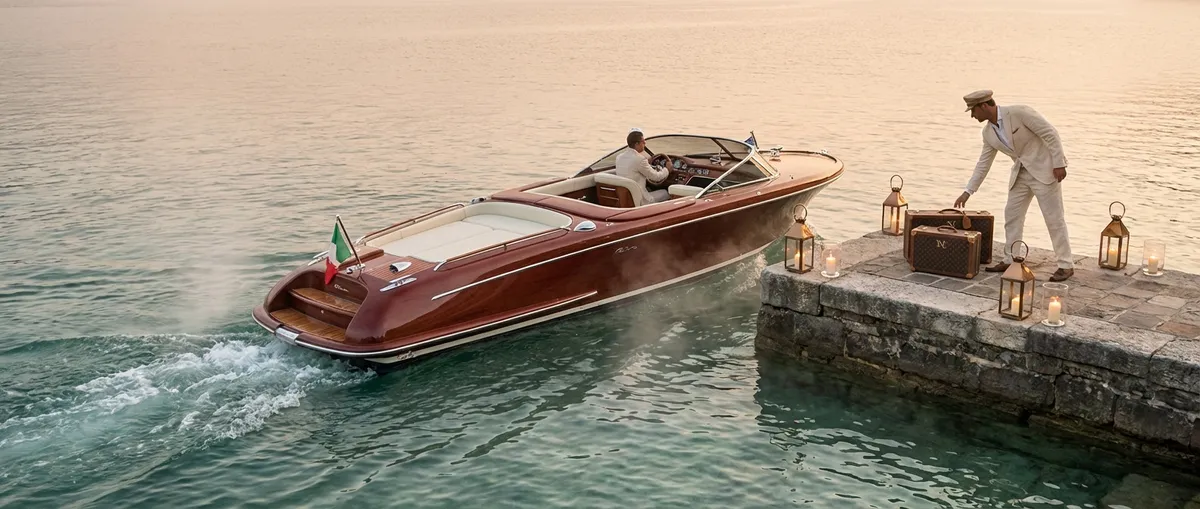
Today’s most refined trips begin hours before landing. The choreography starts with pre-cleared formalities, airport transfer protocols that anticipate real-world delays, and seamless transitions from aircraft to sanctuary. It’s the difference between stepping off a plane into a crowded terminal and stepping into a private, temperature-calibrated vehicle with your preferred playlist already playing at a considered volume.
Premium travelers increasingly view airport experiences as an extension of their private world. Dedicated fast-track services, private lounges, and, where available, private terminal experiences have become non-negotiable—less for status than for maintaining a certain psychological continuity. The goal is not speed alone, but frictionless continuity: the ability to leave a boardroom, cross continents, and arrive at a villa, yacht, or suite without ever feeling “out of frame.”
The ultimate luxury is an arrival that feels like you never left the level of control you enjoy at home.
2. Precision Comfort: When Personal Data Becomes a Private Service
The most sophisticated luxury travelers are quietly authoring their own “comfort dossier”—a private inventory of preferences that transforms generic five-star service into something almost bespoke.
Elite hotel groups, private aviation providers, and villa specialists now maintain detailed guest profiles: preferred pillow density, room scent intensity, mattress firmness, minibar composition, ideal room temperature, even how guests like their curtains drawn at dusk. The true connoisseur doesn’t simply accept this; they curate it, updating their profile as their tastes evolve.
What separates a premium experience from a merely polished one is not the presence of options but the intelligence of their application. It’s the room lighting already set to counter jet lag. The sparkling water brand you prefer, chilled to your preferred temperature range. The in-room coffee ritual that mirrors your kitchen at home, down to the grind and the vessel.
Behind the scenes, hospitality leaders are investing heavily in guest-experience technology. Yet the most discerning travelers insist on something beyond algorithms: a human team capable of interpreting data with judgment, restraint, and taste. Luxury, here, is not that everything is known, but that only what matters is remembered.
3. Time as the Rarest Amenity
For the truly time-poor, the defining luxury is not square footage or thread count; it is the protection and precision of their hours.
High-net-worth travelers increasingly work with specialized travel designers whose primary mandate is not “more” but “less”: fewer transfers, fewer decision points, fewer unnecessary touchpoints with systems that drain energy. A three-country, eight-flight itinerary is quickly losing currency to single-region, high-depth journeys that minimize movement while maximizing experience.
This philosophy extends to micro-moments. Private jet travelers choose routings that avoid high-disruption hubs. Chauffeured transfers are aligned with real-time traffic intelligence to ensure that schedule buffers feel generous yet invisible. Even restaurant bookings are staged to align with circadian rhythms and local light conditions, preventing that hollow sense of being “everywhere and nowhere” at once.
To travel well at the highest level is to accept a new metric of value: not how many countries were stamped, but how much time was truly your own.
4. The Discreet Layer Beneath the Obvious Itinerary
For those accustomed to access, the visible itinerary is often a decoy. The true experience happens in a subtler dimension: invitations, introductions, and private access that rarely make it to social feeds.
Luxury travelers are increasingly seeking connection, not spectacle. This might mean a private viewing at a gallery before an exhibition opens, a late-night kitchen tasting with a chef after service ends, a quiet architectural walk with a conservationist rather than a public tour. These are not packaged “VIP experiences,” but thoughtful, relationship-based encounters that feel more like being welcomed into a circle than buying access.
The most accomplished travel curators function less as agents and more as cultural matchmakers, carefully aligning travelers with local experts, artists, winemakers, or scientists whose worldview resonates with their own. The result is travel that feels less extractive and more reciprocal—a temporary weaving into the fabric of a place, rather than a performance staged for transient guests.
For the sophisticated traveler, the measure of success is not how exclusive an experience appears, but how sincerely it lingers.
5. Sustainability, Reframed as Stewardship and Selectivity
Sustainability, in its most elevated form, has shifted from a marketing checkbox to a quiet code of conduct among discerning travelers.
Rather than “offsetting” as an afterthought, many are restructuring their itineraries to travel less frequently but stay longer, deepening impact and reducing churn. They are opting for properties that practice genuine environmental stewardship—restoration of habitats, considered water use, and fair, long-term employment for local communities—over those that simply advertise green credentials.
This emerging ethos also translates into selectivity. Choosing fewer, better-crafted journeys each year, travelers seek hotels, yachts, and villas whose operations align with their own values around waste, energy, and community engagement. They are increasingly willing to trade conspicuous amenities (excessive lighting, constant linen changes, gratuitous plastic-wrapped convenience) for a refined minimalism that feels both intentional and responsible.
In this sense, the new luxury is coherence: staying in a place whose internal logic—design, operations, food sourcing, staffing—aligns with how you believe the world should work. Travel becomes not an escape from reality, but a more distilled version of it.
Conclusion
At the highest level, luxury travel is ceasing to be a category and becoming a language—a precise vocabulary of details, rhythms, and choices that articulate who you are and how you wish to move through the world.
It is present in the frictionless hush of arrival, in the edited perfection of a room that already understands you, in the disciplined protection of your time, in private access that feels more like friendship than privilege, and in a quiet commitment to travel in a way that leaves more than it takes.
For those attuned to these subtleties, the journey is no longer a departure from their life, but its most carefully expressed chapter.
Sources
- Skift: The Future of Luxury Travel – Industry analysis on evolving expectations in high-end travel
- Virtuoso Luxe Report – Insights from a global network of luxury travel advisors on emerging traveler preferences
- McKinsey & Company: The Rise of the Global Traveller – Research on how affluent travelers are redefining value and experience
- Travel + Leisure: How Luxury Hotels Personalize Stays – Real-world examples of preference-based service in high-end properties
- World Travel & Tourism Council – Sustainability in Tourism – Overview of sustainable practices shaping the future of premium travel
Key Takeaway
The most important thing to remember from this article is that this information can change how you think about Luxury Travel.