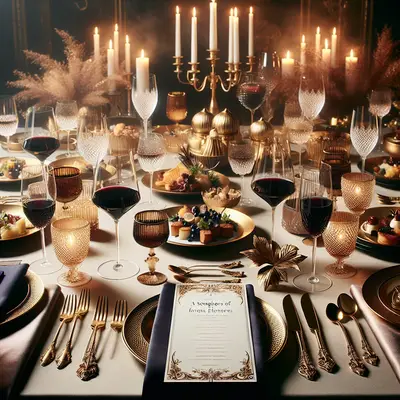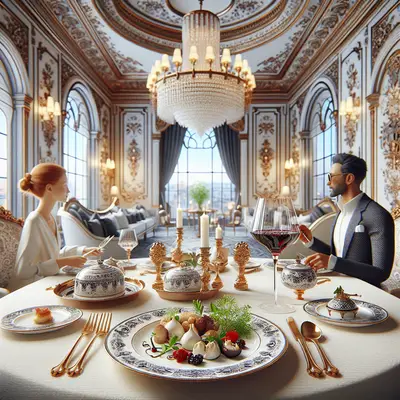
Fine dining, at its best, is less a meal than a precisely orchestrated experience—an interplay of space, service, and flavor designed for those who notice what others overlook. For the luxury traveler, dinner is often the only fixed point in an otherwise fluid itinerary: an anchor for the day, a lens into local culture, and a discreet measure of a city’s standards. Beyond the obvious markers of prestige—Michelin stars, waiting lists, and tasting menus—lies a more nuanced tier of excellence reserved for those who care about the details. This is where fine dining becomes an art of calibration: of pace, of presence, of restraint.
Below are five exclusive insights that matter to the informed traveler who expects more than perfection on the plate.
The Architecture of the Room Matters More Than the View
In the hierarchy of fine dining, travelers often chase views—panoramas of skylines, waterfronts, or iconic landmarks. Yet the most memorable restaurants for serious diners share something subtler: rooms designed for conversation, not spectacle.
The best dining rooms are acoustically engineered so that voices remain private yet clear, even when every table is full. Ceilings, wall treatments, and even table linens are chosen to absorb, not amplify, sound. Light is calibrated to flatter both people and plates, with just enough contrast to shape the room without forcing theatrics. Tables are positioned to create sightlines that feel generous but not exposed, allowing guests to read the room without performing for it.
Luxury travelers increasingly value this kind of architectural discretion. A restaurant that invests in acoustic panels, custom banquettes, and carefully spaced tables is making a statement: your conversation is part of the experience. The view through the window may impress; the design of the room determines whether you want to stay.
The Most Luxurious Menus Read Between the Lines
For the informed traveler, the real story of a restaurant lies not in the signature dishes but in what is implied rather than written. The most refined menus are concise, precise, and quietly confident. They do not overwhelm with endless options or theatrical descriptions. Instead, they offer just enough information to signal intent and technique, trusting that the guest is capable of reading the subtext.
Luxury diners know to look for the following:
- Seasonal discipline: Menus that shift frequently, even subtly, suggest a kitchen “writing” in real time with what markets, fishermen, and farmers provide.
- Unforced sourcing: Ingredients listed by origin only when relevant—specialty citrus, heritage breeds, or single-farm produce—rather than as a breathless inventory.
- Harmony over novelty: Combinations that feel inevitable once tasted, where innovation serves balance, not ego.
- A sense of place: Local references woven quietly into the menu—whether through regional vegetables, seafood, or traditional techniques reinterpreted with restraint.
The most luxurious experience often emerges when the guest feels that the menu was composed not to impress social media, but to stand up to the scrutiny of those who have seen enough to be unswayed by trend alone.
Service as Discreet Intelligence, Not Performance
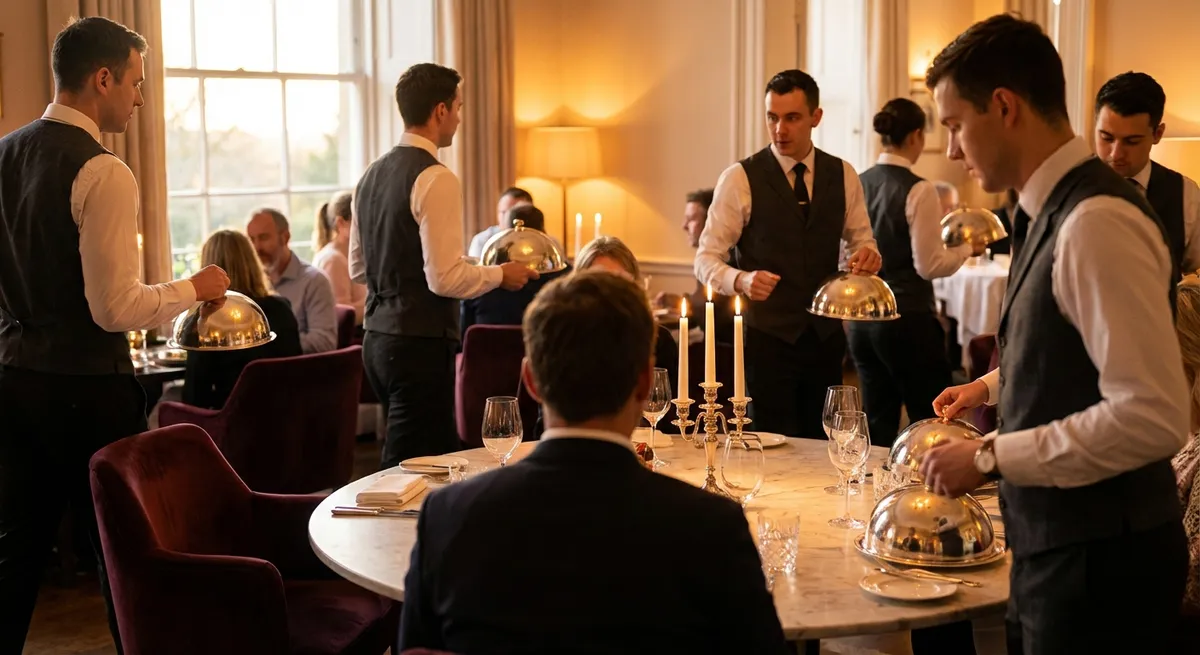
For the luxury traveler, the true measure of a fine dining room is the staff’s ability to recognize what you need before you decide you need it—and to deliver it without fanfare. This is not about choreographed flourishes; it is about cultivated intelligence.
In exceptional dining rooms, service teams gather and share information with the discipline of a well-run hotel or members’ club. Preferences from previous visits, allergies, preferred pacing, and even conversational style are often recorded and quietly referenced. A guest who routinely travels for business dinners may find pacing subtly adjusted to accommodate negotiation; a couple returning for an anniversary might notice a gentler tempo and more spacious courses.
Discreet excellence in service reveals itself in details such as:
- Water and wine glasses topped up only when there is a natural pause in conversation.
- The ability to read when a guest is open to explanation versus when they prefer minimal narration.
- Allergies and restrictions acknowledged once, then seamlessly integrated, instead of repeatedly announced.
- A bill presented not when the table is “turned,” but when the energy of the meal has come naturally to rest.
To the seasoned traveler, this level of service feels less like hospitality as performance and more like a kind of quiet guardianship of their time, privacy, and comfort.
The Wine Program as a Map of the Restaurant’s Soul
For many luxury travelers, the wine list is where the restaurant reveals its true priorities. Beyond labels and vintages, a thoughtful cellar expresses a philosophy: about risk, time, geography, and generosity.
Exceptional wine programs tend to share several characteristics:
- Depth over breadth: Rather than endless pages of predictable icons, there is a curated structure—benchmark producers, rising talents, and a clear point of view about style.
- Respect for maturity: Properly aged bottles reflect not only financial investment but patience and forecasting. A restaurant that cellared wines ten or fifteen years ago was thinking about the guests sitting down tonight.
- Serious but unpretentious guidance: Sommeliers who can move fluently between grand marques and lesser-known regions, suggesting pairings that suit the guest’s taste and intended evening rather than status.
- Non-alcoholic pairings treated as first-class citizens: Increasingly, top-tier restaurants are composing sophisticated tea, infusion, or fermentation pairings with the same rigor as their wine flights, acknowledging that not every guest wishes to drink yet all deserve complexity and craft.
For the traveler who has dined widely, the pleasure lies in discovering how each restaurant expresses its identity through its liquid choices. A clever, quietly daring list can turn a familiar dish into a new experience and is often what lingers in the memory long after the final course.
Time as the Ultimate Luxury on the Plate
In a world governed by convenience, fine dining at the highest level is, in many ways, a celebration of time—time given, time held, time slowed. Luxury travelers, whose schedules are often compressed by flights and meetings, sense immediately when a restaurant is willing to defend their experience from haste.
This care appears in places you can taste and places you can only feel:
- Ingredients given time: Stocks reduced over days, bread fermented slowly, sauces layered with patient extraction rather than shortcuts.
- Pacing calibrated to the guest, not the table turn: The ability to extend or gently compress a tasting menu without compromising the integrity of the dishes.
- A finale that does not rush you to the door: Desserts and mignardises served with a sense of denouement rather than annex, inviting guests to inhabit the last moments rather than signal departure.
For travelers who spend their lives moving quickly, the greatest luxury a restaurant can offer is the sense that time has briefly expanded around their table—that, for a few hours, they are not passing through a city but residing in it, fully present.
Conclusion
For the luxury traveler, fine dining is no longer a checklist of reservations or a parade of signature dishes. It is an exercise in discernment: noticing the architecture of the room rather than the skyline, reading the menu’s silences as carefully as its words, valuing service that anticipates instead of announces, exploring wine lists that reveal a restaurant’s inner life, and recognizing time as the most refined ingredient of all.
The most rewarding meals are those that respect the intelligence and privacy of their guests, offering not ostentation but depth. In these rooms, dinner becomes something more than sustenance or spectacle—it becomes a quiet assurance that, even far from home, there are places where everything has been thought through for you, and nothing needs to be explained.
Sources
- Michelin Guide – About the Guide - Overview of how Michelin evaluates restaurants, including service, consistency, and quality
- The World’s 50 Best Restaurants – Awards and Selection - Insight into how leading global restaurants are identified and assessed
- Harvard T.H. Chan School of Public Health – The Science of Slow Food and Fermentation - Background on the role of time and technique in food preparation
- Decanter – How to Read a Restaurant Wine List - Expert guidance on evaluating and understanding wine programs
- Cornell University School of Hotel Administration – Restaurant Atmospherics Research - Academic analysis of how design, lighting, and acoustics shape dining experiences
Key Takeaway
The most important thing to remember from this article is that this information can change how you think about Fine Dining.