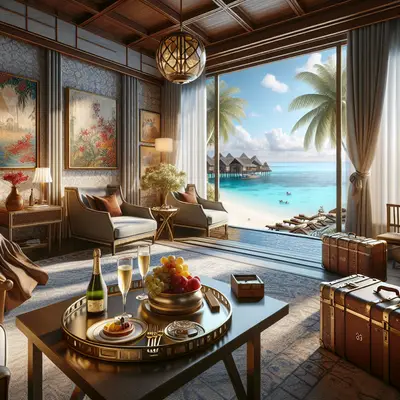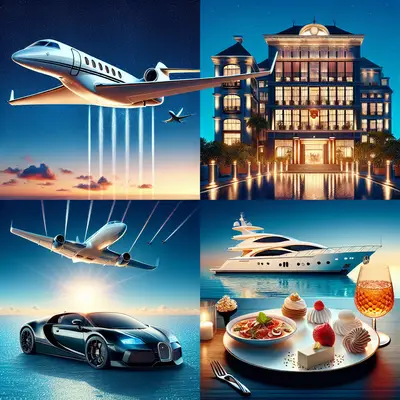
Luxury, at its most evolved, is no longer a catalog of things. It is an edit—of time, of attention, of experiences so considered that they feel almost private. For the modern luxury traveler, the real indulgence is not in being seen, but in being exquisitely, intelligently unseen. This is where premium lifestyle becomes less about accumulation and more about precision: a life assembled with the same care as a bespoke suit or a perfectly balanced tasting menu.
Below, five exclusive insights for travelers who no longer chase luxury, but curate it—quietly, deliberately, and on their own terms.
1. Treat Time Zones as a Material, Not a Constraint
For most travelers, time zones are an inconvenience. For the premium traveler, they are a design element.
The most sophisticated itineraries are no longer built around destinations alone, but around circadian rhythm, natural light, and recovery windows. A red-eye becomes less about maximizing days on the ground and more about protecting cognitive clarity. Travelers are coordinating departure times with chronobiology, selecting westbound flights for critical meetings, and using layovers not as compromises but as controlled recalibration periods.
This approach extends to hotel choices as well. Properties with flexible check-in, curated sleep programs, and in-room wellness technology (from circadian lighting to noise-calibrated rooms) become essential partners in this choreography of time. Premium travelers also increasingly work with dedicated travel planners or concierge teams who understand that a flawless 72 hours across three cities is less about restaurant bookings and more about ensuring each day feels like the first, not the third.
Time, handled with this intentionality, becomes a luxury fabric: tailored, layered, and always aligned with the traveler’s best performance.
2. Elevate Transit Into a Private, Movable Workspace
For many, the journey is still the prelude to the “real” experience. For the discerning traveler, transit has become a high-functioning, deliberately designed environment—part studio, part office, part cocoon.
The premium lifestyle now expects aircraft cabins, lounges, and transfers to function as seamless extensions of one’s professional and personal ecosystem. It is no longer enough for a seat to recline; it must support posture over a four-hour working sprint, offer silent power ports, and deliver Wi‑Fi robust enough for encrypted calls and high‑resolution file transfers. The choice of airline or class of service becomes less about status signaling and more about which carrier reliably replicates a familiar, efficient work setting in the sky.
On the ground, the same standard applies. Chauffeured transfers shift from basic pickups to micro-environments: vehicles with calibrated climate, quiet interiors, and usable surfaces for last-minute notes. Premium travelers increasingly pre-stage their transit: playlists optimized for mental reset, digital clutter cleared, offline folders organized in advance of boarding. The result is a form of travel where movement doesn’t fracture focus but preserves it—where the hours between gates are as valuable as those between meetings.
Luxury here is not an indulgent escape from work, but the ability to decide precisely when to be fully “on” and when to disappear into silence.
3. Collect Access, Not Addresses
The classic vision of luxury travel is a mounting list of destinations: the “where” as a trophy cabinet. Today’s informed traveler has shifted to a more discreet metric: access.
What matters is not that one has been to a city, but the specific doors that quietly opened there. A closed gallery shown after hours by its curator. A heritage atelier that typically never entertains walk-ins. A restaurant where the chef cooks an off‑menu progression based on a five‑minute conversation instead of a fixed tasting. These moments are not purchased; they are earned through relationships, intelligence, or the right intermediaries.
This shift has inspired a new kind of travel partner—less travel agent, more cultural strategist. They cultivate local confidants, not just supplier lists; they broker trust, not just reservations. For premium travelers, this means their itineraries may look minimal on paper—two or three anchors per day—but the substance lies between the lines: the introductions, the unlisted venues, the private perspectives on a place that don’t exist in any guidebook.
Owning a second home in a celebrated destination is one expression of status; knowing the three people who can quietly unfasten its true cultural fabric for you is another level entirely.
4. Redefine Wellness as Subtle Infrastructure, Not a Schedule
The once-conspicuous language of wellness—sunrise boot camps, marathon spa days, elaborate rituals—has become too loud for many premium travelers. Their approach to well-being is more architectural than theatrical: it is about building a travel life where wellness is invisibly integrated, not performed.
This begins with the basics: air quality, light, temperature, and sound. Sophisticated travelers now prioritize properties that invest in these fundamentals with the same fervor once reserved for thread counts. Rooms with advanced ventilation systems, water filtration, and acoustic isolation feel less like upgrades and more like prerequisites. Fitness is similarly reframed: less about hotel gyms with panoramic views and more about continuity with one’s existing regimen—access to familiar equipment, private trainers on call, and nutrition that respects dietary discipline instead of undermining it.
Even leisure is engineered more intelligently. Afternoon meetings are stacked to allow for a late-morning swim when the pool is quiet. Spa appointments are timed not to fill gaps but to anchor recovery after long-haul flights. The traveler might never mention a “wellness focus,” yet every choice—from bedding to breakfast—protects physical and cognitive sharpness.
In this paradigm, luxury wellness is not the spectacle of care, but the reliability of it. It is the assurance that wherever one lands, the body and mind are never treated as afterthoughts.
5. Let Technology Disappear Into the Background of Experience
Technology has become so omnipresent in travel that meaningful luxury now lies in its invisibility. The premium traveler expects everything to work—seamlessly, securely, and silently—while remaining largely unseen.
The most carefully crafted journeys employ technology as a kind of quiet operating system: biometric boarding that eliminates lines, digital keys that remove the check-in ritual entirely, ride services that appear at precisely the right minute without a flurry of notifications. The art lies in minimizing friction without amplifying screen time. Sophisticated travelers delegate as much as possible to trusted platforms and human concierges, keeping their own digital engagement narrow and intentional.
Security is an equally critical layer. Encrypted messaging, VPNs, and privacy-focused devices are guarded not as paranoia but as baseline hygiene. Travelers choose airlines with secure, stable connectivity; hotels with robust cybersecurity and clear privacy standards; and payment tools designed to minimize data exposure across borders.
In this carefully constructed ecosystem, technology ceases to be a spectacle—no futuristic gimmicks, no performative innovation. Instead, it becomes the invisible scaffolding that allows the traveler to stay present: fully immersed in a conversation, a view, or a meal, while the logistics hum quietly in the background, already handled.
Conclusion
The premium lifestyle, especially for the seasoned traveler, is moving steadily away from performance and toward precision. It is less about being “upgraded” and more about being edited—choosing time over tempo, access over address, wellness over show, and invisible efficiency over ostentatious convenience.
For those attuned to this evolution, luxury becomes something deeply personal: a life in motion that still feels composed, a calendar that respects the body and mind, and journeys that are not about escape from reality but an elevated articulation of it. The world remains vast, the options endless. The true privilege now lies in choosing, with almost obsessive care, only what genuinely belongs.
Sources
- Harvard Business Review – The Future of Premium Travel – Analysis of shifting expectations among high-end travelers and the move toward experience-driven value
- McKinsey & Company – The State of Travel and Hospitality – Insight into how corporate and premium travel behavior is evolving post-pandemic
- World Travel & Tourism Council (WTTC) – Data and reports on global travel trends, including luxury and high-spend segments
- Cornell University School of Hotel Administration – Research on hospitality operations, guest experience, and emerging expectations in high-end accommodations
- International Air Transport Association (IATA) – Industry data on air travel trends, premium cabin demand, and the role of technology in passenger experience
Key Takeaway
The most important thing to remember from this article is that this information can change how you think about Premium Lifestyle.