Luxury today is less about accumulation and more about orchestration—of time, of access, of experience. For the modern traveler, premium living does not pause at the jet bridge; it travels with you, in the texture of your days, the decisions you decline, and the rare moments you say yes to. This is not about spectacle. It is about precision.
Below are five exclusive, insider-level perspectives on how discerning travelers are quietly refining the way they move through the world—and how you can, too.
The New Currency: Protecting Your Uninterrupted Hours
For premium travelers, the most precious amenity is not a suite upgrade or a rarified label; it is uninterrupted, well-protected time.
Instead of asking, “Where am I staying?” they begin with, “How will my hours feel between arrivals and departures?” This shift drives a different kind of planning. Flight times are selected for circadian alignment rather than convenience. Connections are minimized not only to reduce risk, but to preserve cognitive clarity. Late check-out is no longer a courtesy but a strategic buffer—space to transition without rush or residue.
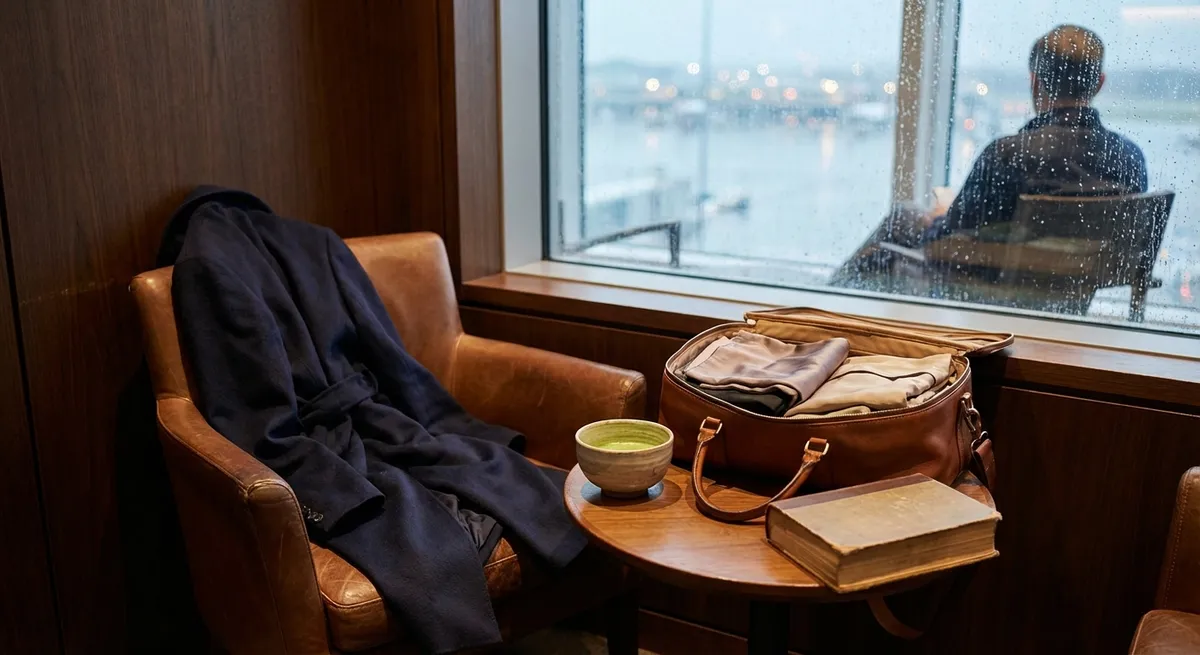
The most discerning travelers now curate “protected blocks” into every journey: two or three hours where meetings cannot be booked, devices are softened, and the sole priority is recalibration. These windows may be spent in a spa suite, a private lounge cabin, or a quiet, light-filled corner overlooking a tarmac at dusk. What matters is the intention: the deliberate refusal to let transit erode one’s internal rhythm.
Premium living in motion is ultimately a defense of attention. By treating time as a curated asset rather than a by-product of travel, you create a journey that feels composed, rather than endured.
Hospitality as a Relationship, Not a Transaction
In the elevated tier of global travel, loyalty is no longer measured solely by nights stayed or miles flown, but by the quality of the relationships that accrue over time.
Seasoned luxury travelers invest in relationships with a tight constellation of properties and service providers: a single airline alliance, a discreet chauffeur company in each key city, a handful of hotels where they are not just recognized, but remembered. With this depth comes a different class of service: a suite pre-set to your preferred room temperature, a minibar edited to match your actual tastes, a pillow already chosen because you last requested it two stays ago.
This is not transactional upgrade-hunting; it is trust-building. Staff become co-authors of your journeys, anticipating preferences before they become requests. Over years, a concierge evolves from gatekeeper to quiet collaborator—smoothing last-minute changes, pulling elusive reservations, or suggesting detours that never appear on standard itineraries.
The paradox is simple: by narrowing your world to a few excellent partners, your overall experience becomes exponentially broader, richer, and more personally tuned.
The Art of Invisible Personalization
Premium travelers are no longer impressed by obvious luxury cues. What resonates now is the elegance of being precisely understood—without spectacle, without display.
Invisible personalization is the new hallmark: your driver choosing a slightly longer route at night because the city lights are exceptional from a particular bridge; a hotel noting you avoided the breakfast buffet and seamlessly offering an in-room, plated alternative the next morning; a private guide subtly rearranging an entire day to avoid cruise ship crowds without ever announcing it.
Technology undoubtedly underpins much of this, from refined guest profiles to real-time preference data. But what truly elevates the experience is discretion: personalization that feels like intuition rather than algorithm. It should feel as if someone has been paying close, respectful attention—not mining your data.
When executed well, this level of curation disappears into the background. You simply notice that your travel days seem to contain more ease, fewer frictions, better light, quieter tables. In premium life, the most sophisticated luxury often looks like nothing at all—except the unmistakable sense that everything has been softly arranged around you.
Designing a Sensory Signature for Your Journeys
The most refined travelers approach movement through the world as a sensorial composition. They don’t simply pack; they design a portable atmosphere.
Scent is often the anchor: a single, understated fragrance reserved exclusively for travel, creating a consistent emotional cue from city to city. Some go further, carrying a travel-sized room spray or candle to gently neutralize unfamiliar hotel spaces and restore a sense of continuity. Texture follows—cashmere or merino layers, a preferred weight of blanket on long-haul flights, the familiar feel of a leather passport wallet.
Sound becomes a deliberate choice: a curated playlist for takeoff and landing, a specific genre for early hotel mornings, perhaps a saved offline recording of a favorite live performance for late-night arrivals. Even taste is considered—premium travelers often rely on a few constant rituals: a particular tea before boarding, a simple, clean meal on arrival, a non-negotiable hydration routine.
This sensory discipline does more than elevate comfort; it holds your identity steady in the flux of transit. Wherever you land, you arrive not as a disoriented passenger, but as a person whose environment has already caught up with them.
Beyond Access: The Shift to Meaningful Rarity
The era of collecting generic “exclusive” experiences is quietly fading. What today’s luxury travelers value more is meaningful rarity: experiences that feel deeply aligned with their values, their curiosities, and their way of seeing.
This might look like a private visit not to the most famous gallery, but to a lesser-known atelier whose work you’ve followed for years. It might be a morning with a local winemaker who produces in microscopic quantities but speaks about soil and aging with a nuance that redefines your palate. Or it might be a chartered day on the water not for spectacle, but for a guided marine conservation experience that you support long after you dock.
Premium life is increasingly defined by coherence: your journeys reflecting what matters to you beyond the passport stamp. As global travelers become more aware of their footprint, there is a subtle migration toward experiences that combine access with responsibility—properties with authentic sustainability credentials, operators who treat local communities as partners, not backdrops.
The true luxury is no longer being “let in” to something others cannot access; it is participating in something that would be diminished if indiscriminately shared.
Conclusion
A premium lifestyle, especially in transit, is less about where you sit and more about how your days are composed. It lives in the way you guard your hours, the relationships you cultivate with those who shape your journeys, the almost imperceptible calibrations that make each movement through the world feel intentional.
For the luxury traveler, the destination is only one chapter. The true narrative lies in the quiet edits: what you decline, what you repeat, what you refine each time you step into the slipstream between here and elsewhere.
Sources
- [Skift: The New Definition of Luxury Travel](https://skift.com/2019/10/28/the-new-definition-of-luxury-travel/) – Industry insight into how luxury travelers’ expectations and behaviors are evolving
- [McKinsey & Company – The Age of Personalization in Travel](https://www.mckinsey.com/industries/travel-logistics-and-infrastructure/our-insights/personalizing-the-customer-experience-travel-and-hospitality) – Analysis of data-driven personalization and guest experience in premium hospitality
- [Virtuoso – Luxury Travel Trends](https://www.virtuoso.com/travel/articles/luxury-travel-trends) – Perspective from a global luxury travel network on what high-end clients increasingly seek
- [Condé Nast Traveler – What Luxury Travelers Want Now](https://www.cntraveler.com/story/what-luxury-travelers-want-now) – Editorial overview of shifting desires in upscale travel, from privacy to purpose
- [Harvard Business Review – Customer Experience in the Age of AI](https://hbr.org/2020/02/using-ai-to-perfect-customer-experience) – Explores how subtle, AI-enabled personalization can enhance high-touch experiences when done with discretion
Key Takeaway
The most important thing to remember from this article is that this information can change how you think about Premium Lifestyle.