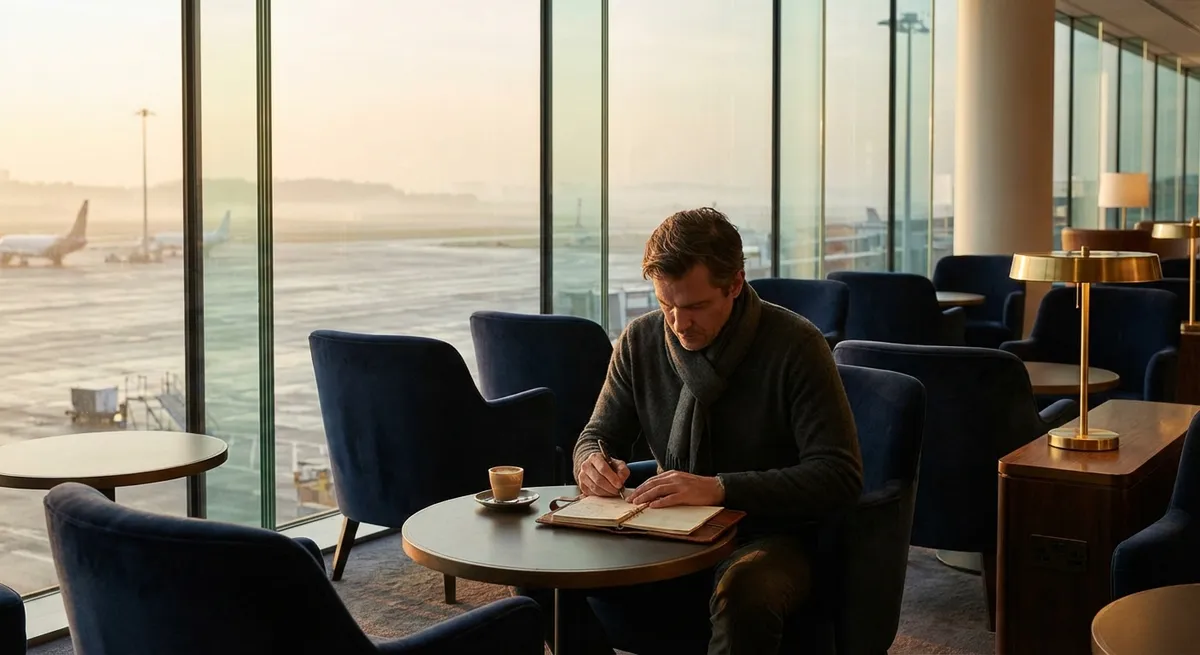
In the true luxury sphere, the flight is rarely the headline. For those who live in motion, the real story is written in the quiet edits: the invisible choices that turn travel from a sequence of bookings into a precisely tuned way of life. Premium living today is less about ostentation and more about calibration—the way you design your time, your space, your attention, and your recovery between departures. This is not about more; it is about better, fewer, and quieter.
Below, five exclusive insights shape a premium lifestyle that feels as considered as a perfectly packed cabin bag—nothing unnecessary, everything intentional.
1. Curating a Personal Service Perimeter
For high-frequency travelers, the most valuable “amenity” is not an object but a perimeter—a discreet circle of service providers who understand your preferences before you articulate them. This goes beyond a favorite hotel concierge or VIP liaison; it is a deliberately assembled ecosystem.
At its core is an assistant or travel specialist with long memory: your preferred aircraft cabin, favorite hotel wing for morning light, jet-lag thresholds, and even your tolerance for small talk. Layered around that are trusted drivers in key cities, a primary wellness practitioner (or team) who tracks your circadian shifts, and a digital gatekeeper who filters invitations and commitments while you are airborne.
The refinement is in how this perimeter is briefed and updated. A short, living dossier—your “Traveler’s Profile”—shared selectively and securely, allows each touchpoint to act in concert: dietary constraints noted before a late arrival, room humidifiers already running after a long-haul, local tailoring or pressing arranged for last-minute appearances. The premium experience is not the number of people serving you, but the coherence of how they do it.
2. Designing a Global Oxygen Strategy
The truly seasoned traveler does not think in flights; they think in oxygen. Elevation, humidity, air quality, and light exposure are all inputs into a personal performance equation. Instead of simply “coping” with jet lag, premium travelers architect an oxygen strategy that spans planes, hotels, and in-between spaces.
This begins pre-departure with sleep banking, light management, and hydration protocols designed with a clinician or performance coach familiar with circadian science. In transit, cabin choices and timing of meals are calibrated to your arrival schedule rather than convenience. On arrival, the focus turns to air quality and light: pre-arranged rooms with air purifiers in cities with poor AQI, blackout solutions that actually work, and local walking routes for natural light exposure within your first waking window.
What appears effortless—the executive who steps off a 12-hour flight and delivers a coherent presentation—is often powered by this invisible oxygen and light choreography. Over time, this becomes less about recovery and more about preservation: maintaining cognitive sharpness, mood stability, and appearance despite constant movement. In the premium lifestyle context, this is not wellness as indulgence; it is wellness as unshakeable baseline.
3. Treating Time as Your Primary Luxury Asset
For luxury travelers, money solves fewer problems than it appears to. Time, on the other hand, is unforgiving. The most refined lifestyles treat time not as something to fill but as a material to sculpt, especially on the move.
This starts with a ruthless clarity about travel purpose. Every trip is assigned a “mode”—performance (high output), relationship (connection), restoration (recovery), or exploration (curiosity). Your schedule, accommodations, and commitments are then layered around that declared mode. A performance trip has protected silent blocks and controlled social exposure; a relationship trip prioritizes longer unstructured dinners and shared experiences; a restoration trip quietly eliminates anything that requires too much decision-making.
Micro-routines anchor this design: a non-negotiable first 10 minutes after waking, a precise pre-meeting ritual, a fixed boundary for last email or message. The luxury is not the spa appointment squeezed between calls, but the absence of frantic improvisation. When executed well, your calendar becomes less a battleground and more a curated gallery—each commitment deliberately chosen, with enough negative space to breathe.
4. Elevating Transitions into Private Rituals
For most people, the journey between hotel, airport, and meeting is wasted or forgotten time. For those leading truly premium lifestyles, these transitions become private rituals—deliberate, repeated experiences that reset the mind and signal a shift in role or environment.
This may be as simple and structured as a three-part car ritual: first five minutes for decompression and silence, the next ten for a curated audio selection (a particular playlist, a saved podcast, or even a language lesson), and the final five to mentally rehearse or review the next engagement. Over time, your body learns the cues; by the time the car door opens, you have already arrived in the next version of yourself.
In-flight rituals carry similar weight. The moment the seatbelt sign turns off, a practiced sequence might unfold: change of clothing, specific skincare routine to combat cabin dryness, a set reading list separated by mental effort, and a defined point at which work laptops close no matter how tempting the inbox. These personal protocols transform anonymous transit into consistent, almost ceremonial interludes. The external environment may be unpredictable; your internal sequence is not.
5. Commissioning a Personal Aesthetic of Movement
The most sophisticated travelers quietly commission—rather than simply purchase—the aesthetics of their mobility. This is not about logo density; it is about coherence, longevity, and ease under pressure. Every item that travels with you, from luggage to outerwear to tech, is evaluated on three axes: weight (literal and psychological), resilience, and replaceability.
A personal “mobility palette” emerges: consistent colors that simplify packing and reduce cognitive load, fabrics selected for how they perform after eight hours seated, accessories chosen for how easily they clear security and adapt between climates. Over time, you and your belongings develop a visual language recognizable across terminals, hotel lobbies, and boardrooms—a quiet signature that never needs to be announced.
Bespoke touches—custom garment alterations for specific cabin postures, tailored travel footwear that balances compression with elegance, monogramming used sparingly on high-touch items—add a subtle layer of individuality. The true luxury here is not being noticed; it is never being distracted by what you are wearing or carrying. Your aesthetic of movement exists to serve your focus, not steal from it.
Conclusion
A premium lifestyle, especially for those who live between time zones and terminals, is less about visible extravagance and more about invisible design. A curated service perimeter, a deliberate oxygen and recovery strategy, a sculpted relationship with time, meaningful transition rituals, and a coherent aesthetic of movement all work together to create a life that feels improbably calm despite constant motion.
These are the edits that transform travel from a series of logistical problems into a finely tuned operating system. When done well, you step off each journey not just having arrived somewhere new, but still entirely yourself—composed, prepared, and quietly ahead of the next departure.
Sources
- Harvard Business Review – Manage Your Energy, Not Your Time – Research-backed insights on structuring work, energy, and routines for high performance
- Centers for Disease Control and Prevention – Jet Lag and Sleep – Official guidance on circadian disruption, jet lag, and mitigation strategies for frequent travelers
- National Institutes of Health – Circadian Rhythms Fact Sheet – Scientific overview of circadian biology and its impact on health and performance
- World Health Organization – Ambient (Outdoor) Air Pollution-air-quality-and-health) – Data on air quality, health implications, and why oxygen and air management matter for global travelers
- Mayo Clinic – Healthy Travel Tips – Practical medical advice on staying well on the move, from hydration to sleep and recovery
Key Takeaway
The most important thing to remember from this article is that this information can change how you think about Premium Lifestyle.