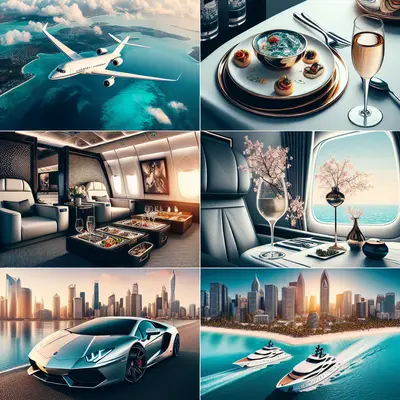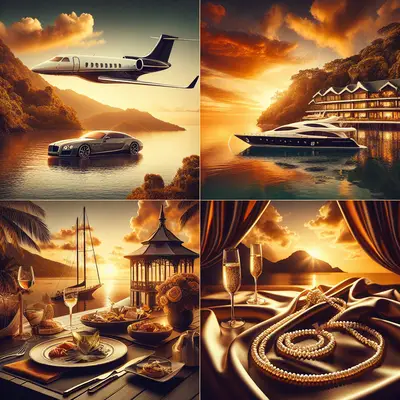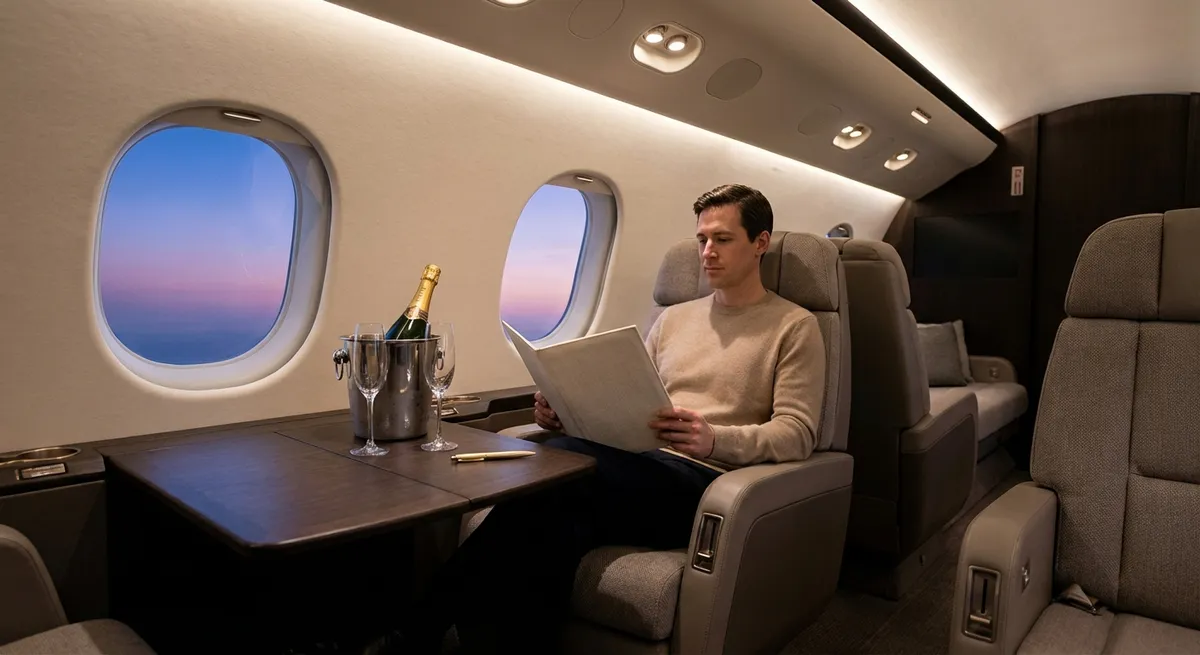
Luxury travel today is less about being seen and more about being exquisitely understood. The most discerning travelers are no longer chasing the obvious marquee experience; they are curating a private, deeply personal relationship with place, time, and service. The journey itself becomes a kind of quiet authorship—each decision a considered line in an itinerary that nobody else could wear convincingly.
Below, five exclusive insights reveal how the global elite are reshaping what “luxury” means when they move through the world.
1. From VIP to VQP: The Rise of “Very Quiet Privilege”
The most coveted status is no longer VIP; it is VQP—Very Quiet Privilege. This is the art of enjoying every advantage without broadcasting any of it.
VQP travel is defined by intentional understatement. Guests arrive via secondary entrances rather than red carpets. Check-in happens in private salons or in-suite, documents handled discreetly in advance. Transportation is arranged so that no one ever stands waiting in a lobby, yet drivers are never ostentatiously hovering.
The visual codes are equally restrained: luggage without logos, muted palettes, and clothing that reads as “impeccably tailored” rather than “immediately recognizable.” Staff are trained to recognize regulars by posture and cadence as much as by name, and to adjust service protocols accordingly—removing unnecessary steps, minimizing conversational friction, and eliminating performative luxury.
What emerges is a paradox: the more extraordinary the access, the less dramatic the choreography. The traveler moves through terminals, hotels, and cities with almost cinematic smoothness, while the machinery required to create that ease remains deliberately invisible.
2. Precision Over Excess: Curated Time as the New Currency
For the truly global traveler, time—not money—is the scarce resource. Luxury is no longer measured in square footage or thread count, but in the precision with which the hours of a journey are composed.
This begins before departure. Flight times are selected not simply for convenience, but for how they shape circadian rhythms, meeting schedules, and even appetite. A late-night departure might be preferred because it allows a fully structured pre-flight evening: a tailored meal to avoid jet bloat, a short treatment to downshift the nervous system, and a quiet boarding window that eliminates queuing.
On the ground, itineraries are designed around energy arcs rather than checklists. One immaculately planned experience might replace five hurried ones. A single, perfectly timed museum visit—before opening hours with a curator who understands the guest’s specific aesthetic sensibilities—will outvalue a day of generic sightseeing.
The key insight: refined travelers now treat time with the same rigor a watchmaker brings to a tourbillon. Every segment of the journey has a purpose—restorative, inspiring, productive, or connective—and anything that creates friction or dilution is quietly edited out.
3. Sensory Minimalism: Designing Travel for a Calm Nervous System
In a world of hyper-stimulation, the most advanced form of luxury is often sensory subtraction. Not asceticism, but intentional, elegant restraint.
This manifests in spaces that privilege clean lines, natural materials, and an absence of visual noise. Private aviation terminals with acoustic damping and warm, indirect light; suites where the technology is fully integrated and almost invisible; fragrance profiles that are subtle, context-appropriate, and never competing with the local air. The goal is not to impress, but to soothe.
Elite travelers increasingly specify environmental preferences with the same precision once reserved for dietary requirements: preferred room temperature, bedding firmness, light color temperature, even the sound profile of the space (no buzzing minibar, no audible corridor traffic). Properties that maintain detailed “sensory profiles” for returning guests—documented, refined, and updated—are quietly winning long-term loyalty.
What emerges is a kind of personalized calm. After a day of dense meetings or heavy social engagement, stepping into a perfectly tuned room that feels instantly familiar and physiologically regulating is a luxury far more potent than any ornate embellishment.
4. The Discreet Intelligence Layer: Data as Tailored Hospitality, Not Surveillance
The most sophisticated trips today are underpinned by an invisible intelligence layer—data used not to push offers, but to remove friction and anticipate unspoken needs.
At the highest level, this begins with serious pre-travel briefing. Advisors and concierges study not just preferences, but patterns: when a traveler tends to eat after landing, how long they need to decompress before being social, which types of activities they abandon halfway through, and which they extend. This becomes a living dossier of behavioral nuance rather than a static “likes and dislikes” form.
In execution, this might mean a hotel proactively shortening or lengthening a car transfer based on whether the guest had back-to-back calls that day; adjusting turndown rituals to earlier or later times; or ensuring that a jet cabin is stocked not only with favorite beverages, but with the specific tea that helps them sleep before a key negotiation.
The sophistication lies in the restraint. The most valued service is anticipatory without feeling intrusive. Guests are never confronted with an obvious recitation of their data; they are simply met with a continual sense that “everything seems to fit.” The artistry of modern luxury service is knowing exactly when to act, and equally, when not to.
5. Legacy-Oriented Journeys: Traveling with an Eye on Continuity
Among seasoned luxury travelers, a subtle shift is emerging: journeys are designed not just for immediate pleasure, but for continuity—for what they imprint on family, reputation, and future access.
This can be seen in multi-generational trips that are planned less as indulgent vacations and more as living archives: returning to the same Mediterranean village each year, staying in the same suite, cultivating relationships with the same boat captain, cheesemaker, or gallery owner. Children grow up not just traveling widely, but returning meaningfully—learning how long-term presence transforms one from visitor to familiar face.
There is also an increased interest in journeys that align with personal and family values. Stays at properties with serious sustainability credentials, visits orchestrated around local craftsmanship and preservation, or private experiences with researchers and conservationists—all chosen not as performative altruism, but as a way of ensuring that one’s footprint on a destination is thoughtful, not extractive.
In this paradigm, the itinerary is part of a much larger story: of who the traveler is becoming, what they are known for in the circles that matter to them, and what they will quietly leave behind in the places they frequent.
Conclusion
The new language of luxury travel is written in understatement, precision, and deep personalization. It is less about the size of the suite and more about the exactness of the moment: the car that appears the instant you think about leaving, the room that feels tuned to your nervous system, the destination that greets you not as a stranger but as a recurring character in an ongoing narrative.
As expectations rise and time compresses, the most coveted journeys are those that feel both effortlessly smooth and intimately tailored—where the world reshapes itself, subtly and intelligently, around the traveler’s private definition of ease.
Sources
- [Virtuoso: 2024 Luxe Report](https://www.virtuoso.com/travel/articles/virtuoso-2024-luxe-report) - Insights into evolving luxury traveler preferences and emerging trends
- [Forbes Travel Guide](https://www.forbestravelguide.com/) - Standards and perspectives on high-end hospitality and service excellence
- [McKinsey & Company – The Travel Industry Turned Upside Down](https://www.mckinsey.com/industries/travel-logistics-and-infrastructure/our-insights/the-travel-industry-turned-upside-down) - Analysis of shifting traveler behavior and expectations in premium segments
- [Skift Research: The Rise of Experiential Luxury](https://research.skift.com/report/the-rise-of-experiential-luxury/) - Examination of how high-end travelers are moving from material excess to experiential richness
- [Condé Nast Traveler – Future of Luxury Travel](https://www.cntraveler.com/story/the-future-of-luxury-travel) - Editorial perspective on how luxury travel is being redefined globally
Key Takeaway
The most important thing to remember from this article is that this information can change how you think about Luxury Travel.