Fine dining, at its highest expression, is less about white tablecloths and tasting menus and more about fluency in a very specific language of care. The world’s most discerning travelers are no longer impressed by spectacle for spectacle’s sake; they look instead for precision, restraint, and a kind of thoughtful orchestration that feels almost private. At this level, excellence hides in plain sight—in the way a glass is set down, the way a menu is worded, the way a room sounds at 9 p.m. on a Friday. For those who move comfortably between Michelin-starred dining rooms and discreet hotel lounges, understanding these quiet signals transforms dinner from a reservation into a rarefied experience.
Below are five exclusive, often-overlooked insights that distinguish a table that is merely good from one that is genuinely world-class—where luxury is expressed not in volume, but in how little you have to ask for.
1. The Signature of the Room: Acoustics as a Mark of Mastery
The first indicator of an exceptional restaurant is something you cannot see: its soundscape. Fine dining has matured beyond the echoing, Instagram-friendly dining rooms of the last decade. Sophisticated travelers now look for an acoustic environment that allows a conversation to be intimate without ever becoming effortful.
Notice how easily you can hear the person across from you without raising your voice, even when the room is full. The best spaces are tuned like a concert hall—plush fabrics, discreet wall treatments, and carefully chosen table spacing absorb the clatter without deadening the atmosphere. You still sense the energy of the room, but it never intrudes on your table.
Equally telling is how sound is used to pace the evening. In a well-run room, the music never competes with human voices and subtly shifts over the night. Early in the evening, more measured tempos suggest an unhurried start; as the room fills, the soundtrack recedes almost imperceptibly, ceding the foreground to conversation and service. This choreography signals a restaurant that understands that luxury is not silence, but the controlled balance between privacy and vibrancy.
For the seasoned traveler, this is the first test on entering: if you find yourself instinctively leaning in or repeating yourself, the restaurant has already surrendered some of its claim to true refinement.
2. Water, Glass, and the Unspoken Art of Calibration
In elite dining rooms, the handling of something as simple as water or glassware reveals an entire philosophy. The question is not still or sparkling; it is whether the staff can read your preferences before you have finished your first sentence.
Discerning guests often notice the weight of the glass, the temperature of the water, and the precision of the pour. At the highest level, your water glass is never theatrically refilled mid-sentence, never allowed to run embarrassingly low, and never topped to the brim. Refills happen during natural pauses—when a course is cleared, when you adjust your napkin, when your attention is on the room rather than the table.
The glass itself is a quiet tell. If the wine program is serious, stemware will vary subtly based on grape or style rather than a single “house” glass for everything. The best operations invest in glassware that feels almost weightless in the hand, designed to showcase bouquet and temperature rather than withstand careless handling. This kind of choice is never ostentatious, but to those who travel often and drink well, it reads as a clear signal: your palate is taken seriously here.
Even the ice—size, clarity, and dilution rate—can be an indicator. A bar that takes its ice program seriously, particularly in a pre-dinner cocktail, is rarely careless about anything else.
3. The Menu as Cartography: How Exceptional Kitchens Guide, Not Overwhelm
For luxury travelers who dine globally, menus have become a kind of map—revealing not only the cuisine, but the confidence of the kitchen. In extraordinary restaurants, menus are edited with the restraint of a well-curated gallery. Fewer dishes, each precisely described, speak more persuasively than pages of options.
Look for the language: the best menus are specific but unfussy. They list origins or producers when meaningful (a particular farm, a heritage breed, a coastal region) without slipping into a catalog of branded name-dropping. Seasonality is evident in both the ingredients and the structure of the meal—lighter, vegetal compositions in warmer months; deeper, slow-cooked elements appearing as the weather cools.
An advanced detail appreciated by discerning travelers is the presence of “quiet” dishes—items that do not photograph dramatically but are technically demanding and deeply comforting. A seemingly simple consommé, a deceptively modest rice dish, or a restrained dessert with only two or three elements can reveal more about a kitchen’s skill than its most elaborate showpieces.
Tasting menu experiences at this level are not rigid scripts but frameworks with thoughtful adaptability. A truly sophisticated team absorbs your preferences from a few remarks—your aversion to strong anise, your interest in local seafood—and adjusts, often without fanfare or repeated questioning. Menus, then, become living documents: starting points rather than fixed declarations.
4. Service as Discreet Choreography, Not Performance
For the experienced luxury traveler, the measure of service is no longer friendliness or efficiency—those are assumed. The differentiator is how seamlessly the team moves around you without ever making you feel managed.
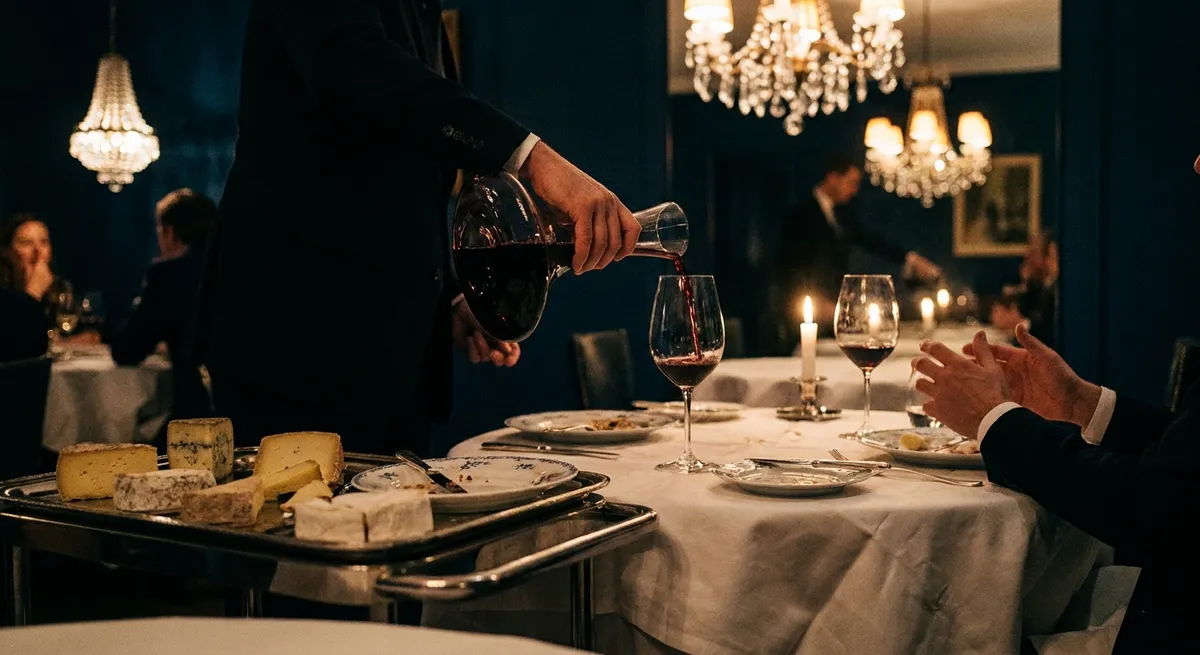
In the world’s most elevated dining rooms, service operates on a kind of peripheral awareness. Napkins are refolded while you step away without being conspicuous. A server subtly adjusts the angle of a plate so that the composition faces you correctly without explanation. Your preferred pacing—lingering between courses or maintaining momentum—is correctly inferred after the first two plates.
What distinguishes elite service is anticipation without presumption. If you are dining alone, a truly aware team will adjust the rhythm: perhaps offering a half portion of a particularly rich course, or suggesting a half-glass pairing, knowing that lengthy solo tastings can be fatiguing. If you are clearly in deep conversation, pronouncements about each element of the dish become more concise and rare; if you exhibit curiosity, the explanations deepen and contextualize.
Staff hierarchies also become invisible. The best rooms avoid the “handoff fatigue” of meeting a new face every time; instead, you sense a calm, coordinated presence where each person seems to know exactly what you have ordered, what you have been told, and what you might appreciate next. It feels less like service and more like being quietly hosted in a private home where every detail has been considered before you arrive.
5. Provenance with Purpose: When Sourcing Becomes a Form of Storytelling
At the pinnacle of fine dining, luxury travelers are no longer impressed by vague gestures toward “local” or “sustainable.” They look for sourcing that is intentional, transparent, and woven into the narrative of the meal with subtlety rather than sermonizing.
An elite restaurant does not simply list a farm; it has a visible, ongoing relationship with its producers. This might take the form of rotating dishes that reflect a particular fisherman’s seasonal catch, or a wine list that thoughtfully balances established icons with emerging, regionally significant winemakers. The story is not that ingredients are expensive, but that they are chosen with discernment—lines caught rather than trawled, small estates over mass-market labels, specificity over generality.
Luxury travelers also notice how waste is treated. At the highest level, nose-to-tail and root-to-stem cooking is not a trend but a quiet assumption. Trimmings reappear in broths, sauces, or staff meals; yesterday’s excess is today’s refinement. You rarely see it, but you taste the depth in reductions, emulsions, and infusions that could only come from such disciplined use of resources.
Most telling is how this information is shared. The most sophisticated experiences do not lecture about ethics; they fold provenance naturally into conversation when it enhances your understanding of a dish or a pairing. You leave not with a list of suppliers, but with a felt sense that each element on your plate earned its place there.
Conclusion
For those accustomed to moving through the world’s most rarefied dining rooms, the true luxury of fine dining lies in its ability to feel inevitable—effortless, unhurried, and perfectly attuned to you without ever drawing attention to its own precision. The acoustics, the weight of a glass, the restraint of a menu, the choreography of service, and the integrity of sourcing are all part of a quiet lexicon, legible to those who know how to read it.
When you recognize these signals, you stop evaluating restaurants by stars, lists, or reputations. Instead, you begin to value the subtler, more enduring markers of excellence: how fully a space allows you to be present with your companions, your palate, and the place itself. That, for the truly discerning traveler, is where fine dining ceases to be a category and becomes a rare and deeply personal form of hospitality.
Sources
- Michelin Guide – What Is a Michelin Star? - Background on how top restaurants are assessed and what defines culinary excellence
- World’s 50 Best Restaurants – The Voting Process - Insight into how global dining reputations are formed among expert travelers and diners
- Harvard T.H. Chan School of Public Health – Sustainable Dining - Overview of responsible sourcing and sustainability practices in food systems
- Cornell University School of Hotel Administration – Restaurant Acoustics Research - Academic perspective on how acoustics influence guest experience in restaurants
- Institute of Culinary Education – The Role of Seasonality in Fine Dining - Discussion of how top kitchens use seasonality and sourcing to shape menus
Key Takeaway
The most important thing to remember from this article is that this information can change how you think about Fine Dining.