Luxury today is less about what is seen and more about what is understood. For the discerning traveler, the premium lifestyle is written in a quiet lexicon of details—subtle decisions, private rituals, and carefully orchestrated experiences that rarely make it to the feed, yet define how one moves through the world.
These are not rules, but signals—five discreet codes that shape how sophisticated travelers design their lives between departures.
1. The Art of Unobtrusive Personalization
True luxury is no longer a monogrammed robe waiting in the suite; it is personalization so skillful it feels inevitable rather than staged.
For the most refined travelers, the experience begins long before arrival. Preference profiles are not simple lists of “likes,” but living documents that evolve with each stay: which floral scents do not trigger allergies, which time you naturally wake without an alarm, which vintages you finish rather than merely sample. The most sophisticated properties and private travel services now use this data not to overwhelm guests with options, but to reduce friction—anticipating when to offer a quiet upgrade, when to remove choices entirely, and when to step back.
Unobtrusive personalization also extends beyond the hotel or residence. It is the car that arrives with the rear temperature already set to your usual preference, the onboard chef who has quietly sourced local produce in alignment with your dietary philosophy, the concierge who has already edited your restaurant shortlist to three choices that match your pace that evening.
The premium traveler is not impressed by the obviousness of personalization but by its restraint: the sense that their day has been subtly cleared of obstacles without anyone needing to announce it.
2. Time as the Ultimate Premium Material
Among sophisticated travelers, time has replaced status symbols as the most coveted luxury. How time is protected, expanded, and refined is a clear indicator of a truly premium lifestyle.
This begins with considered pacing. Rather than packing an itinerary with appointments and reservations, premium travelers design “architected emptiness” into their days—space in which something unplanned can occur. They might schedule a morning without meetings on a work trip purely to experience the city’s rhythm, or structure long-haul travel to include a deliberate 24-hour interlude in a secondary destination that offers restoration, not distraction.
Technology is enlisted not to accelerate life, but to reclaim hours. Private airport services, pre-cleared immigration arrangements, and dedicated travel concierges exist to ensure that a 14-hour journey feels like six hours of high-functioning focus and eight hours of seamless restoration. Rather than bragging about how quickly they move, refined travelers quietly invest in systems that allow them to slow down without losing momentum.
Most revealing is how they treat “empty time” in unfamiliar cities: not as a scheduling failure, but as a medium for discovery. A long layover becomes the perfect window for a museum visit arranged with after-hours access, a local design studio tour, or a private tasting at a city’s most discreet bar—experiences that require time, not just money.
3. Insider Networks Over Public Access
There is a distinct difference between having access and belonging. Premium travelers increasingly understand that exclusive membership is not measured by velvet ropes or loyalty tiers, but by the depth and discretion of their human networks.
The most coveted experiences are often not sold, but extended—by a gallery director who opens a viewing room after closing, a chef who designs a menu off the standard card, or a winemaker who hosts a tasting in the corner of a working cellar rather than a formal salon. These moments rarely arise from transactional requests. They are built over years of returning to the same people, respecting their craft, and treating their time with the same attentiveness they expect for themselves.
This network extends horizontally across cities: a trusted driver in Paris who understands when to speak and when not to, a personal shopper in Milan who texts quietly when an under-the-radar designer begins to gain attention, or a local advisor in Tokyo who knows which tiny omakase counter welcomes foreign guests with the right introduction.
For the sophisticated traveler, the signal of true luxury is not the ability to enter any space, but the knowledge that, in a handful of places around the world, they are not guests—they are known.
4. Sourcing Authenticity with Curated Precision
Premium travelers have moved beyond collecting destinations; they curate context. What matters is not simply where they stay or dine, but how precisely each element aligns with their personal aesthetic, philosophy, and values.
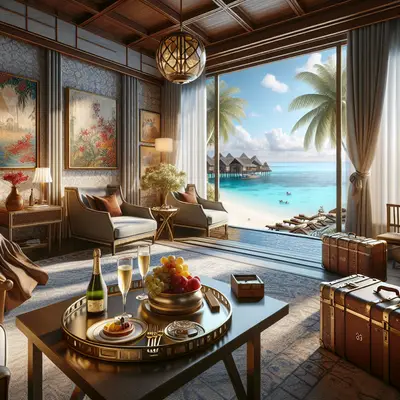
This begins with a new approach to “local.” It is no longer enough that something is sourced nearby; it must make cultural, environmental, and experiential sense. The luxury of a beachfront villa is enhanced not by imported marble, but by the knowledge that the property was built with local stoneworkers whose craft is rooted in the region’s history. A tasting menu becomes more compelling when each ingredient has a quiet narrative tied to its place of origin, rather than a vague promise of farm-to-table.
This curation extends into wellness, design, and even technology. The premium traveler might choose a property because its spa programs integrate evidence-based treatments with indigenous rituals, or favor a yacht not for its size but for its silent hybrid propulsion and low-impact footprint. They care where linens are woven, how art was acquired, whether staff have been invested in, not merely trained.
Instead of performative “conscious travel,” this is a private, rigorous editing process: choosing properties, brands, and experiences that resonate with a coherent personal standard, even when no one is watching.
5. Crafting a Signature Travel Identity
Perhaps the most subtle code of the premium lifestyle is the development of a personal travel identity so well-defined that it becomes a quiet signature. This identity is expressed not through logos or dramatic statements, but through a consistent language of small, intelligible details.
It can be seen in the way one packs: a restrained color palette that works across climates, a single leather carry-on that has evolved with their journeys, a compact selection of objects—fountain pen, travel candle, specific headphones—that turn any space into a familiar environment. It is audible in the calm cadence with which they move through airports and hotel lobbies, avoiding both haste and spectacle.
This identity is also intellectual. The premium traveler becomes the person who knows precisely which hotel room numbers to request in three different continents, which independent coffee bar near a major financial district offers quiet tables and strong Wi‑Fi at 7:00 a.m., or which museum entrances allow for a near-private arrival experience on a weekday afternoon. These are not trivia points; they are the practical expression of a carefully composed life.
Above all, a refined travel identity is consistent. Whether flying privately or in the front cabin of a commercial airline, staying in a flagship suite or an architect’s guesthouse, there is a recognizable constancy in demeanor, choices, and rituals. The luxury is not just in where they are—it is in how they are, everywhere.
Conclusion
The contemporary premium lifestyle is not a catalog of visible luxuries, but a choreography of subtle decisions that shape how time, access, and attention are experienced. For the most discerning travelers, the measure of luxury lies in how quietly it operates: in personalization that feels natural, in time that feels expansive, in networks that feel genuine, in sourcing that feels principled, and in a travel identity that feels unmistakably one’s own.
In a world increasingly defined by noise and exposure, the true privilege is to move through it with precision, intention, and a vocabulary of luxury that needs no translation.
Sources
- Skift Research: The State of Luxury Travel 2024 - Industry analysis on evolving expectations of affluent travelers and the shift toward personalization and experience over status symbols.
- McKinsey & Company – The New Rules of Luxury Growth - Insightful report on how luxury consumers are redefining value, time, and authenticity.
- Virtuoso – 2024 Luxe Report - Global luxury travel network’s data-backed perspective on emerging premium travel trends and preferences.
- Harvard Business Review – The Future of Customer Experience - Explores personalization, frictionless design, and the emotional dimensions of high-end service.
- World Travel & Tourism Council – Responsible Travel & Tourism Report - Provides context on sustainability, local sourcing, and responsible practices within premium and luxury travel.
Key Takeaway
The most important thing to remember from this article is that this information can change how you think about Premium Lifestyle.