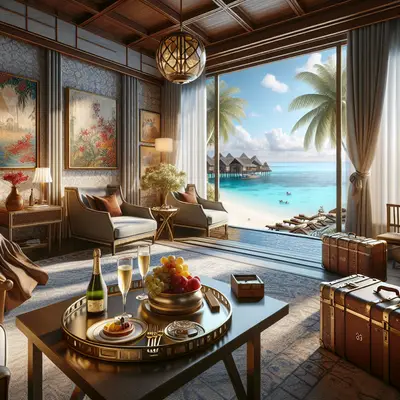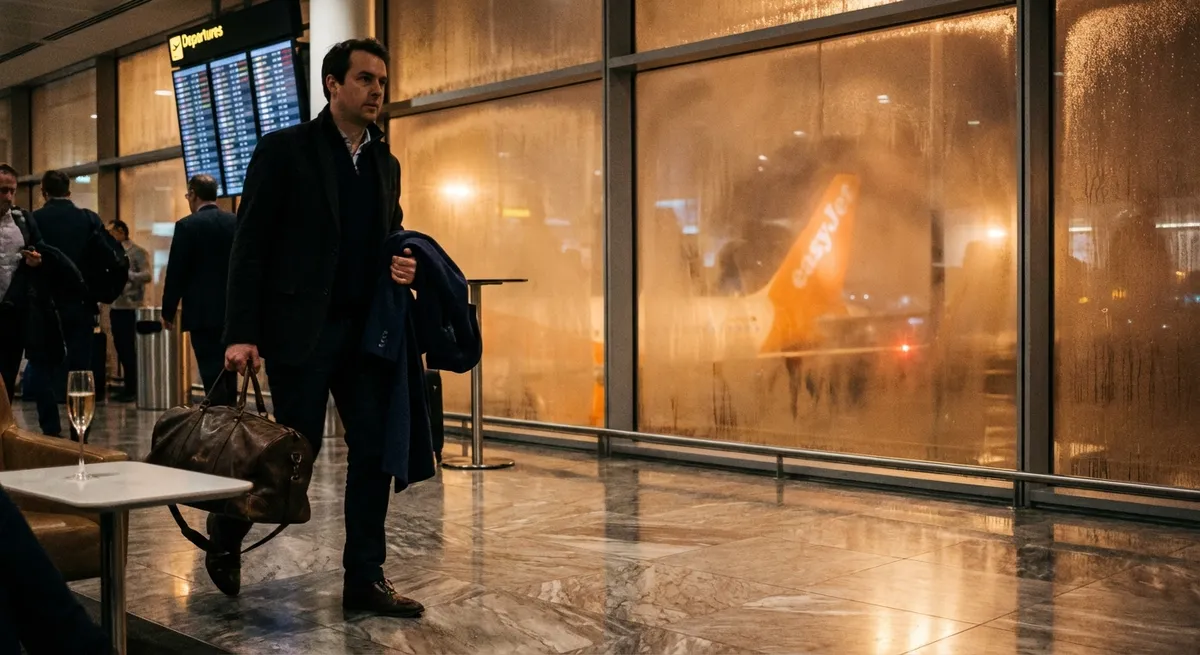
The most discerning travelers know that luxury is rarely about price tags or logos. It lives in the quiet thresholds between moments: the way a room feels before you even place your luggage down, the choreography of a transfer that feels almost telepathic, the texture of time when everything unnecessary has been edited away. For those who move frequently—and insist on doing so beautifully—the true premium lifestyle is not a destination, but a standard applied consistently to every transition.
What follows are five exclusive, nuanced insights designed for travelers who already know the basics of “first class,” and are more interested in mastering a private, elevated rhythm of life in motion.
1. Designing a Personal Operating Standard, Not an Itinerary
Itineraries change. Routes divert. Bookings shift. The genuinely premium traveler relies less on a perfect plan and more on a personal operating standard—an internal rulebook that quietly governs every journey.
This standard might begin with non-negotiables: arrival at the airport at a specific minimal-stress window, a pre-selected rotation of favorite hotels in key cities, and a personal threshold for what constitutes acceptable connection times. It continues with aesthetic preferences—room orientation, preferred lighting, water pressure standards, and mattress firmness—that you communicate ahead of time, often via a travel advisor or concierge team who already knows your profile.
Documenting this as a living “travel codex” (even a simple shared file with your assistant, advisor, and preferred properties) transforms every trip from a fresh negotiation into a precise execution of your preferences. The result is a seamless continuity of life, where you step into new environments that already feel edited to your measure, rather than starting from zero with each booking.
2. Curating Time as the Ultimate Luxury Asset
Among those who travel well, the rarest luxury is not access, but unfragmented time. The premium lifestyle is defined not by how much you do, but by how deliberately your time is protected.
This begins with scheduling that respects cognitive and physical rhythms: landing early enough to integrate into a new time zone without being immediately overbooked; structuring flight segments to protect deep work or uninterrupted rest; and reserving post-arrival silent windows with no external commitments. Many sophisticated travelers now coordinate their calendars around “temporal buffers”—deliberate white space before and after each transit leg—to ensure they arrive mentally present rather than simply physically on time.
It also involves treating certain moments as sacred: one unhurried breakfast per day, a no-device ritual during takeoff and landing to reset the mind, or a quiet arrival routine at each property that signals “transition complete.” When time is curated like this, each segment of your journey holds a distinctive texture instead of blending into a blur of transit.
3. Building a Private Ecosystem of Trusted Human Gatekeepers
Premium technology is convenient, but it is still the human gatekeeper who protects the quality of your experience. The seasoned luxury traveler does not simply book services; they cultivate relationships—with a small, highly trusted constellation of professionals who quietly align the world to their standards.
This might include a dedicated travel advisor with deep relationships at key hotel groups, a preferred driver in cities you frequently visit, a single point of contact at a flagship property, and a private aviation or membership service that understands your patterns. Over time, these individuals become stewards of your preferences: they know your preferred room position relative to elevators, how you take your coffee, what level of privacy you expect, and which kinds of “surprises” you actually welcome.
Instead of constantly explaining who you are and what you like, you allow a curated inner circle to represent your needs upstream. The result is a premium lifestyle where the exceptional becomes routine, not through showmanship, but through accurate, anticipatory care at every handover.
4. Editing for Sensory Coherence Across Continents
One of the most underappreciated luxuries is sensory continuity—stepping into a different time zone yet feeling an unbroken thread of familiarity. Elegant travelers deliberately design this.
They travel with a personal “sensory kit” that anchors each new space: a single signature fragrance (or unscented routine) used across continents, a compact travel candle or diffuser with a consistent scent profile where permitted, a favored tea or coffee for early mornings, and a small curation of fabrics—slippers, lounge wear, perhaps a cashmere wrap—that instantly make any room feel privately inhabited. Even choices like a consistent color palette in your travel wardrobe or the same brand of sleep mask and headphones serve to stabilize your experience.
This sensory coherence extends to light and sound. Advanced travelers use portable light therapy devices to regulate circadian rhythms, noise-cancelling systems tuned to their preferences, and pre-set playlists engineered for flight, arrival, and unwind phases. Over time, your body learns these cues, allowing you to adjust faster, rest deeper, and feel at home in motion rather than in exile from it.
5. Transforming Journeys into Private Studios for Thought
For many luxury travelers, movement is not downtime; it is the most protected thinking time they have. The flight, the drive, the quiet hour in an unfamiliar lounge—these become mobile studios for strategy, reflection, and creation.
Instead of filling every journey with distraction, the refined approach is to curate “modes” for each segment: a deep-focus work flight, a purely restorative route, or a reflective leg dedicated to planning, journaling, or reading. This often involves a pre-travel decision: what is the single outcome or question this journey will serve? It might be a strategic decision you need clarity on by the time you land, or a creative idea you want to develop while the world cannot directly reach you.
Premium travelers often maintain a dedicated “travel notebook”—physical or digital—that exists only in transit. Over time, it becomes an archive of ideas born in the liminal spaces between takeoff and landing. When travel becomes not just movement, but a structured environment for your best thinking, every journey yields a return that far exceeds the miles accrued.
Conclusion
The contemporary premium lifestyle is less about how loudly luxury announces itself, and more about how quietly it supports you. It is found in the standards you enforce, the time you protect, the people you entrust, the sensory coherence you maintain, and the way you use motion as a catalyst for clarity rather than chaos.
For those who live between departures, the real privilege is this: a life so precisely edited that every arrival feels less like an interruption and more like a natural continuation of who you already are—no matter where you touch down next.
Sources
- Virtuoso: The Future of Luxury Travel - Industry insight into evolving expectations among high-end travelers
- Forbes – How Ultra-Wealthy Travelers Are Redefining Luxury - Explores shifting values from ostentation to personalization and experience
- Harvard Business Review – Manage Your Energy, Not Your Time - Foundational perspective on time, energy, and performance that informs premium travel scheduling
- National Institutes of Health – Jet Lag and Circadian Rhythms - Research-based insights on circadian disruption and adaptation while traveling
- McKinsey & Company – The Rise of the Global Nomad - Analysis of high-frequency travelers and how they structure life across borders
Key Takeaway
The most important thing to remember from this article is that this information can change how you think about Premium Lifestyle.