Fine dining, at its highest level, is no longer about white tablecloths and elaborate plating alone. For the global traveler who moves easily between continents and cultures, the restaurant has become a stage for precision, discretion, and deeply personal pleasure. It is where time can be slowed on command, where flavors act as a passport, and where service is choreographed to anticipate you before you fully arrive. This is not about conspicuous luxury; it is about curated nuance—experiences that feel designed quietly, and exactly, for you.
Beyond the Plate: The Architecture of Atmosphere
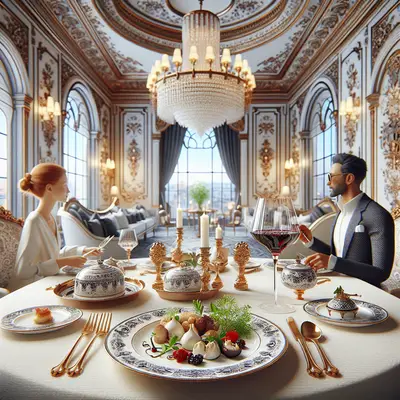
For the truly discerning, the most memorable fine-dining experiences begin long before the first course. The architecture of the room—its ceiling height, sightlines, and circulation—determines whether a space feels theatrically grand, cocoon-like, or privately observant. World-class restaurants work with acousticians as carefully as they do with designers, ensuring conversations remain intimate even when the room is full.
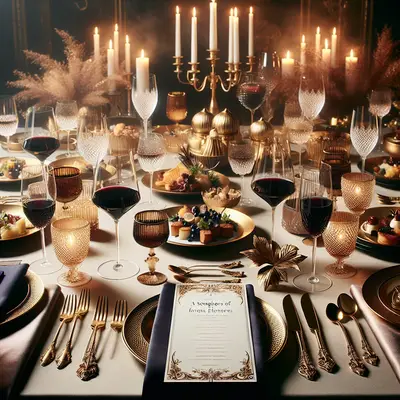
Light is calibrated almost cinematically: bright enough to appreciate the detail of a sauce’s sheen, soft enough to flatter and never fatigue. Temperature is discreetly managed so a multi-course tasting never feels heavy. Scent is controlled with almost obsessive discipline—no intrusive floral arrangements, no clashing colors on the plate or in the room. Luxury travelers recognize that this invisible architecture is what allows a three-hour dinner to feel like an elegant intermission in a demanding day, rather than another appointment to endure.
The Multi-Sensory Menu: When Flavor Becomes Cartography
At the pinnacle of fine dining, menus are no longer mere sequences of dishes; they are narratives shaped by geography, season, and memory. The most compelling chefs today act almost as cartographers, mapping flavors across regions and traditions with quiet confidence. For the luxury traveler, there is a particular pleasure in recognizing a place before it is announced: the mineral edge of a shellfish broth that recalls a specific coastline, or the smoky sweetness of a spice blend that belongs unmistakably to one city.
Tasting menus at this level often shift in rhythm and tempo: a precise, almost monastic opening; a crescendo of layered textures; then a restrained, graceful landing. The portions feel calibrated, not constrained. A course might arrive with only a single, perfect component on the plate, framed by a supporting element poured or finished tableside. The affluent traveler understands that the true indulgence is not abundance, but accuracy—the sensation that nothing extraneous has been allowed to remain.
Service as Private Choreography, Not Performance
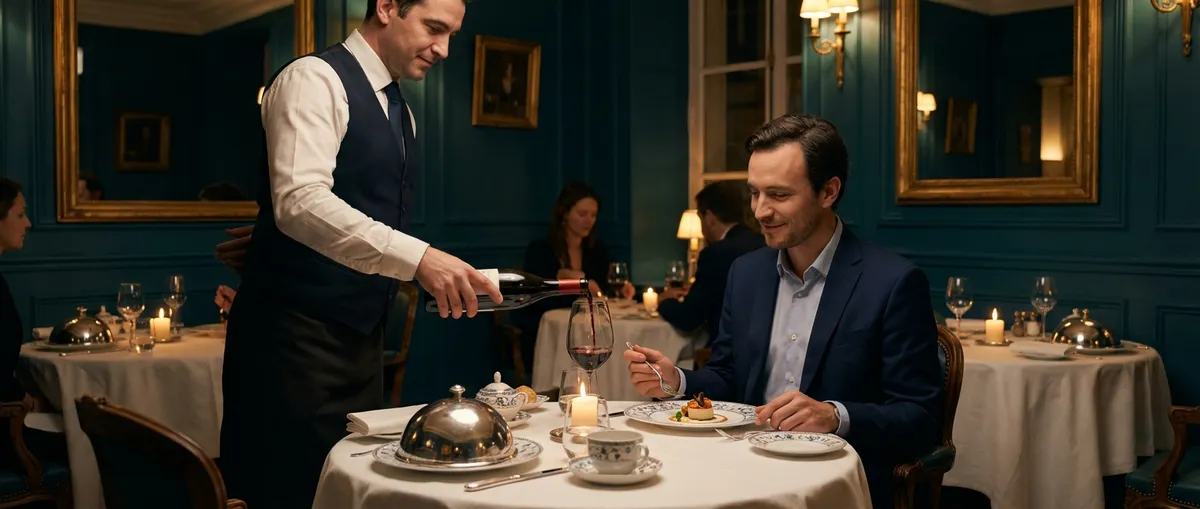
Exceptional service in fine dining is no longer theatrical in the traditional sense; it is a form of choreography that feels tailored to your pace, preferences, and even your silence. The most sophisticated rooms operate with a kind of studied invisibility. Staff appear at precisely the right moment: when a question has formed, when a glass needs a quiet top-up, when the conversation has found a natural pause.
Experienced luxury travelers pay attention to the micro-signals of a refined operation: the way a napkin is refolded the moment you stand; how dietary preferences are registered once, then remembered without further mention; how a sommelier adjusts recommendations after a single comment about your preferred texture or acidity. The best teams conduct subtle guest “mapping” at the beginning of a service—who is leading the table, who is more contemplative, who is there to celebrate and who is there to recover. When done well, the evening feels not curated for a demographic, but for you alone.
The Cellar as Story: Curated Pairings for the Well-Traveled Palate
For those who cross time zones with ease, the wine list (and increasingly, the non-alcoholic pairing) has become a key indicator of a restaurant’s sophistication. It is less about possessing every celebrated label and more about demonstrating a considered point of view. A truly elevated cellar balances grand marques with small, meticulously chosen producers; it offers instantly recognizable comfort and opportunities to discover.
Experienced travelers notice how a sommelier listens: Do they insist on the expected prestige bottle, or do they explore what you actually enjoy—structure, aromatics, minerality, something textural rather than simply “rich” or “light”? Increasingly, premier restaurants offer non-alcoholic pairings that are as complex and intentional as their wine selections: clarified juices, infusions, fermentations, and teas that echo the menu’s architecture while respecting your rhythm, wellness, or jet-lag reality. The luxury is not in the alcohol content but in the precision of the pairing—and in the sense that every glass placed before you has been chosen with discernment, not default.
The New Exclusivity: Access, Intimacy, and Discretion
For luxury travelers, the most coveted fine-dining experiences are often defined not by how difficult they are to book, but by how private and unforced they feel once you arrive. Obtaining a reservation at a globally recognized restaurant is now almost a matter of logistics and connections; the true differentiator is what happens once you cross the threshold.
Some of the most refined properties offer semi-private nooks or chef’s counters that balance access and anonymity: you are close enough to feel part of the restaurant’s inner rhythm, yet buffered from intrusion. Others curate off-menu experiences for known guests—quietly adjusted tasting menus, unexpected library bottles from the cellar, or a favorite dish from a prior visit reinterpreted for the season. The affluent, well-traveled guest values discretion over display: no performative congratulations, no forced interactions, no assumption that every dinner must be an “occasion.” The most exclusive sensation is the feeling of being recognized, but never exposed.
Conclusion
For the global traveler, fine dining has evolved into a highly personal form of respite—part ritual, part exploration, part quiet indulgence. Its most exquisite expressions are not always the most visible: they are embedded in acoustics, lighting, pacing, pairing, and the way a team reads your evening and edits it in real time. As standards rise worldwide, the difference between a very good restaurant and a truly remarkable one is felt less in what is put on the table and more in what is thoughtfully kept outside your field of awareness. In that invisible space, luxury becomes what it has always aspired to be: the art of making complexity feel effortless.
Sources
- Michelin Guide – What Makes a Restaurant a Michelin Star Restaurant? – Overview of the criteria and philosophy behind top-level fine dining recognition
- The World’s 50 Best Restaurants – Awards & Criteria – Insight into how leading global restaurants are evaluated and celebrated
- Harvard T.H. Chan School of Public Health – The Science of Taste – Explains multi-sensory aspects of taste and flavor that underpin sophisticated menu design
- Cornell University School of Hotel Administration – Restaurant Atmospherics Research – Academic look at how lighting, sound, and design shape dining experiences
- Wine & Spirit Education Trust (WSET) – Food and Wine Pairing Guide – Foundational principles behind curated pairings in fine dining settings
Key Takeaway
The most important thing to remember from this article is that this information can change how you think about Fine Dining.