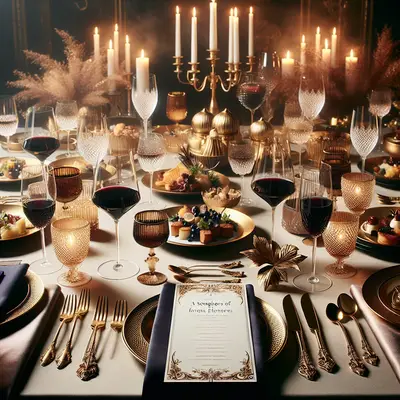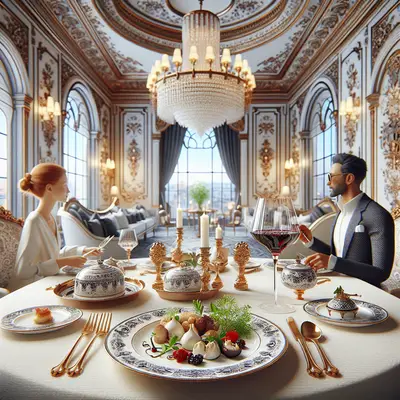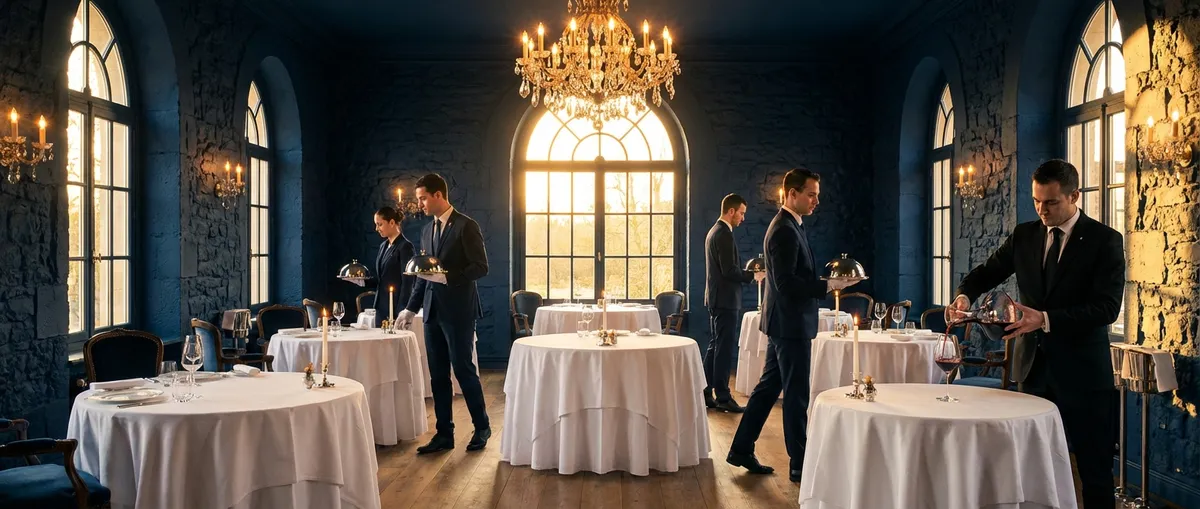
Fine dining, at its highest level, is less about plates and pairings and more about precision—an unspoken choreography in which every gesture, glance, and quietly placed glass is deliberate. For luxury travelers accustomed to exceptional experiences, the most memorable meals are rarely the loudest or the most photographed; they are the ones that feel uncannily attuned to who you are and how you like to move through the world. This is where fine dining evolves from “a nice restaurant” into a finely tuned instrument of hospitality, composed for a single evening and a very specific guest: you.
Below are five exclusive, often unspoken dimensions of world‑class dining that seasoned luxury travelers recognize instantly—and quietly expect.
1. The Art of Anticipation: Service That Arrives Half a Second Early
At the top tier of fine dining, true luxury is measured not in opulence, but in anticipation. The most discreet dining rooms are calibrated to register the slightest signal—a subtle shift in posture, the way you hold your glass, the tempo of your conversation—and respond before you have fully formed a request.
A well‑trained service team tracks the table as if it were a timepiece. Courses are delivered as your conversation naturally reaches an interlude rather than interrupting a key moment. Water is topped up while someone at your table is mid‑story, ensuring the action happens in your periphery, never at center stage. If you are left‑handed, place settings adjust without fanfare; if you favor a particular side of the dining room’s view, future reservations may quietly reflect that.
Elite travelers quickly notice when service moves from reactive (“Of course, I can get that for you”) to predictive (“We’ve prepared an alternative that might suit your tastes and timing”). This anticipatory standard is not about memorizing preferences; it is about training the room to read energy and respond with near‑telepathic precision.
2. Curated Acoustics: The Invisible Luxury You Feel, Not See
One of the most refined luxuries in a dining room is something you can’t photograph: its soundscape. Acoustics, when masterfully handled, are the difference between a beautiful room and a habitable one—especially for travelers who dine to connect, negotiate, or decompress.
In world‑class spaces, ceiling geometry, fabric density, and even the choice of tableware are engineered to modulate noise. Heavy linens absorb the clatter of cutlery, specially treated walls diffuse sharp sound, and chairs are chosen as much for their quiet movement as their silhouette. The music—if there is any at all—is set just below the level of conscious awareness, supporting privacy rather than performance.
For the frequent luxury traveler, this is an immediate tell. Can you speak in a low conversational tone and still be clearly heard across the table? Can you linger over a final glass without the room feeling frenetic or emptied of warmth? The most thoughtful restaurants treat acoustics as a first‑order design decision, not an afterthought, making the act of conversation itself feel like an indulgence.
3. The Precision of Pace: How Time Is Crafted Around Your Evening
Luxury travelers understand that the same tasting menu can feel wildly different depending on the tempo. The true luxury is not simply the number of courses, but the way the restaurant sculpts time around your night—without ever announcing that it’s doing so.
In refined dining rooms, pacing is individualized. Couples may experience a slightly elongated rhythm between courses, allowing their conversation to deepen and the evening to breathe. A business dinner might move at a subtly tighter tempo to respect schedules while still feeling gracious. Regular guests who prefer languid, extended meals may find that their second visits are paced more slowly, the kitchen and service teams having registered their preferences without a word.
Elite operations integrate the kitchen pass, the sommelier, and the dining room into a single tempo map of the night. Adjustments are constant: a short delay in one course might be offset by an interlude of champagne or a small, unscripted amouse‑bouche. For the seasoned traveler, the giveaway of a truly sophisticated establishment is that you never feel rushed, never feel forgotten, and never need to look at your watch until you are ready to leave.
4. Beyond the Pairing: When Beverage Programs Predict Your Curiosity
Wine pairings are now standard; what distinguishes an exceptional program is its ability to sense your curiosity and evolve with it. For luxury travelers who have tasted their way across continents, the most memorable pairings are no longer about showcasing labels—they are about revealing the chef’s narrative in a new dimension.
Top restaurants integrate their beverage philosophy into the architecture of the menu. This might mean fine, stem‑specific glassware chosen to complement not just the wine, but the room’s temperature and humidity. It might be a selective inclusion of non‑alcoholic pairings—house‑fermented teas, clarified juices, or infusions—that mirror the structure of wine, designed for guests who want a clear head without sacrificing sophistication.
The best sommeliers read not only preferences (“Burgundy, not Bordeaux”), but mood and intention. Are you in the frame of mind for a discovery journey of obscure producers, or do you want the quiet reassurance of a benchmark bottle served at exactly the right moment in the meal? For global travelers, the mark of a superlative beverage program is that it both respects your palate and gently expands its borders, never with bravado, always with precision.
5. Micro‑Details That Signal a World‑Class Operation
At the level where many restaurants appear flawless, true connoisseurs pay attention to micro‑details—the small, nearly invisible choices that differentiate the competent from the extraordinary.
These include the ergonomic reality of the chair (can you sit for three hours without shifting uncomfortably?), the exact temperature of the room as it fills, and the fluidity with which staff navigate tight spaces without so much as brushing a guest’s chair. It is the quiet orchestration of lighting: soft enough to flatter, bright enough to appreciate the plate, subtly adjusted as the evening moves from aperitif to digestif.
Menus may be printed on paper stock chosen not only for look but for tactile finesse, with typography that is legible in low light. Cutlery has a weight that feels deliberate in the hand, not merely decorative. Even the restrooms are held to the same standard of scent, sound, and cleanliness as the main room—an immediate barometer of operational discipline.
Luxury travelers recognize that these small decisions build a broader narrative: this is a place where nothing is accidental. And when nothing is accidental, you are free to relax completely, because every detail has been considered on your behalf.
Conclusion
For the discerning luxury traveler, fine dining is not a checklist of Michelin stars or coveted reservations; it is an ecosystem of details working in concert to create a single, unrepeatable evening. Anticipatory service, curated acoustics, intelligent pacing, deeply considered beverage programs, and a discipline of micro‑details are the quiet codes that signal you are in the hands of true professionals.
In a world saturated with spectacle, the most elevated dining experiences are often the least performative. They draw you in, not with noise, but with nuance—leaving you with the rarest souvenir of all: the sense that, for a few hours, time, space, and attention were crafted precisely around you.
Sources
- [The World’s 50 Best Restaurants – What Makes a Great Restaurant](https://www.theworlds50best.com/stories/News/what-makes-a-great-restaurant.html) - Industry perspective on the elements that define world‑class dining
- [Michelin Guide – Inspectors’ Tips on What They Look For](https://guide.michelin.com/en/article/features/what-michelin-inspectors-look-for) - Insight into the standards and nuances of top‑tier restaurant assessment
- [Harvard Business Review – The Psychology Behind Great Customer Service](https://hbr.org/2016/03/the-psychology-behind-great-customer-service) - Explores anticipation, perception, and experience design in service contexts
- [Cornell University School of Hotel Administration – Restaurant Atmospherics](https://scholarship.sha.cornell.edu/articles/1020/) - Academic research on how sound, lighting, and environment influence dining experiences
- [Wine Spectator – Inside the Modern Wine Program](https://www.winespectator.com/articles/how-restaurants-are-rethinking-their-wine-lists) - Overview of contemporary wine list curation and pairing philosophies
Key Takeaway
The most important thing to remember from this article is that this information can change how you think about Fine Dining.