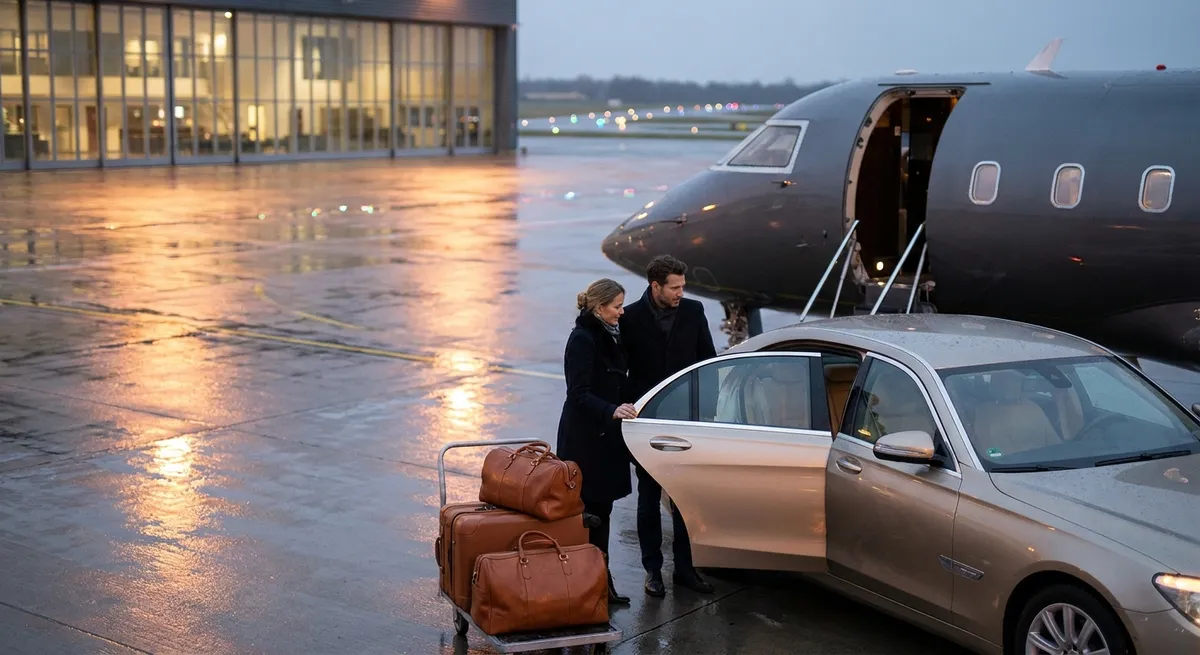
For the genuinely discerning traveler, luxury has shifted away from visible opulence toward something subtler, almost invisible: how your journey feels before, during, and after you land. The finest experiences are rarely loud; they are orchestrated, precise, and deeply personal. At Jet Ready, this is the arena we care about most—the quiet space where logistics become art and movement becomes a pleasure in itself.
Below are five exclusive, under‑discussed insights that sophisticated travelers use to transform every trip from “well organized” to effortlessly exceptional.
Designing the Journey Around Your Chronotype
Elite travelers increasingly design their itineraries around their own biological rhythm—not around airline schedules alone. Your chronotype (whether you’re naturally inclined toward early mornings or late evenings) significantly shapes how you experience time zones, jet lag, and recovery windows.
A chronotype-aware itinerary considers not just departure and arrival times, but where in your circadian curve your long-haul flight, first meeting, or first dinner falls. For example, an evening chronotype traveler flying east may choose a departure that allows for a naturally later sleep window on board, then a gentle, staggered entry into local time with a late check-in and twilight city walk, rather than a forced early-morning arrival with immediate obligations.
This elevated approach can include pre-flight light exposure planning, melatonin timing under professional guidance, and selecting aircraft cabins that allow true darkness and quiet when your physiology requires it. The result is subtle but profound: you arrive not merely “on time,” but in sync—ready to engage rather than endure.
Quiet Control: Private Protocols from Door to Suite
The most refined travelers don’t rely on chance once they lock their front door; they operate on discreet personal protocols that make the entire journey feel private, even within public infrastructure.
This often begins with a “door-to-suite script”: a pre-defined sequence for every stage—residence pickup, private terminal or VIP meet-and-assist, immigration fast-tracking, baggage interception, and in-suite check-in upon arrival. The choreography is consistent regardless of city or continent, so the traveler’s cognitive load is almost zero. They are not figuring things out; they are moving through a polished, familiar ritual.
True luxury also shows up in contingency design. Quiet control means having a preferred back-up aircraft type, an alternate routing rule (for example, never connecting through certain congested hubs), and a standing instruction set for ground teams if delays cross a given threshold. When executed well, you rarely notice these layers—they simply manifest as a trip where, mysteriously, nothing ever seems to go wrong.
The Art of Curated Micro-Transit
Most itineraries focus on flights and hotels; the truly elevated ones obsess over everything that happens in between. Micro-transit—the 10 to 60 minutes between major waypoints—is often where a trip feels fragmented or, conversely, exquisitely seamless.
Sophisticated travelers view every transfer as a stage for texture and calm. That could mean arranging a specific make and model for airport-city transfers that matches your preferred seat ergonomics and ambient noise profile, or ensuring the vehicle’s cabin scent, temperature, and in-car refreshments are tuned to your personal tastes and time of day. In city centers, they may avoid generic rideshares in favor of vetted chauffeurs who understand local traffic rhythms, security preferences, and unspoken etiquette.
On longer itineraries, micro-transit becomes a mode of gentle immersion: an iconic wooden boat rather than a standard shuttle in Venice, or a well-appointed vintage car for a short transfer in a historic European city. These brief segments, when curated intentionally, create a continuous narrative of refinement rather than a series of logistical gaps.
Bespoke Wellness in Transit, Not Just on Arrival
Luxury wellness is no longer confined to the resort spa; it begins the moment you step into motion. The most attuned travelers treat transit itself as a controlled wellness environment, integrating medical-grade insight with indulgent comfort.
This can involve pre-trip consultations with travel-savvy physicians or performance specialists, yielding a tailored in-flight hydration and nutrition plan, targeted movement routines suited to aircraft cabins, and evidence-based jet lag mitigation strategies. Suites or first-class cabins become personalized sanctuaries: moisture-maximizing skincare regimens, curated soundscapes for deep sleep, and specific breathing exercises to counter cabin pressurization and stress.
On arrival, the wellness continuum carries forward with timed exposure to natural light, structured recovery sessions (contrast bathing, gentle mobility work, guided stretching), and subtle dietary choices that support circadian realignment. The luxury is not only in how you are pampered, but in how expertly your body is protected from the usual toll of distance.
Cultural Briefing as a Private Intelligence Layer
For those moving frequently among global capitals, cultural fluency is as valuable as a suite upgrade. The most sophisticated travelers engage in discreet, high-level cultural briefings that go far beyond standard destination guides.
Before arrival, they receive tailored intelligence: current social nuances, the tone of local headlines, unspoken norms in high-end restaurants and business settings, and even how local luxury is currently being expressed—understated, exuberant, or somewhere in between. This briefing often extends to wardrobe guidance for specific environments, local gifting etiquette, and conversational touchpoints that demonstrate both respect and awareness.
This is less about avoiding faux pas and more about entering a city as if you have always belonged there. When combined with trusted local fixers or concierges who understand your personal sensibilities, the result is a form of invisible membership: you move through each destination not as a visitor with status, but as a thoughtful participant in its most refined spaces.
Conclusion
For the traveler who values nuance over noise, luxury is no longer defined by excess; it is defined by precision. When your chronotype guides your timetables, your door-to-suite journey follows a personal protocol, every transfer is curated, wellness is woven into motion, and culture is treated as a private intelligence layer, travel stops being something you endure between locations.
It becomes, instead, a quiet expression of who you are—measured, intentional, and exquisitely prepared for whatever awaits at your next destination.
Sources
- Centers for Disease Control and Prevention – Jet Lag and Sleep - Explains jet lag, circadian rhythm disruption, and evidence-based mitigation strategies
- National Institutes of Health – Circadian Rhythms - Provides foundational insight into chronotypes and biological clocks
- Harvard T.H. Chan School of Public Health – Healthy Travel Tips - Offers research-informed guidance on wellness and health in transit
- International Air Transport Association (IATA) – Passenger Facilitation - Discusses streamlined airport processes, VIP services, and passenger experience design
- World Tourism Organization (UNWTO) – Tourism and Culture Synergies - Explores the importance of cultural understanding and context in global travel
Key Takeaway
The most important thing to remember from this article is that this information can change how you think about Luxury Travel.