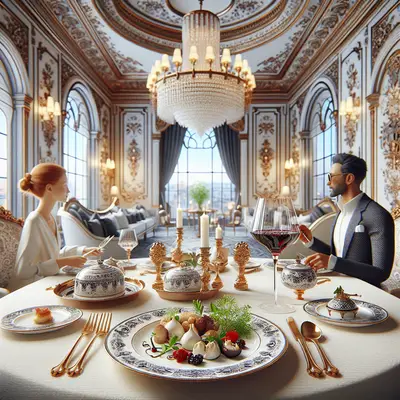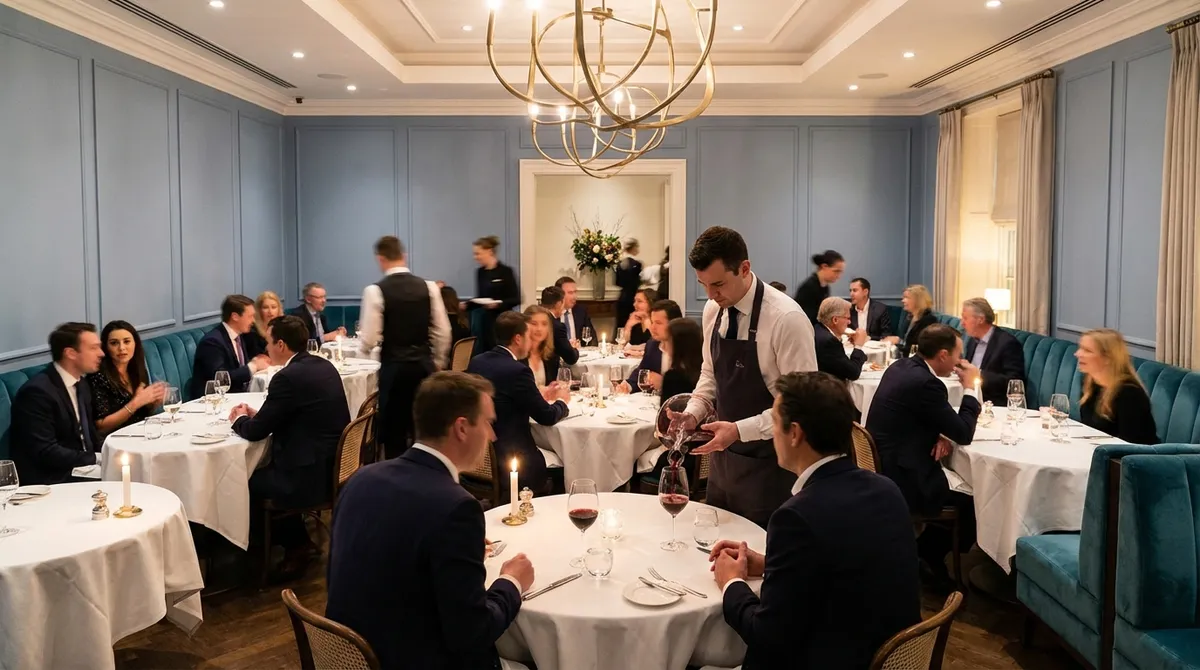
Fine dining at the highest level is no longer defined by white tablecloths and tasting menus alone. For the well-traveled guest, excellence reveals itself in far subtler gestures—the way light falls on porcelain, the cadence of service, the quiet precision behind every pour. In the most accomplished dining rooms, luxury lives in the details you almost miss, yet never forget.
This is the world Jet Ready’s audience knows well: where the destination matters, but discretion, orchestration, and intent matter more. Below, we explore five exclusive insights that distinguish an exceptional fine dining experience from a merely impressive one—nuances that seasoned luxury travelers will recognize instantly.
1. The Architecture of Time: Pacing as a Form of Luxury
In a truly elevated dining room, time is the most precious course. The finest restaurants do not simply serve food; they choreograph tempo. Courses are not rushed, yet never languish. Plates arrive with the quiet confidence of a team reading the table’s energy in real time: a brief pause after a particularly rich dish, a slightly accelerated pace for a business dinner, a softened rhythm for a late seating.
The most accomplished teams anticipate your internal clock without intrusion. They notice how quickly you move through a glass of wine, how engaged you are in conversation, whether you are heading to a performance afterward, or recovering from a long-haul flight. Pacing becomes a form of personalized comfort—expanding or contracting the evening around you as needed.
This is where some of the world’s great restaurants distinguish themselves. They invest as much in service training and floor management as they do in sourcing ingredients. The guest rarely sees the back-of-house communication that governs this timing—quiet signals between sommelier and kitchen, subtle nods from host to captain—but they feel it. When you leave a three-hour dinner somehow energized rather than depleted, it is not an accident; it is time, engineered with care.
2. The Invisible Dialogue Between Chef and Sommelier
For luxury travelers accustomed to grand cellars and deep lists, a “good” wine program is table stakes. What separates the truly exceptional is the invisible conversation between plate and glass—one that begins long before you sit down. In refined dining rooms, the chef and sommelier think in tandem, crafting tasting arcs where acidity, texture, and aromatics are orchestrated as precisely as flavor.
You may notice this in the way a pairing evolves over the course of the meal. Rather than a predictable escalation from sparkling to white to red to sweet, the sequence might gently oscillate: oxidative notes to echo smoked elements in a dish, a saline white to frame shellfish, a lighter red with higher acidity to refresh after a particularly rich course. For the seasoned guest, these choices reveal a philosophy, not just a cellar.
Another hallmark is thoughtful restraint. In destinations known for marquee labels, a sophisticated program may lean into lesser-known producers, micro-terroirs, or mature vintages poured by the glass. The aim is not to impress with price tags, but with precision. The sommelier’s true skill lies in reading your mood and palate—sensing whether tonight calls for discovery, comfort, or celebration—and curating accordingly.
In the most polished rooms, this partnership extends beyond pairings. The bar team understands the chef’s flavor language; pre-dinner cocktails are calibrated not to overpower the meal to come. Non-alcoholic pairings are treated with equal seriousness, with infusions, ferments, and teas designed as considered counterparts rather than afterthoughts. For the global diner, such alignment is one of the clearest signals that a restaurant understands hospitality as a total composition.
3. Sourcing as Narrative: Knowing More Than Just “Local”
At the uppermost tier of dining, “locally sourced” has evolved from a trend into a baseline expectation. What distinguishes a truly refined experience is not proximity, but perspective—how a restaurant uses its ingredients to tell a coherent story about place, season, and craft. The best teams are not simply buying from local farms; they are in active dialogue with them.
Luxury travelers will recognize this in subtle ways: a server who can speak with ease about a specific fisherman’s methods, or how a single grower’s vegetables taste different in early versus late autumn. It might appear in how a menu handles scarcity—not apologizing for limited availability, but embracing it as part of the narrative of the evening. A particular shellfish may appear only for a few weeks a year; a dessert might shift nightly based on which fruit arrived at its peak that morning.
There is also a new form of discretion at play. The most sophisticated restaurants resist turning sourcing into theater. Instead of grandiose monologues about every purveyor, they edit carefully—offering detail when curiosity is expressed, remaining graceful and unhurried when it is not. For a guest who has traveled extensively, the luxury lies in the option: the ability to dive deep into sourcing conversations, or simply enjoy the experience in serene quiet.
Equally telling is how a restaurant addresses sustainability without sermonizing. You may notice an intelligent use of secondary cuts, an elegant dish that reimagines trims and offcuts, or a menu that shifts with climate realities rather than clinging stubbornly to past signatures. For the discerning diner, these choices signal a kind of intellectual rigor—a restaurant that understands its role in a broader ecosystem and designs around it.
4. The Texture of Comfort: Micro-Details Guests Remember
At this level, comfort is engineered with the same seriousness as cuisine. The finest dining rooms understand that your memory of a meal is shaped as much by how you feel in your chair at 10 p.m. as by the complexity of the sauce on your plate. Luxury travelers are particularly attuned to this spectrum of micro-details—the ones that vanish when they are right, and dominate when they are wrong.
Consider acoustics. The world’s most considered rooms balance lively atmosphere with conversational privacy. Materials, ceiling heights, and table spacing are orchestrated to create a hum rather than a roar, ensuring you can hear your companion without effort. Lighting is equally deliberate: flattering without being dim, focused enough to appreciate plating, yet diffused enough to soften edges and encourage lingering.
Even the weight of a water glass, the temperature of plates, or the ergonomics of cutlery can become quiet barometers of care. The most elevated operations test these elements repeatedly: how a long-handled spoon feels during a tasting menu, how a banquette supports a guest during a multi-hour seating, how a napkin fabric behaves with fine fabrics and delicate jewelry.
For the global traveler, seasonal and cultural sensitivity stands out as well. In tropical climates, impeccable air flow without aggressive cold air; in colder destinations, a thoughtful cloakroom experience that respects valuable outerwear. Subtle accommodation—discreet bag stools, a low-profile charging solution if needed, a backup reading-glasses menu for those who forgot theirs—signals a level of attentiveness that far exceeds the obvious.
5. The Exit: How the Best Restaurants Conclude a Journey
In lesser dining rooms, the meal ends with the bill. In the best, the conclusion is a final act, as composed as the first course. Luxury travelers often recall not just what they ate, but how they were allowed to leave: whether the final moments felt rushed, transactional, or gracefully unhurried.
One hallmark of excellence is the ability to adjust the final stretch of the experience without disturbing its integrity. If a guest indicates an early departure, dessert and mignardises might be re-framed—perhaps a condensed plating, or a portion packaged elegantly for later, without diminishing the sense of closure. Conversely, if the restaurant senses that you are content to linger, coffee service and digestifs may unfold at a more generous pace, transforming the end of the meal into a prolonged, quiet coda.
The best teams also understand the power of memory. A handwritten note accompanying a favorite petit four you admired, a discreet remembrance of your preferred tea from a previous visit, or a driver notified in advance that you are en route—these gestures reveal an ecosystem of care that extends beyond the table. The bill presentation, too, is telling: efficient, unobtrusive, timed to the natural pause in conversation rather than imposed upon it.
For frequent travelers, the most meaningful luxury is often continuity. On a return visit months later, the host may recall where you chose to sit, or the fact that you prefer still water and a quieter corner. In an era where data can feel intrusive, the most refined dining rooms employ memory with elegance—never as a performance, always as a form of ease.
Conclusion
For those who move easily through the world’s best restaurants, luxury is no longer about spectacle. It is about intelligence, coherence, and a kind of practiced calm. The five insights above—the architecture of time, the chef–sommelier dialogue, sourcing as narrative, micro-comforts, and the art of departure—form a quiet lexicon that distinguishes exceptional dining from the merely impressive.
In this realm, refinement is not announced; it is inferred. A dining room that understands this speaks fluently to the global traveler: not in grand gestures, but in small, exacting decisions that allow you to relax, to trust, and ultimately, to remember.
Sources
- [The World’s 50 Best Restaurants – How the List Is Compiled](https://www.theworlds50best.com/facts/how-the-ranking-works) - Overview of evaluation criteria and global perspectives on top-tier dining
- [Michelin Guide – Official Site](https://guide.michelin.com) - Insights into how Michelin assesses service, cuisine, and overall experience
- [Harvard T.H. Chan School of Public Health – Sustainable Food Systems](https://www.hsph.harvard.edu/nutritionsource/sustainability/) - Context on sustainability and sourcing practices in modern gastronomy
- [Cornell University School of Hotel Administration – Restaurant Service Research](https://scholarship.sha.cornell.edu/hospitalityfaculty/) - Academic resources on service design, guest experience, and restaurant operations
- [National Restaurant Association – Trends in Fine Dining](https://restaurant.org/research-and-media/research/industry-insights/) - Industry data on evolving expectations in premium and fine dining segments
Key Takeaway
The most important thing to remember from this article is that this information can change how you think about Fine Dining.