Fine dining, at its highest level, is no longer about theatrical excess or visible opulence. For the serious traveler, it is a discipline of detail, a quiet choreography where architecture, service, and flavor speak in hushed, confident tones. In the best rooms, you do not simply consume a meal; you inhabit a point of view.
For luxury travelers who curate their itineraries around truly exceptional tables, the difference between “very good” and “unforgettably precise” lies in subtleties that most guests will never notice—but that you should.
Below are five exclusive, under‑discussed insights that separate a merely expensive dinner from a genuinely world‑class experience.
1. The Texture of Time: How Elite Restaurants Control Your Evening
In a serious dining room, the most precious ingredient is not truffle or caviar—it is time. The way a restaurant manages the tempo of your evening reveals its true caliber.
Observe the sequence from the moment you cross the threshold. Are you left waiting awkwardly with your coat half‑removed, or are you transitioned seamlessly from doorway to welcome to seat, as if the space were anticipating your arrival? The finest operations engineer micro‑intervals: the precise moment your water is poured, how long you rest between amuse‑bouche and first course, when the sommelier appears (never hovering, never absent).
Equally telling is how they respond when you quietly shift the rhythm yourself. If you linger over a conversation, do courses begin to feel rushed, or does the pacing subtly readjust so that your evening lengthens without any sense of delay? At this level, a long dinner should feel expansive, not interminable—like an elegantly edited film, not an overstuffed director’s cut.
For luxury travelers accustomed to first‑class cabins and private transfers, this mastery of time is the dining equivalent: invisible when executed perfectly, jarring when mishandled.
2. The Unspoken Dialogue Between Kitchen and Glass
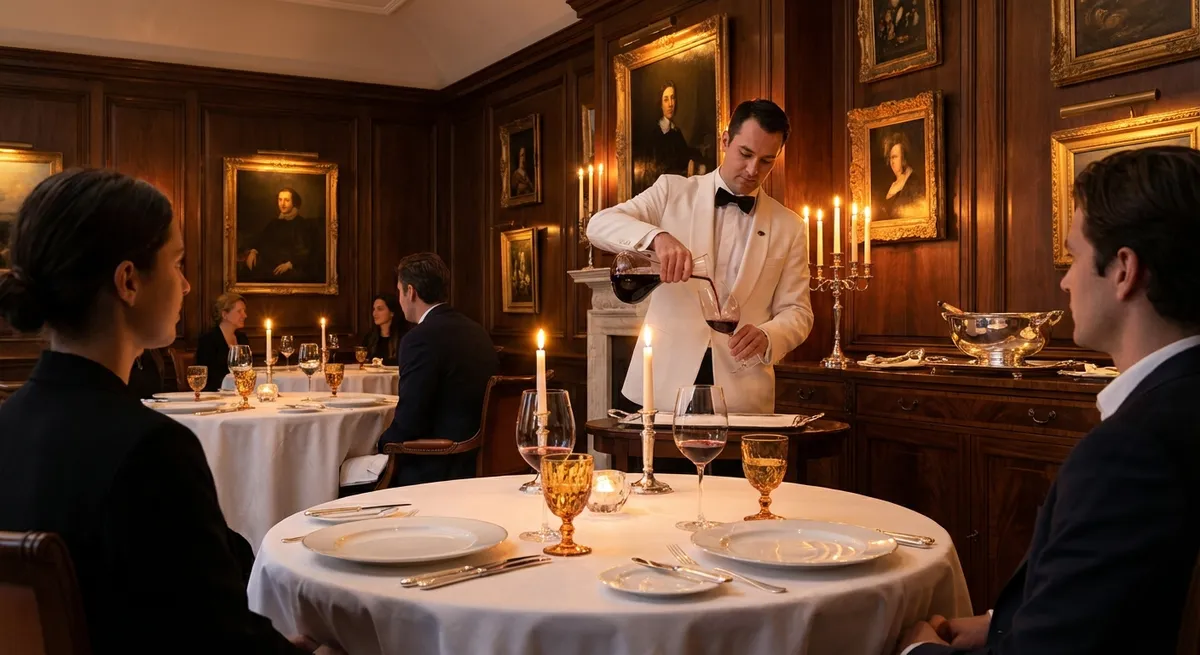
Wine pairings are easy to romanticize, but true alignment between kitchen and cellar goes far beyond “white with fish” and “red with meat.” In elite dining rooms, the choice of what is poured—and when—is a quiet dialogue between chef and sommelier that you, as a discerning guest, can learn to read.
Pay attention to the structural relationship between what is on the plate and what is in the glass: acidity against cream, salinity against minerality, smoke against sweetness. The most sophisticated pairings rarely aim for simple harmony; they create a controlled tension that heightens both elements. A slightly oxidative Champagne with a clean, saline crudo, for instance, can make the dish taste more vivid while revealing layers in the wine you would never meet on its own.
Ask not just what you’re drinking, but why it sits beside that particular course. How does this specific vintage, this particular producer, this style of vinification interact with the chef’s chosen flavors? In top rooms, the sommelier should be able to articulate the pairing in terms of texture, structure, and even rhythm—words like “lift,” “length,” and “arc” that describe how the combination unfolds over a bite, not just how it tastes in isolation.
For frequent travelers, this awareness becomes a transferable skill: whether you are in Tokyo, Copenhagen, New York, or São Paulo, you can quickly distinguish between a wine list curated for effect and one curated for a serious, thoughtful conversation with the kitchen.
3. When Service Becomes Architecture
In lesser restaurants, service is a function: food arrives, plates are cleared, checks are presented. In the finest dining rooms, service is a form of architecture—structuring your experience as deliberately as the walls and lighting.
Watch how staff move relative to your table. Are there clear lines of approach, consistent entry points, and considered distances kept from your personal space? High‑end restaurants often design service routes as meticulously as they design the menu, so that your table is tended to from the same angle, with the same hand, maintaining an almost architectural symmetry.
The most refined rooms deploy a hierarchy of touchpoints rather than a single server for everything. One person might handle wine and water, another handles breads and small details, a third appears only at key narrative moments—the presentation of a signature course, a transition from savory to sweet, or an unexpected interlude. You are never confused about whom to address, yet you never feel observed.
For luxury travelers, this is a powerful indicator. If a restaurant can choreograph human movement with this level of discipline while maintaining warmth and natural conversation, you can be confident that the same rigor is applied in the kitchen—even if you never see it.
4. The Geography of the Plate: Reading a Chef’s Sense of Place
At the top tier of dining, “local” and “seasonal” are baseline expectations, not marketing points. What separates a serious destination restaurant is how persuasively it expresses its location on the plate—how it distills a city, a coastline, a landscape into a sequence of flavors and textures.
Begin by asking: if you removed the restaurant’s name from the menu, could you still guess where in the world you are from the dishes alone? A tasting menu in the Alps should not feel interchangeable with one in coastal Mexico or urban Hong Kong. The best chefs do not merely source local ingredients; they filter them through a personal, often intellectual lens that reflects both place and perspective.
Look for subtle signals: the minerality of local water influencing bread and sauces, the use of regional preservation techniques, unexpected references to nearby markets, forests, or tides. Even the bread program can be revealing—whether grains reflect regional agriculture, or butter and oils tell a story of surrounding farms and producers.
As a frequent traveler, you may find your most striking food memories are not the grandest dishes but the quietest ones: a small course that captures morning mist on local produce, or a single bite that feels like stepping into the region’s landscape. The ability to evoke that sense of where you are—without cliché or pastiche—is one of the clearest signs of a world‑class kitchen.
5. The Art of the Exit: How Exceptional Restaurants Linger After You Leave
Luxury travelers often focus on the arrival: the welcome, the first glass, the opening notes of the meal. Yet the most discerning indicator of excellence is sometimes what happens after you stand up from the table.
In elite dining rooms, the exit is curated with the same precision as the entrée. Your check appears at the exact moment you are ready—never implied, never withheld. The transition from table to door is unhurried but efficient, with a series of graceful handoffs: a final sip, a quiet word of thanks from a senior staff member, your coat presented already brushed and arranged.
But the true mark of refinement is what extends beyond the physical space. Thoughtful follow‑ups—a personalized note referencing a specific dish you admired, a digital copy of the wine list you inquired about, a discreet remembrance of your preferences on your next visit—signal a restaurant that operates with a long‑term view of its guests, not a single transaction.
For a global traveler, these post‑visit gestures become especially valuable. They create continuity between cities, trips, and years, allowing you to build an ongoing dialogue with dining rooms scattered across the world. Over time, the very best restaurants begin to feel less like destinations and more like private salons you occasionally reenter—each time finding that they remember not just who you are, but how you like to experience the table.
Conclusion
For those who travel seriously, fine dining is no longer a trophy to collect; it is a discipline to understand. The true luxury is not in conspicuous displays or headline ingredients, but in the quiet assurance that every element—time, pairing, movement, place, and memory—has been considered with uncommon care.
When you learn to read these subtle signals, you move beyond simply booking acclaimed restaurants. You begin curating a personal constellation of dining rooms around the world that speak your language of refinement—rooms where excellence is not announced, but calmly, confidently assumed.
Sources
- The World’s 50 Best Restaurants – About the Awards - Overview of criteria and philosophy behind global restaurant rankings
- Michelin Guide – How We Select Our Restaurants - Insight into how inspectors evaluate fine dining establishments
- Harvard T.H. Chan School of Public Health – The Nutrition Source: Dining Out - Context on restaurant choices and considerations for guests
- The Culinary Institute of America – About CIA - Background on professional culinary training and standards
- Wine & Spirit Education Trust (WSET) – What Is Food and Wine Pairing? - Foundations of pairing principles that underpin serious wine programs
Key Takeaway
The most important thing to remember from this article is that this information can change how you think about Fine Dining.