There is a particular quiet that exists only behind certain doors. It is found not in grand lobbies or on crowded terraces, but in the thoughtful distance between a guest and the world beyond—curated with intent, delivered without spectacle. Within the landscape of exclusive resorts, this quiet has become the new measure of distinction. For the traveler who values refinement over display, access over exposure, and precision over abundance, the true luxury is no longer where you are, but how discreetly and intelligently the experience bends around you.
Where Fewer Keys Exist: The Art of Controlled Capacity
In the upper tier of hospitality, the guest count is not an operational number; it is a design principle.
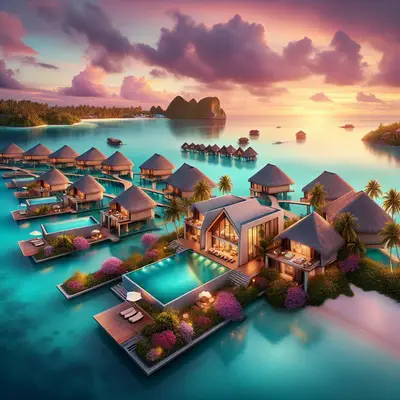
The most considered resorts now work with deliberately constrained capacity—sometimes fewer than a couple dozen keys, often arranged not as rooms but as standalone villas, casitas, or pavilions with private access and sightlines carefully engineered to avoid overlap. The objective is not emptiness, but intentional space: a sense that every pathway, pool edge, and terrace has been measured against the question, “How little accidental proximity can we sustain?”
This approach allows for an almost residential rhythm. Pool loungers are not reserved with towels at dawn; they simply wait, because the resort knows precisely who is there and how they live their days. Restaurants operate on curated seatings rather than open chaos, ensuring that service teams know, in advance, which guests will likely arrive late from a dive, a tasting, or a helicopter transfer.
For the discerning traveler, this controlled capacity is not just about privacy; it is about tempo. With fewer people, the resort can move at the speed of your preferences rather than the friction of a crowd.
Exclusive Insight #1: When evaluating an exclusive resort, ask not only the number of keys, but how those keys are distributed—standalone residences, separate arrival paths, private pools, and spatial zoning reveal far more about the level of privacy than star ratings or brand names ever will.
The Invisible Handshake: Personalization Without Performance
True personalization in luxury travel has moved beyond remembering your preferred pillow or sparkling water brand. In the most refined retreats, personalization is no longer a performance; it is an invisible handshake that starts before you arrive and continues without overt announcement.
Pre-arrival questionnaires—handled discreetly, often through a private liaison rather than a generic form—allow the resort to choreograph your stay with microscopic accuracy. A villa is pre-set to your preferred ambient temperature and lighting tones; the mini-bar is edited, not stocked; a particular tea that you only ever order on your second morning appears unasked, because someone reviewed your historical stays across the brand’s portfolio.
Equally telling is what does not happen. Staff do not recite your biography back to you. Instead, they appear at the edges of your experience, with precisely what you require, at an interval that anticipates need without intruding. Preferences are acted upon but rarely referenced.
This is personalization as a quiet algorithm: sensitive, observant, and uninterested in applauding itself.
Exclusive Insight #2: Refined travelers increasingly look for brands with a global guest intelligence system—able to learn, remember, and apply preferences across properties—while still maintaining data privacy and discretion around how that information is used.
Curated Remoteness: Connected, Yet Deliberately Apart
Exclusive resorts no longer rely solely on geography for a sense of awayness. Remoteness is now as much a conceptual experience as a physical one: the carefully curated feeling of being separate from the noise, even when you remain within a short transfer of a major hub.
Many ultra-high-end retreats are positioned with precise intent: accessible by helicopter, seaplane, boat, or private terminal, yet close enough to a sophisticated medical center or major city to avoid genuine isolation. The approach is choreographed—private arrivals docks, secure hangars, secondary entrances—so that the journey itself feels like the calibration from public to private.
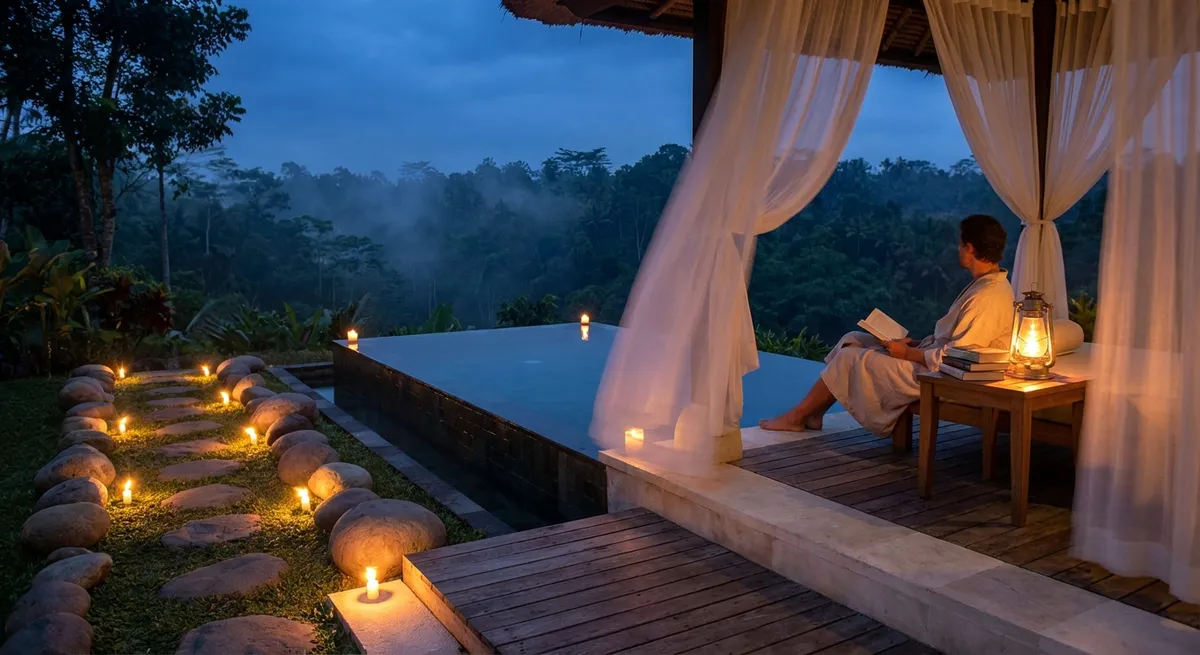
Within the property, “remoteness” is crafted through controlled lines of sight, acoustic landscaping, and zoning. Pathways curve to obscure other residences. Beachfronts feel singular, even if shared. Nature is not just scenery but a buffer—dense foliage, elevation, and water all functioning as elegant boundaries.
The modern luxury traveler is no longer impressed simply by distance from civilization; they are reassured by the duality: secluded when desired, immediately connected when needed.
Exclusive Insight #3: The most astute guests now inquire about both remoteness and contingency—distance to top-tier medical facilities, private-jet handling, secure helipads, and emergency access—understanding that true luxury blends serenity with quiet readiness.
Private Infrastructure: When Amenities Belong Only to the Few
There is an emerging distinction between resorts that offer access to premium amenities, and those that own them outright or control them exclusively.
For the traveler who values privacy, infrastructure has become a quiet filter. Private marinas where yacht berths are allocated only to in-residence guests; members-only golf courses with capped play per day; wellness facilities where external day passes simply do not exist. These are not marketing flourishes—they are architectural investments that define the texture of your stay.
In wellness, the difference is especially pronounced. Rather than a busy spa menu, select properties now channel their resources into a small number of deeply resourced programs: medical-grade diagnostics, visiting specialists, resident practitioners, and immersive, multi-day protocols conducted in seclusion. The spa is not a department; it is a self-contained sanctuary with its own rhythm, sometimes with standalone wellness residences that separate you from any sense of “hotel.”
Similarly, culinary experiences may privilege private kitchens, chef’s counters, and off-menu evenings composed for a single party, with provenance and technique curated to your preferences rather than presented as a spectacle to the restaurant at large.
Exclusive Insight #4: Savvy guests look beyond brand names and ask direct questions about exclusivity of use—Who else can access the marina, the course, the spa programs, the private beach? The answer often reveals more about the property’s true positioning than any brochure language.
Discretion as a Design Language
For the most considered resorts, discretion is not a policy statement—it is embedded in the architecture, staffing, and even the visual identity of the brand.
You see it first in what is absent: no oversized external signage, no public-facing restaurant drawing non-resident footfall, no lobby that serves as a spectacle. Arrival is quiet, often via a private drive, courtyard, or gatehouse where check-in happens en suite or within a private salon rather than at a desk.
Staff training emphasizes presence without narrative. Names are used sparingly, tones are modulated, and uniforms are chosen to recede subtly into the environment rather than turn the service into theatre. Photographic policies often discourage or restrict public-facing content in key areas, not to be difficult, but to maintain a sanctuary-like ethos for guests who consciously seek spaces beyond the social feed.
Even the digital footprint is considered. Reservation channels may be restricted, imagery may be intentionally understated, and certain experiences might be available only by direct conversation, never by online booking. For a particular tier of guest, that level of opacity is not a barrier but a signal.
Exclusive Insight #5: One of the most reliable indicators of a truly discreet resort is how it handles visibility—online, on-property, and in its approach to non-resident guests. The less it needs to be seen, the more it tends to prioritize those who value not being seen.
Conclusion
The lexicon of luxury travel has shifted. Opulence, once measured in visible abundance, is increasingly defined by what remains unseen: the guest list, the staff choreography, the infrastructure that protects your time, your privacy, and your preferences with almost forensic precision.
Within this evolution, exclusive resorts have moved from being destinations to becoming finely tuned ecosystems—crafted for those who prefer their experiences highly edited, their movements lightly shielded, and their presence understood but never displayed. For the traveler who expects the world to adjust quietly around them, the new hallmark of a premium stay is simple: you leave feeling that everything important was arranged, and almost nothing important was announced.
Sources
- Forbes Travel Guide – What Makes a Hotel Truly Luxurious – Overview of criteria used to evaluate top-tier luxury properties, including service and privacy standards
- Virtuoso – The Future of Luxury Travel – Insight into evolving expectations of high-net-worth travelers and emerging trends in exclusivity
- Condé Nast Traveler – What Luxury Travelers Want Now – Examination of post-pandemic shifts in demand toward privacy, space, and bespoke experiences
- Aman – Brand Philosophy – Example of a luxury brand’s approach to low-density design, privacy, and personalized service
- Four Seasons Private Retreats – Illustrates the move toward standalone villas and residences within resort settings for increased exclusivity and control over space
Key Takeaway
The most important thing to remember from this article is that this information can change how you think about Exclusive Resorts.