Fine dining is no longer about ostentatious rooms and silver cloches paraded through a dining room. For the discerning traveler, it has become a quiet stage where artisans, architects, producers, and guests collaborate in a kind of edible performance. The spotlight is subtle, the gestures are precise, and luxury reveals itself not in spectacle, but in intention. For those who cross borders in search of rare experiences, understanding these nuances turns dinner into a deeply personal ritual rather than a mere reservation.
Below are five exclusive insights—less obvious than a Michelin star, more telling than a famous chef’s name—that signal a dining experience crafted for the truly particular guest.
1. The Architecture of Arrival
In a genuinely elevated restaurant, the experience begins before the menu appears. It starts with the choreography of arrival.
Notice the thresholds you cross: a discreet passageway, a softened change in lighting, the suppression of street noise, and the barely perceptible adjustment in temperature. Consider the way you’re greeted—by name, ideally without an obvious prompt; with a tone that matches the room, neither intrusive nor rehearsed. The finest dining rooms often calibrate the journey from door to table as carefully as they plate a dish.
For luxury travelers, this is where a restaurant’s philosophy quietly declares itself. A space that has been acoustically tuned so you can converse at a normal volume, a lobby or bar that acts as a decompression zone, thoughtful seating that avoids direct drafts or heavy foot traffic—these are architectural decisions made with the guest’s nervous system in mind. The transition from the outside world into the dining room should feel like slipping through a veil into a more deliberate tempo of time.
When you feel your shoulders drop before you’ve even seen the menu, you’re in the presence of intentional design, not mere decoration.
2. Provenance as Narrative, Not Marketing
Every ambitious restaurant now speaks the language of “local” and “seasonal.” For the serious gourmet traveler, such claims are no longer differentiators—they are minimum standards. What truly distinguishes a fine dining experience is how the story of provenance is woven into the meal with restraint and integrity.
In expert hands, provenance is not a flood of name-dropping farmers and foragers. Instead, it’s a curated narrative: a fisherman whose catch defines the menu’s rhythm, a century-old mill responsible for the flour that gives a bread course its haunting flavor, a rare varietal of citrus grown on a single hillside that appears only for a brief moment each year. The luxury is not merely that these producers exist; it’s that the restaurant has built long-term, symbiotic relationships with them.
The most sophisticated menus illuminate origin only where it enriches perception. A server might simply tell you that the greens on your plate were picked at dawn and are on your table before they spend even 24 hours out of the soil. The effect is subtle but powerful, anchoring the dish in time and place. For the well-traveled guest, these quiet revelations transform dinner into a geographic and cultural map, rendered in flavor.
When provenance shifts from slogan to lived ecosystem, you’re no longer just eating; you are momentarily inhabiting a terroir.
3. The Precision of Pace: Time as a Luxury Ingredient
In the world’s most thoughtful dining rooms, time is treated as a malleable element—stretched, compressed, and modulated to fit the individual table. This is an invisible service art that seasoned travelers quickly learn to recognize.
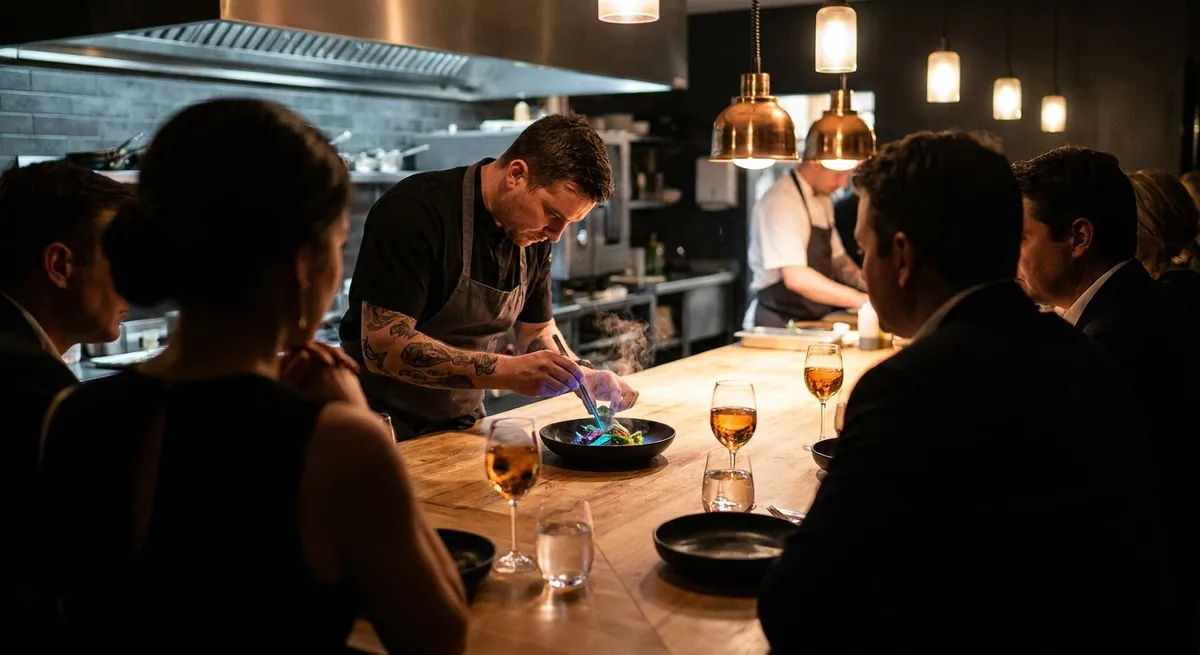
A truly premium establishment reads your cadence within the first course. Are you conversing intensely, or watching the room? Is this a celebration, a negotiation, or a quiet retreat after a long international flight? Courses will appear with an almost uncanny intuition: the next plate arriving just as your conversation naturally dips, or being held back without you needing to request a pause.
The room’s tempo is orchestrated like a symphony. Tables at different stages of their meal seem to progress without collision; there are no bottlenecks where half of the dining room waits for the same course. If you subtly signal a desire to linger—a second glass of champagne before the first plate, a request to revisit the wine list—the team responds by recalibrating the entire sequence, not merely delaying the next dish.
Luxury travelers recognize that this mastery of pacing requires a high-caliber, well-trained staff, a tightly coordinated kitchen, and a leadership team who understands that true indulgence lies not only in what is served, but in how generously time is handled.
4. A Wine Program That Listens, Not Lectures
For many fine-dining guests, the wine list can be a moment of either delight or intimidation. In a genuinely elite dining room, the experience of choosing a bottle feels like a conversation with a curator, not an exam with a gatekeeper.
The hallmark is not an encyclopedic cellar for its own sake, but a program with a point of view: perhaps a deep vertical of a single region, an emphasis on small, cult producers, or a deliberate blend of classic estates and avant-garde winemakers. The list should tell a story that complements the chef’s philosophy rather than compete with it.
What sets top-tier establishments apart is the sommelier’s ability to translate your preferences—even when they are imprecise—into a precise recommendation. If you say, “I’d like something that feels like a great Burgundy, but I’m curious to explore something less obvious,” a skilled sommelier might guide you to a volcanic Italian pinot noir or an elegant, under-the-radar cru Beaujolais. The pleasure lies not only in the wine itself, but in discovering something you didn’t know to ask for.
Equally important is how the team handles non-alcoholic pairings—a growing priority for high-end travelers. Thoughtful temperance pairings that incorporate teas, fermentations, infusions, and house-made sodas signal a commitment to hospitality beyond tradition. When abstaining feels as elevated as ordering a grand cru, you know the restaurant regards every guest with equal care.
5. The Afterglow: What Lingers Long After the Bill
The world’s finest restaurants understand that the experience does not end when the last plate is cleared. There is an afterglow to a truly premium evening, and it is in this quiet epilogue that their sophistication becomes unmistakable.
It might be the way the team manages your departure—your coat warmed, a car already summoned, the door held at precisely the right second so you step straight into a waiting vehicle. Perhaps it’s a small gesture handed to you on the way out: a delicate pastry for the following morning, a printed card with the names of the producers featured in the meal, or a simple, handwritten note referencing a detail you casually mentioned earlier in the evening.
For the frequent traveler, these touches build continuity across borders. A restaurant that remembers your preferred water temperature from a previous visit months or even years ago, or that reaches out before your next journey with a quiet note—“We’d be honored to welcome you back; the white asparagus you loved is in season for just another week”—tilts the experience from outstanding to indelible.
The true test is what remains in your mind days later. Not just the standout dish, but the sensation of having been anticipated, understood, and gently surprised. In luxury, memory is the ultimate currency—and the most refined dining rooms invest in it wisely.
Conclusion
For those who travel not merely to change location but to deepen perception, fine dining offers a rare kind of theater—one in which you are both audience and participant. Beyond stars, rankings, and social media moments, the true markers of culinary luxury are subtle: the architecture of arrival, the integrity of provenance, the orchestration of time, the intelligence of the wine program, and the carefully woven afterglow.
When these elements align, dinner becomes more than a meal. It becomes a crafted performance that calibrates all the senses and leaves you, if only briefly, living at a higher resolution.
Sources
- Michelin Guide: What Makes a Restaurant Stand Out - Insight into evaluation criteria and elements that distinguish top-tier dining rooms
- World’s 50 Best Restaurants – About - Background on how leading global restaurants are assessed and recognized
- Cornell University: Restaurant Atmospherics and Dining Behavior - Research on how design, acoustics, and ambiance shape the guest experience
- Wine Spectator: Inside Top Restaurant Wine Programs - Overview of what defines an exceptional restaurant wine list and service
- UNWTO: Global Report on Gastronomy Tourism - Exploration of gastronomy as a core driver of high-end travel experiences
Key Takeaway
The most important thing to remember from this article is that this information can change how you think about Fine Dining.