There is a particular confidence that accompanies those who move through the world without visible effort. Their journeys are not louder, larger, or more ostentatious—they are simply more precise. For the truly discerning traveler, luxury is no longer an accumulation of symbols, but an editing process: fewer frictions, fewer decisions, fewer compromises. What remains is a silhouette of ease—deliberate, unhurried, and exquisitely calibrated.
This is not about where you go, but how you inhabit the journey. Below are five exclusive insights that define how today’s most sophisticated travelers choreograph their movements through the world.
1. The Art of Invisible Planning
For the premium traveler, the most luxurious itinerary is the one that feels as though it planned itself. In reality, this apparent effortlessness is underpinned by meticulous, often invisible architecture: layered contingencies, precise timings, and a deep understanding of how destinations actually function beneath the surface.
Rather than overloading the calendar, these travelers design journeys with structural integrity—knowing precisely where to be anchored and where to remain uncommitted. Long-haul arrivals are cushioned by guaranteed early check-ins or private lounges; critical transfers are insulated with generous buffers, not as a concession to risk, but as an investment in serenity. Concierge teams, private travel advisors, and on-the-ground fixers are briefed not only on logistics, but on personal patterns—when you prefer to be left alone, when you welcome engagement, and what kind of “unexpected surprise” is genuinely welcome.
The result is a form of curated inevitability: everything feels natural, unsurprising, and exactly as it should be. The sophisticated traveler understands that the luxury is not in the plan itself, but in never having to think about the plan once the journey has begun.
2. Curated Friction: Choosing What to Optimize—and What to Feel
The affluent traveler does not attempt to eliminate all friction. Instead, they decide intentionally where to experience effort and where to remove it entirely. This distinction is subtle yet transformative.
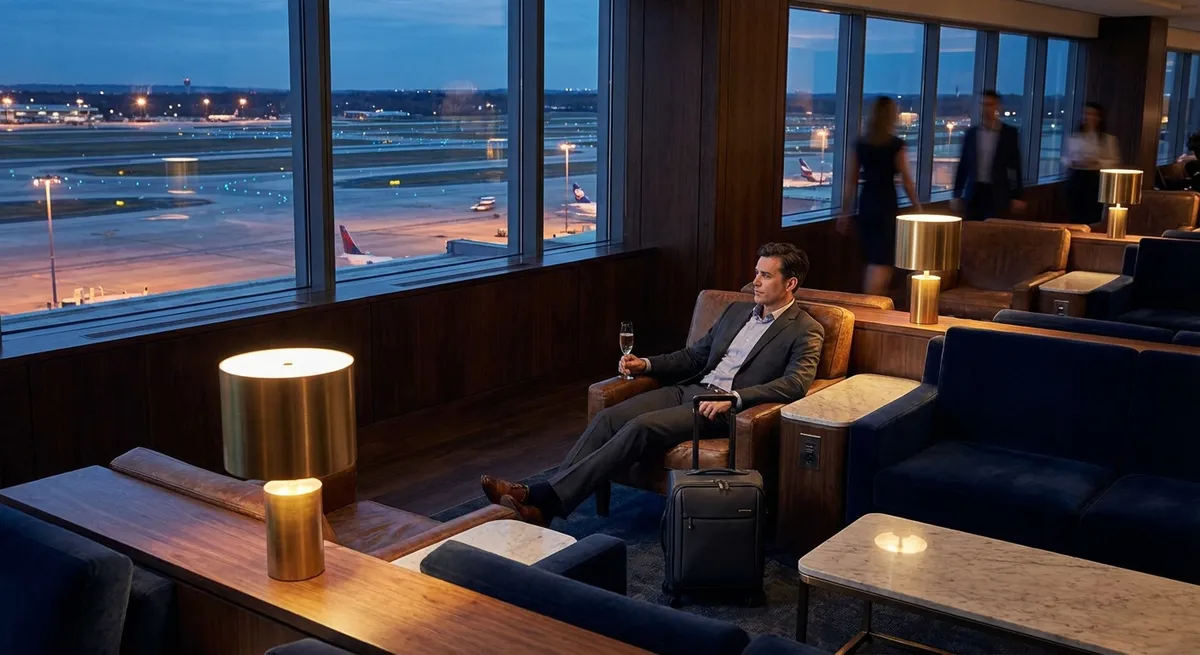
Airport queues, inconsistent transfers, and administrative redundancies are edited out with fast-track services, private terminals, or membership-based privileges that streamline the entire transit experience. Yet, in other areas, this traveler may actively choose complexity: a remote property with limited connectivity, an intricate tasting menu in a little-known restaurant, or a multi-step traditional ritual that demands time, stillness, and presence.
In practice, premium travel becomes a form of curation: convenience is maximized where it adds clarity, but deliberately withheld where a degree of challenge, delay, or ritual thickens the experience. The most refined journeys feel neither hyper-optimized nor indulgently chaotic—they alternate between pure ease and intentionally chosen depth. This is the quiet luxury of control: not over the world itself, but over how and where one chooses to feel it.
3. Signature Constants: Creating a Private Continuity Across Cities
Frequent travelers at the highest level rarely start from zero when they arrive somewhere new. They carry a private infrastructure with them—habits, small rituals, and carefully chosen objects that render any city instantly legible.
This continuity might be expressed through a preferred room archetype (high floor, corner exposure, north-facing light), a specific type of workspace setup (external keyboard, noise-cancelling headphones, identical adapters), or a constant approach to physical well-being (same brand of athletic wear, same stretching sequence after long flights, same hydration routine on arrival). Some rely on memberships that create a familiar thread across otherwise disparate destinations: wellness clubs with reciprocal access, private members’ spaces, or hotel brands known for consistent service philosophies rather than identical aesthetics.
By scripting these constants, the traveler reduces cognitive load and preserves their attention for what is genuinely singular about a place. The hotel room becomes not just accommodation, but a canvas on which a familiar pattern is reassembled within minutes. This is less about comfort for its own sake and more about precision: a curated personal ecosystem that follows you, ensuring that your best self arrives in every destination, fully intact.
4. Time as a Primary Luxury Asset
At the highest levels of affluence, money ceases to be the binding constraint; time takes its place. The most sophisticated travelers treat their hours with the same discretion that private banks reserve for capital. Every decision is viewed not only in terms of cost or exclusivity, but in its relationship to time: what it preserves, what it wastes, and what it elevates.
Rather than compressing experiences into dense itineraries, they open space around key moments. A remarkable art exhibition is not slotted between meetings; it is given the afternoon, with a late check-out secured and transfers configured to allow lingering. A three-day city stay might be designed around a single dinner, with everything else optimized to support that event’s emotional and physical resonance—rest before, ease after, and room for the unexpected in between.
Even in transit, time is curated differently. Night flights are chosen not only for convenience but for alignment with the body’s rhythms. Private or semi-private aviation is as much about reclaiming usable hours in the air as it is about exclusivity. The metric is not simply “How quickly can I arrive?” but “What will the hours between departure and arrival feel like—and what will they allow me to become ready for?”
5. Discretion as a Design Principle, Not a Reaction
Modern premium travelers often prize discretion not merely as privacy, but as a design principle—an intentional filtering of noise, exposure, and unnecessary narrative. Where traditional luxury favored conspicuous visibility, contemporary refinement leans toward a quieter, more controlled presence.
This extends beyond choosing secluded properties or private villas. It includes how and when they appear in public spaces, their footprint on social media, their interactions with staff, and even the signals sent by what they carry and wear. Logos are minimized; fabrics and form do the communicating instead. Private briefings replace large group tours, and access is arranged in off-peak windows, not only to avoid crowds but to reduce the sense of performance that public spaces often enforce.
At the highest tier, discretion also means controlling one’s own story. The most affluent travelers are careful with digital traces—the locations they tag, the people they acknowledge, and the experiences they share in real time, if at all. Luxury here is defined by autonomy over visibility: the ability to decide when to be fully seen, when to be partially legible, and when to remain entirely outside the frame.
Conclusion
For those who travel at the most refined levels, luxury is less an aesthetic than an equilibrium. It is the point at which effort disappears from view, time is treated as a rare asset, and each journey becomes an expression of deeply personal priorities rather than a generic performance of status.
The silhouette of ease is not accidental. It is the product of invisible planning, curated friction, private continuity, reverent stewardship of time, and a quietly controlled relationship with visibility. When these elements align, the world does not simply open its doors—it seems to move out of your way, leaving only what is essential, rare, and precisely yours.
Sources
- [World Travel & Tourism Council – High Net Worth Travelers Report](https://wttc.org/research/insights/high-net-worth-travellers) – Industry insights into behaviors and preferences of affluent travelers
- [Virtuoso – Luxury Traveler Trends](https://www.virtuoso.com/travel/articles/luxury-travel-trends) – Analysis of emerging patterns in premium and experiential travel
- [McKinsey & Company – The Future of Luxury: Bouncing Back](https://www.mckinsey.com/industries/retail/our-insights/the-future-of-luxury-bouncing-back-from-covid-19) – Research on how today’s luxury consumers define value and experience
- [Forbes – Why Time Is the Ultimate Luxury](https://www.forbes.com/sites/forbesbusinesscouncil/2023/04/10/why-time-is-the-ultimate-luxury-for-todays-consumers/) – Exploration of time as the defining dimension of modern luxury
- [American Express – Global Travel Trends Report](https://www.americanexpress.com/en-us/travel/discover/get-inspired/global-travel-trends-report/) – Data-driven view of preferences among premium cardmembers and frequent travelers
Key Takeaway
The most important thing to remember from this article is that this information can change how you think about Premium Lifestyle.