Travel at the highest level is no longer a parade of upgrades and logos; it is a carefully tuned instrument, played softly. The most discerning travelers are not chasing visibility, but precision—of timing, of atmosphere, of access. Luxury, in this quiet register, is not defined by what can be purchased, but by what can be calibrated: who is there, what is absent, and how a journey feels at its most unobserved moments.
The New Metric: Time as a Curated Asset
For the serious traveler, time is no longer something to be filled; it is something to be edited.
This begins long before departure. Flight schedules are chosen not only for convenience, but for their impact on circadian rhythm, airport congestion patterns, and the likelihood of operational delays along specific corridors. A 10:30 p.m. departure on a long-haul flight might be chosen because it aligns with a natural sleep window, paired with a pre-boarding routine—proper hydration, light protein, no alcohol—that transforms the cabin into a controlled sleep environment rather than a test of endurance.
On the ground, the same philosophy applies. Smart itineraries avoid binary “busy” vs. “relaxed” days. Instead, they create a sophisticated cadence: high-focus cultural immersion in the morning, unscheduled drift in the late afternoon, and one carefully selected anchor experience per day—never more. Time is treated as a finite, premium ingredient. Every addition must justify its presence; everything else is edited out.
This is where private transfers, pre-cleared immigration when available, and tight partnerships with local fixers cease to be indulgences and become instruments of precision. The outcome is not just convenience, but a calm, unhurried quality that threads through the entire journey.
The Architecture of Atmosphere: Designing the Invisible Details
The world’s most refined trips are defined not simply by where you stay, but by how each element interacts to create a coherent atmosphere.
Destination and lodging are chosen with the same care one might apply to acoustics in a concert hall. The question is not “Is this hotel luxurious?” but “What does this place sound like at 5:30 a.m.? What does the air feel like when I open the window? What do I see when I move through the lobby alone at night?”
Advanced travelers are increasingly attentive to sensory architecture. They consider seasonal light patterns (soft winter sun over Lake Como versus the high, sharp glare of midsummer), humidity levels that affect sleep quality, and soundscapes that shape mood. A centuries-old city apartment with slight creaks and distant church bells may be chosen deliberately over a flawless yet anonymous suite, because its imperfections hold a distinctive, grounding texture.
This approach extends to the micro-level: the weight of the room key, the quality of hangers in the wardrobe, the temperature of the bathroom floor at dawn, the tactility of fabrics, the pacing of housekeeping—never intrusive, never late. These details, often overlooked, become the signature components of an atmosphere that lingers long after the trip has ended.
Beyond Access: Quiet, Precise Cultural Immersion
Access is no longer sufficient. Early entry to a museum, a private viewing, or a closed-door tasting has become table stakes. The real differentiator is how gracefully those moments are integrated into context.
The most meaningful cultural immersions now balance depth and restraint. Rather than a scatter of “exclusive” appointments, travelers might work with a curator to spend two uninterrupted hours with a single masterpiece in a gallery—no photography, no guided monologue, just a calibrated conversation before and after to frame the experience. In a city renowned for its cuisine, the focus might shift from headline-making restaurants to the quiet rituals that sustain them: first-light visits to markets with a chef, or a late-afternoon session observing service preparations rather than just the performance of dinner.
In emerging destinations, thoughtful travelers are attentive to power dynamics, sustainability, and the ethics of access. They seek experiences that leave a light footprint and a meaningful trace: investing in community-led conservation projects; staying in properties that measure and transparently report their impact; choosing guides who are stakeholders in the destination’s future, not simply intermediaries.
The result is an immersion that feels less like extraction and more like conversation—a measured exchange of time, attention, and resources that respects both guest and host.
The Poise of Mobility: Crafting Seamless Transitions
For those accustomed to moving often and far, the most stressful moments are rarely the grand ones. It is the transitions—arrivals, departures, crossings, connections—that test the architecture of a journey.
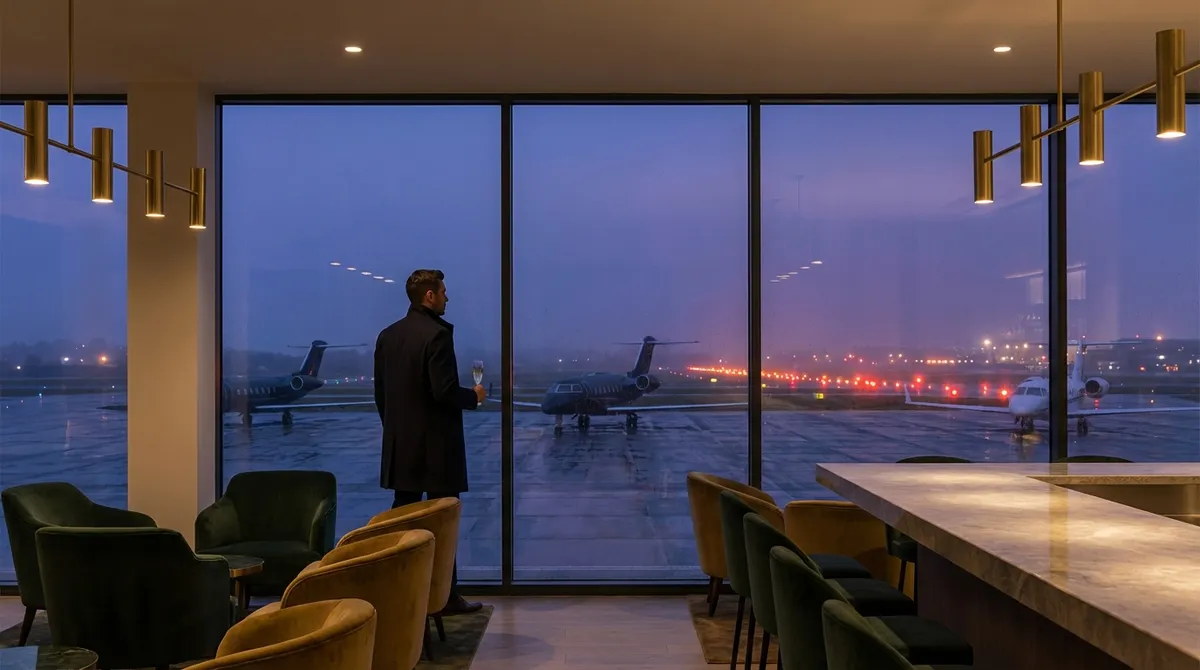
Luxury, at this level, is defined by how friction is handled at thresholds. Private aviation, where used, is evaluated not just for the aircraft but for the infrastructure around it: reliability of slots at congested airports, the quality of FBOs (fixed-base operators), discretion of ground staff, and the speed of procedures. On commercial routes, the focus shifts: airport layout is studied as carefully as hotel design, and routes with consistently smoother flows through security and immigration are quietly preferred.
At city level, an evolved traveler choreographs movement so that no segment feels like a logistical chore. Train over short-haul flight when possible, not only for environmental reasons but for the ability to work, read, or simply look out the window without interruption. Car services are chosen for calm, consistent drivers, not brand cachet. Luggage strategies become more intelligent: a core, impeccably organized kit that travels everywhere, while more seasonal or experimental items can be shipped ahead or left in trusted storage in frequently used hubs.
The ideal scenario is one in which movement itself becomes a form of rest: the car that feels like a moving cocoon after an overstimulating evening, the night train that serves as both transport and decompression chamber, the airport lounge that functions as a reset rather than a holding pen.
The Edited Self: Personal Rituals That Travel Well
At a certain level of travel frequency and intensity, the biggest luxury is continuity of self.
Experienced travelers develop a suite of personal rituals designed to withstand changing time zones, climates, and contexts. These are not the performative wellness routines of social media, but a quiet, practical discipline: a consistent sleep protocol that includes strategic light exposure, perhaps magnesium or melatonin under medical guidance; a core stretching or movement sequence that can be done in five minutes in any room; a minimalist but high-quality skincare lineup that stabilizes the effects of cabin air and shifting humidity.
Nutrition is approached with similar clarity. The goal is not asceticism, but calibration: knowing when to indulge and when to protect the system. On long-haul flights, this may mean declining heavy meals in favor of light, protein-forward plates and focusing on hydration; on arrival, choosing one high-impact, local meal versus a string of unfocused indulgences that blur together.
Most importantly, the edited self includes boundaries around communication. The highest form of travel luxury is sometimes the right to be briefly unreachable. Out-of-office messages are crafted honestly, expectations are set with teams and family, and certain journeys are designated as low-notification by design. The result is a rare, intact sensation of presence—a traveler fully inhabiting their experience, instead of merely streaming it.
Five Exclusive Insights Driving the Next Era of Luxury Travel
These are the quieter shifts guiding how the most discerning travelers now move through the world:
- Precision over excess. The value lies not in how many upgrades can be layered on, but in how precisely each choice serves energy, focus, and emotional tone throughout the trip.
- Atmosphere as a central criterion. Decisions increasingly revolve around light, sound, texture, and rhythm, not just star ratings or brand names. Sensory harmony is the new badge of excellence.
- Ethical depth as a luxury marker. Travelers are privately auditing the integrity of experiences—how locals are compensated, how environments are protected, and whether access feels earned rather than extracted.
- Transition design as a status skill. The truly adept are recognized not by where they stay, but by how seamlessly they move: minimal frictions, smart routing, and an almost choreographic grace across borders and cities.
- Continuity of self as the ultimate upgrade. The rarest luxury is returning home not depleted but subtly sharpened—sleep intact, body steady, mind expanded rather than exhausted.
Conclusion
The quiet evolution of luxury travel is not about grander suites or louder statements. It is about control over time, a studied command of atmosphere, an ethical seriousness about place, and an almost artisanal attention to movement and self. In this landscape, the most coveted journeys are not those most seen, but those most finely felt—where every decision, from departure hour to bedside lamp, has been tuned to one private standard: how it feels, in the moment, to be there.
Sources
- U.S. Department of Transportation – Air Travel Consumer Reports – Data and analysis on flight delays, cancellations, and operational reliability that inform route and schedule choices.
- Harvard Medical School – Travel and Sleep – Evidence-based guidance on jet lag, circadian rhythm management, and sleep strategies while traveling.
- World Travel & Tourism Council – Environmental & Social Impact Reports – Research on sustainability, community impact, and evolving expectations around responsible luxury travel.
- UNESCO World Heritage Centre – Authoritative information on culturally and historically significant sites, including conservation considerations and visitation context.
- International Air Transport Association (IATA) – Traveler Insights – Industry research on evolving traveler behavior, expectations, and premium travel trends.
Key Takeaway
The most important thing to remember from this article is that this information can change how you think about Luxury Travel.