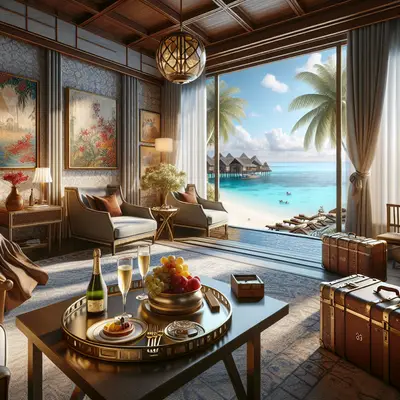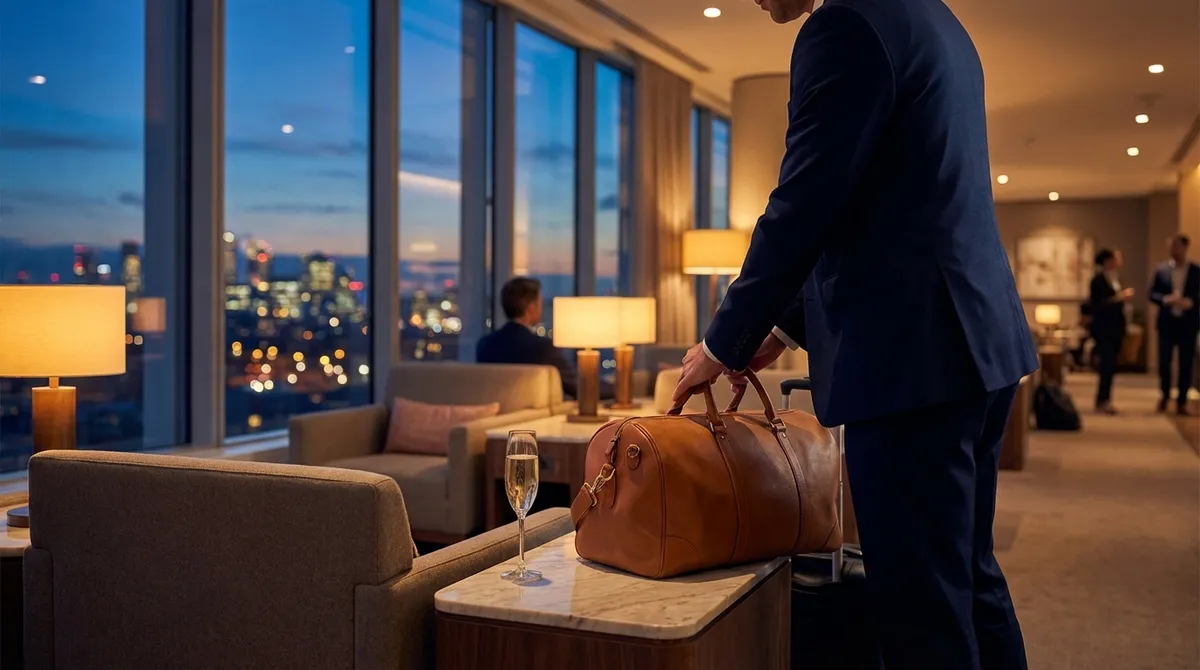
Luxury today is less about what can be seen and more about what can be felt. For the discerning traveler, the true measure of a premium lifestyle reveals itself in the quietest moments: the way you arrive, how you move through a space, how time bends discreetly in your favor. This is not about spectacle; it is about orchestration. Below, five exclusive insights that increasingly shape how sophisticated travelers define—and live—true modern luxury.
1. The New Luxury Currency: Curated Time, Not Added Perks
For serious travelers, “busy” is not a badge of honor; it is a design flaw. The most premium experiences today are not built on more amenities, but on fewer frictions.
At the top end of hospitality and aviation, the real differentiator is how invisibly your time is protected. Think coordinated airport-to-suite transfers with baggage pre-cleared, in-villa check-in that eliminates front desk formality, or private access to airport fast-track services that cut transit time in half without fanfare. High-end travelers are increasingly evaluating brands on how thoughtfully they compress the uninteresting parts of a journey—queues, paperwork, redundant conversations—so that attention can be spent on meaningful moments instead.
In this context, a premium lifestyle is defined less by possessions and more by a calendar that has been intelligently edited. Working with a high-touch travel advisor, securing guaranteed late checkouts in cities where flight schedules shift, or having a dedicated on-the-ground contact who pre-emptively re-routes plans when weather interrupts—these are not indulgences, but the new structural supports of a refined life in motion.
2. Discretion Over Display: The Rise of Low-Visibility Luxury
Old luxury wanted to be noticed. New luxury knows how to disappear. For travelers operating at the upper tier, a low visibility profile—physically and digitally—is an emerging hallmark of good taste.
On the ground, that might mean choosing hotels with deliberately understated branding and quietly layered security: private floors accessed by unmarked elevators, restaurant entrances that open directly from a residence wing, or pool areas that feel more like private gardens than scenes for social media. Onboard, it translates to aircraft cabins designed with acoustic insulation, subdued lighting, and partitions that permit a sense of sanctuary rather than spectacle.
Digitally, discretion shows up in minimal data footprints and thoughtful use of loyalty programs—valuing privacy settings, encrypted messaging with concierges, and bespoke arrangements handled by dedicated relationship managers instead of chatbots or generic apps. The luxury traveler increasingly prioritizes spaces where they can be fully present without becoming part of someone else’s content. The quietest environments are often the most highly engineered—and the most highly coveted.
3. Sourcing with Intent: When Provenance Becomes Part of the Itinerary
For the refined traveler, the question is no longer “How beautiful is this?” but “Where does this come from, and who stands behind it?” Provenance has moved from a niche curiosity to a central filter through which premium experiences are evaluated.
At the dining table, that might mean tasting menus designed around single-origin ingredients, collaborations with small coastal fisheries or mountain producers, or hotel wine lists that feature family-owned vineyards with limited allocations. In wellness, it can appear as spa treatments developed in partnership with medical institutions or products that transparently list sourcing and research.
Even interior details matter: custom cashmere blankets onboard sourced from traceable herds, hand-blown glassware produced in centuries-old ateliers, or artwork curated from contemporary local galleries rather than generic luxury décor. Sophisticated travelers increasingly request this information in advance, building itineraries that consciously support artisans, architects, and producers whose work reflects both technical excellence and ethical clarity. The byproduct is a journey that feels less like consumption and more like patronage.
4. Precision Comfort: Personal Operating Manuals for the Journey
The most privileged travelers no longer move through the world as anonymous guests; they operate with something closer to a personal “operating manual” that follows them from jet to suite to table.
This can include exacting climate preferences—room temperature calibrated before arrival, bedding with specific thread composition, hypoallergenic options logged and remembered across stays. It extends to sensory signatures: preferred ambient scent strength, lighting levels tuned for working versus unwinding, and in-flight cabin conditions adjusted for sleep optimization. At the highest end, biometric and health data (handled discreetly) may inform tailored meal timings, cabin humidity, and circadian-friendly light cycles on long-haul flights.
Service teams that function at this level of precision don’t simply “remember preferences”; they anticipate how those preferences might evolve over the course of a journey. The espresso you request upon landing is different from the infusion you’re offered before a late dinner; the pillow selection and turndown routine are adjusted based on whether tomorrow is a negotiation, a celebration, or a day deliberately left blank. What feels like effortless comfort is, in reality, meticulous choreography.
5. Narrative-Driven Journeys: Experiences that Age Well in Memory
A premium lifestyle is not measured just by where you go, but by how the story of that journey unfolds over time. Increasingly, the most discerning travelers seek experiences that “age well” in memory—journeys designed with a narrative structure rather than a list of high-priced touchpoints.
This might look like a sequence of destinations linked by a single through-line: tracing a composer’s life through three European cities, exploring contemporary architecture along a specific coastline, or following a region’s culinary evolution from traditional markets to avant-garde kitchens. It could also involve a recurring ritual across continents—a particular type of morning swim, a tea ceremony at sunset, or a private gallery viewing before opening hours—that becomes an anchor wherever you are in the world.
Luxury travel designers who understand this begin with questions about a traveler’s inner themes rather than simply their budget or bucket list. The result is a style of movement where experiences are chosen for their capacity to resonate, not just impress. What remains, long after the jet has landed and the bags are unpacked, is a carefully composed narrative that can be revisited, reinterpreted, and expanded with each future departure.
Conclusion
The contemporary premium lifestyle is not a more opulent version of the familiar; it is a different architecture altogether. It values time as the ultimate scarce asset, treats discretion as a design principle, insists on clarity of origin, prizes hyper-personal comfort, and curates experiences that form a coherent narrative rather than a chaotic highlight reel.
For those who live frequently in transit—between cities, time zones, and roles—these five quiet codes are less about indulgence and more about alignment. They shape a way of traveling, and of living, in which every detail is tuned not to impress the world, but to precisely fit the person at the center of it.
Sources
- Virtuoso Luxe Report - Insight into evolving preferences of high-net-worth luxury travelers
- McKinsey & Company: The Future of Luxury - Analysis of changing behaviors among global luxury consumers
- Condé Nast Traveler – How Luxury Hotels Are Redefining Service - Examples of discreet, high-touch hospitality practices
- Harvard Business Review – The Experience Economy 2.0 - Context on why curated, meaningful experiences outperform simple consumption
- OECD Tourism Trends and Policies - Macro-level data and insights on global travel patterns and premium segments
Key Takeaway
The most important thing to remember from this article is that this information can change how you think about Premium Lifestyle.