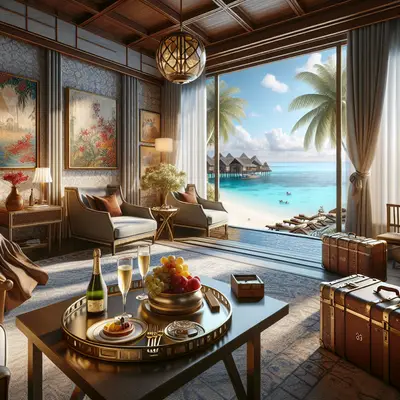
The modern luxury traveler is no longer chasing spectacle; they are curating presence. The focus has shifted from being seen to feeling deeply, quietly accommodated—intellectually, sensorially, and emotionally. Premium lifestyle today is less about accumulation and more about orchestration: of time, privacy, craftsmanship, and meaning. For those who move frequently between cities, continents, and time zones, refinement is measured not in monograms, but in how seamlessly life continues at altitude and abroad.
Below, five exclusive insights shaping how discerning travelers are quietly redefining what it means to move through the world well.
1. Treating Time as the Ultimate Suite Upgrade
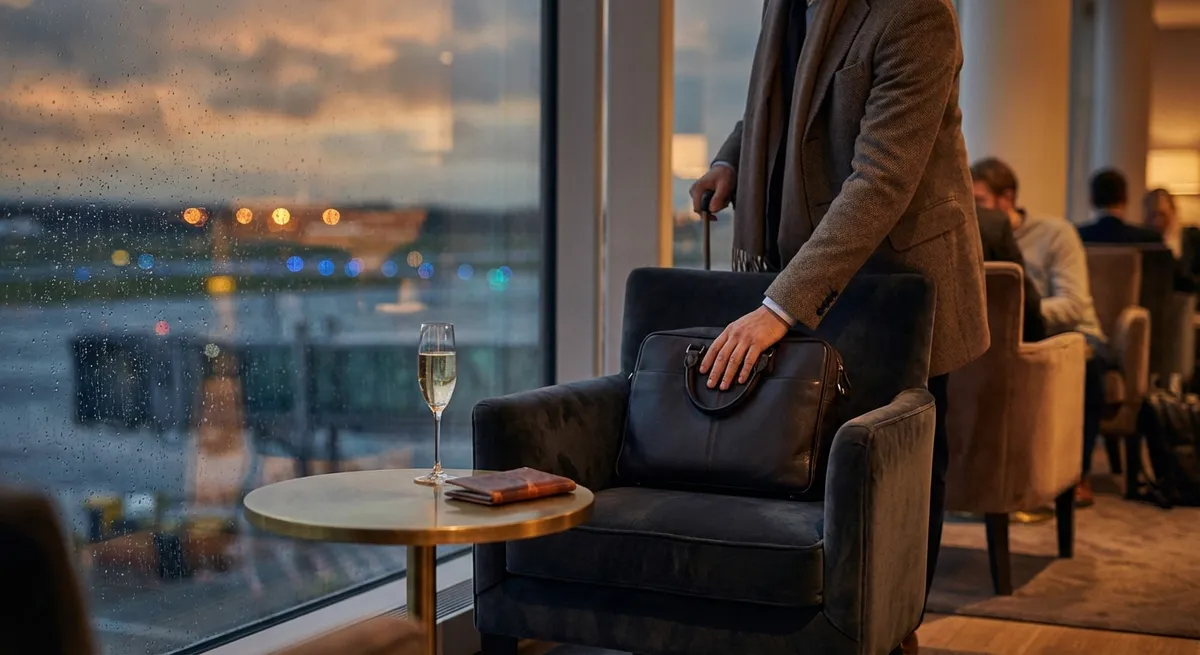
For luxury travelers, time is no longer a backdrop to the journey; it is the most valuable asset in the itinerary. The truly premium experience is one that edits out friction—queue-less immigration, orchestrated transfers, and invisible waiting. High-net-worth travelers now lean on a discreet ecosystem of services: pre-cleared arrivals, private terminal lounges, and airport-to-doorstep logistics that ensure the clock is always working in their favor.
What distinguishes the sophisticated traveler is not merely speed, but intelligent pacing. They engineer travel days to feel like an extension of their home rhythm: calls taken in quiet, well-equipped lounges rather than crowded gates; arrivals timed to align with natural light and circadian patterns; itineraries that preserve pockets of unscheduled time amid boardrooms and black-tie dinners. The luxury is not in having more time, but in eliminating time that feels wasted, poorly lit, or poorly considered.
2. Curating a Personal Ecosystem Across Borders
The most refined travelers no longer rely on chance or generic hotel offerings to define their experience. Instead, they cultivate a personal global ecosystem that travels with them, both physically and digitally. This might include a preferred in-room fragrance delivered ahead of arrival, the same sleep pillow waiting in suites worldwide, or a consistent wellness protocol recreated from city to city.
Elite loyalty programs and premium credit cards are now tools in a broader design: they are used not simply for perks, but to create continuity. Room layouts are pre-selected where possible, minibar contents tailored in advance, and recurring preferences—air quality, mattress firmness, coffee ritual—encoded into profiles so that each arrival feels less like check-in and more like a private residence being reopened. The result is a sense of familiarity in unfamiliar cities, a traveling version of home that reduces cognitive load and enhances genuine enjoyment.
3. Redefining “Service” as Anticipation, Not Attention
For the contemporary premium traveler, exceptional service is not a performance; it is almost preternatural anticipation. They value staff who are present but not pervasive, who appear at precisely the right moment—with the right answer, the right solution, or, often, the right absence. Name recognition is expected. What impresses is memory: the wine that was enjoyed two years ago, the particular way a guest prefers a room to be lit after 6 p.m., the fact that they always request extra still water before a long-haul flight.
This new service aesthetic relies heavily on discreet data and well-trained intuition. Luxury travelers reward teams and properties that use technology quietly: mobile keys that work flawlessly; concierge communication via secure messaging; itinerary changes reflected instantly across transfers, dining, and wellness bookings. The experience feels effortless not because less is happening, but because an intricate choreography of micro-decisions is concealed. True sophistication in service is when the guest’s bandwidth is entirely freed for the moments that matter.
4. Elevating the In-Between: Transition Moments as Micro-Retreats
What once felt like dead zones in travel—the drive to the airport, the layover, the transfer from city to resort—are being reimagined as moments of deliberate restoration. The premium traveler now seeks to elevate transitions into micro-retreats: a car stocked with a preferred tea and ambient playlist; a layover transformed by access to spa-grade showers, nap suites, and chef-led dining; a yacht tender that doubles as a moment of decompression between the marina and the villa.
The refinement lies in the calibration of these intervals. Rather than overfilling every minute, luxury travelers are increasingly protective of transition time, using it for breathwork, screen-free reflection, or carefully chosen reading. High-end airlines and private terminals understand this shift: lighting is softer, noise minimized, nutrition lighter and more functional. When transitions are treated as valuable, restorative chapters rather than logistical necessities, the entire journey feels more composed, more deliberate, and less fragmented.
5. Pursuing Depth Over Display in Global Experiences
Perhaps the most significant evolution in premium lifestyle travel is a preference for depth over display. The sophisticated traveler is increasingly discreet about where they have been, and more invested in how they engaged with a place. They prioritize access—to expert-led experiences, private viewings, and intimate cultural encounters—over postable vistas.
This might look like a private after-hours museum tour with a curator rather than a public gallery opening; a tasting with a winemaker in the barrel room instead of a crowded terrace; a guided visit to a historic site at dawn before it opens to the public. It also extends to impact: discerning travelers are asking how their presence shapes the communities they visit, leaning toward stays and experiences that support local artisans, conservation projects, or educational initiatives. Prestige is no longer in the number of passport stamps, but in the quality of understanding each journey leaves behind.
Conclusion
Premium lifestyle today is defined less by excess and more by exquisite calibration. For the luxury traveler, the journey is a carefully orchestrated continuum in which time, space, and attention are treated as precious, non-renewable resources. The most coveted experiences are not the loudest, but the most intelligently designed—where every touchpoint, from airport arrival to late-night turndown, reflects a deep understanding of how refined people actually live, think, and move.
The new art of travel is not about going further, but about arriving better—again and again, in every city, on every shore, with a sense of continuity, composure, and quiet command over one’s own experience.
Sources
- [Skift Research: The Future of Luxury Travel](https://research.skift.com/report/the-future-of-luxury-travel-2023/) - Industry analysis on evolving expectations of high-end travelers
- [McKinsey & Company – The Expanding Role of Experience in Luxury](https://www.mckinsey.com/industries/retail/our-insights/luxury-in-2023-recalibrating-for-resilience) - Insights on how luxury consumers are shifting from products to experiences
- [Virtuoso – 2024 Luxe Report](https://www.virtuoso.com/travel/articles/virtuoso-2024-luxe-report) - Data-driven perspectives on trends among affluent travelers and their preferences
- [Deloitte – Global Powers of Luxury Goods](https://www2.deloitte.com/global/en/pages/consumer-business/articles/global-powers-of-luxury-goods.html) - Context on how luxury brands are responding to changing consumer behavior
- [Harvard Business Review – The New Science of Customer Emotions](https://hbr.org/2015/11/the-new-science-of-customer-emotions) - Explains how emotional drivers influence premium and luxury experiences
Key Takeaway
The most important thing to remember from this article is that this information can change how you think about Premium Lifestyle.