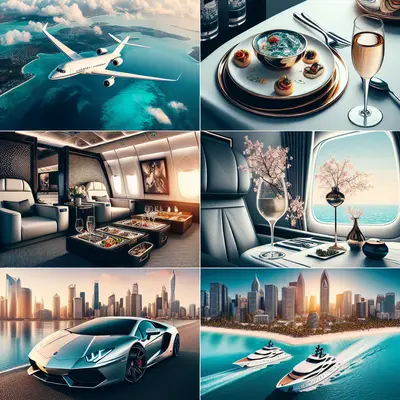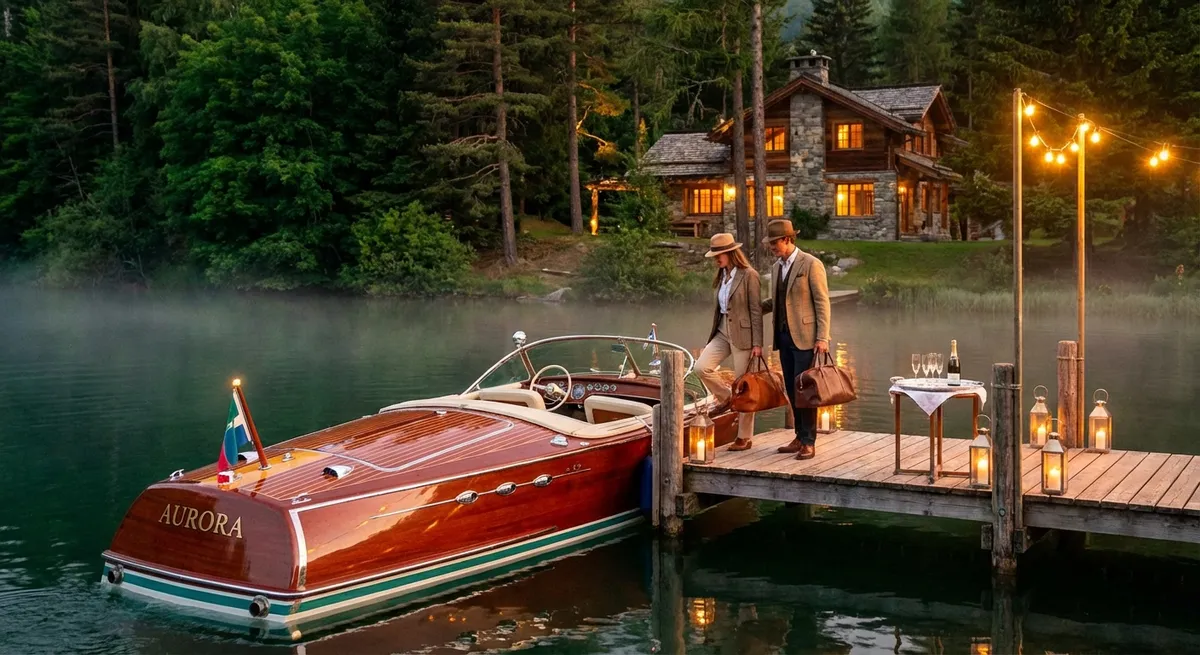
Luxury travel is no longer defined by square footage, thread counts, or logo visibility. For the truly discerning, it is an orchestration of details: the way light falls across a private terrace at 5:37 p.m., the hush of a cabin tailored to your circadian rhythm, the sense that every interaction has been considered three steps ahead of you. At this level, travel becomes less about where you are going, and more about how gracefully you arrive—internally as much as physically.
Below, five exclusive insights shaping how sophisticated travelers now curate their journeys, far from the obvious and the overexposed.
When the Itinerary Becomes a Narrative, Not a Schedule
The most refined trips are not built from checklists; they are composed like stories.
Elite travelers increasingly work with specialist travel designers and destination experts who think in chapters rather than time slots. A morning is not “museum + lunch,” but a deliberate progression: a private-before-opening tour with a curator who frames the collection through a personal lens, followed by a chef’s table lunch inspired by a single artwork encountered earlier that day.
The itinerary becomes a narrative arc: anticipation, quiet crescendo, considered pause. Days are structured with emotional pacing—periods of stimulus balanced by intentional stillness, ensuring you return elevated rather than depleted. These journeys avoid the tyranny of “efficiency,” embracing instead the luxury of thematic cohesion. A week in Japan, for instance, might be designed around the concept of impermanence—manifested in art, architecture, seasonal cuisine, traditional crafts, and even the choice of onsen at dusk.
For travelers at this level, the true currency is not access alone, but coherence: a trip that feels like a beautifully edited film rather than a crowded reel.
The New Benchmark: Precision, Not Excess
Once, luxury was measured in visible abundance: larger suites, more features, an expanding list of amenities. Today’s connoisseur quietly prefers precision over excess—an exacting alignment between their personal preferences and the environment around them.
Consider the rise of hyper-personalized in-flight experiences on premium cabins and private aviation: lighting calibrated to your origin and destination time zones, meal service paced to your preferred sleep window, even bedding and cabin temperature adjusted based on your chronotype. The same principle extends on the ground, where leading hotels and villas maintain detailed guest profiles: pillow density, floral sensitivities, favored varietals, preferred reading chair height.
The sophistication lies not in grand gestures, but in frictionless continuity. Your favorite tea appears without being requested. Turn-down timing subtly adapts to your real patterns rather than a generic schedule. Transportation waits precisely where you naturally exit the lobby, not where the signage suggests.
Excess is visible; precision is almost invisible. The latter, increasingly, is the standard by which serious travelers judge true luxury.
Access Reimagined: Private, Yet Deeply Connected
For years, “exclusive access” meant what others could not do: closed-door viewings, after-hours museum entries, private yacht charters. While these remain coveted, the most sophisticated travelers now seek a different layer of access: depth rather than mere separation.
This may look like a winemaker not just hosting a tasting, but walking you through the vineyard at harvest, letting you participate in the decisions of the day. It might be a Michelin-starred chef designing a menu around a single ingredient sourced together that morning from a coastal market, or a conservator opening a restoration workshop to show how centuries-old textiles are preserved.
Here, privacy is not isolation—it is context. You are not fenced off from a destination; you are quietly woven into it, away from spectacle. Relationships, not reservations, define the privilege. Over time, this can evolve into an ongoing dialogue with a place: returning to the same riad, same island, or same chalet, each year accessing another layer of local life that is never advertised, only offered.
The rarest luxury is not simply to be alone, but to be meaningfully included.
Time as the Primary Amenity
At the highest strata of travel, time is engineered with almost architectural intent. Not just freed, but curated.
Long-haul journeys are increasingly designed to feel like self-contained retreats: spa-grade bedding on overnight flights, nutrition-forward menus to reduce jet lag, guided movement or stretching programs to ensure you land restored rather than diminished. Advanced scheduling tools, VIP airport services, and private terminals compress transfer chaos into quiet, curated transitions that feel less like logistics and more like prologues.
On the ground, time is honored through deliberate spaciousness. Instead of eight experiences in a day, there may be two—with intentional gaps to allow the mind to absorb, edit, and reframe. Check-in and check-out become fluid, tailored to your flight pattern rather than property policy. Dining is never rushed by the subtle choreography of clearing plates; your pace becomes the property’s tempo.
Luxury travelers now gravitate to partners who understand that time is not what fits around the experience. Time is the experience.
The Discreet Future: Sustainability as a Silent Standard
For today’s most discerning travelers, sustainability is not a marketing tagline—it is an assumed baseline. Yet, the way it manifests at the upper end of luxury is notably quiet, embedded in design and operations rather than loudly announced.
You might notice it in the architecture: properties built to follow the land’s contours rather than dominate them; use of local materials that age gracefully; natural ventilation that reduces reliance on mechanical cooling. Or in the supply chain: partnerships with nearby farms, fisheries, and artisans, allowing for menus and amenities that are both elevated and locally rooted.
The highest caliber properties take a regenerative rather than simply “less harmful” approach: funding coral restoration near a private island, investing in local education, or supporting the preservation of cultural crafts at risk of disappearing. Crucially, these efforts are integrated seamlessly; guests can engage deeply if they wish, or simply rest in the confidence that their presence is aligned with responsible practice.
For many luxury travelers, the emotional ease that comes from knowing their journey is thoughtfully stewarded—not merely offset—is part of the experience’s elegance.
Conclusion
At its most refined, luxury travel is not about being seen in coveted places. It is about feeling precisely understood, wherever you are. The industry’s quiet evolution—from excess to intention, from separation to depth, from speed to curated time—mirrors the priorities of those who travel not to collect destinations, but to accumulate perspective.
For the truly discerning, the question is no longer “Where should I go next?” but “How do I wish to arrive—in this place, in this moment, in myself?” The answers lie in the details most people will never notice, and in the calm certainty that nothing important has been left to chance.
Sources
- International Air Transport Association (IATA) – Future of the Airline Industry 2035 - Explores evolving expectations around premium air travel, personalization, and passenger experience
- Virtuoso – Luxe Report - Insight into current trends among high-net-worth travelers, including personalization, access, and sustainability
- Forbes Travel Guide – Luxury Travel Trends - Ongoing coverage of how luxury hotels, resorts, and experiences are redefining service, design, and exclusivity
- Condé Nast Traveler – Sustainable Luxury Travel Coverage - In-depth reporting on how top-tier properties integrate sustainability and regenerative practices
- World Travel & Tourism Council (WTTC) – Sustainability and Travel Reports - Research on the intersection of high-end travel, environmental responsibility, and community impact
Key Takeaway
The most important thing to remember from this article is that this information can change how you think about Luxury Travel.