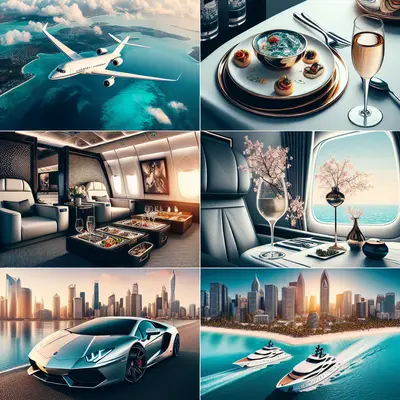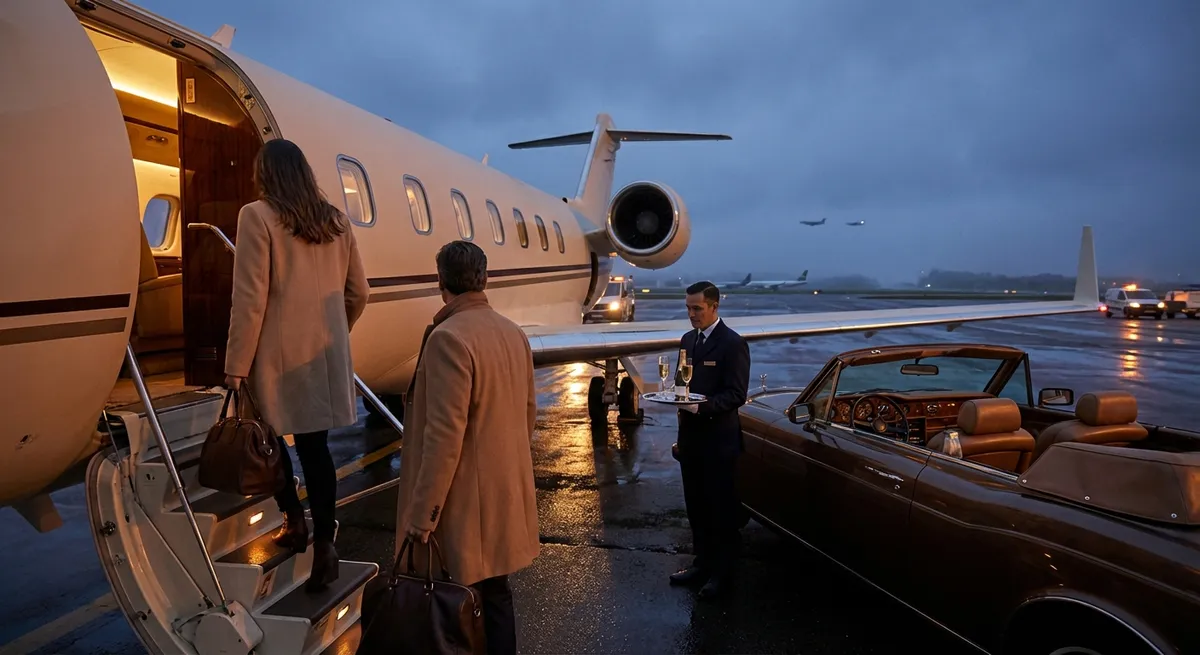
The new language of luxury travel is no longer shouted in logos or measured solely in square footage. It is felt in the way you arrive, the quiet intelligence of an itinerary, and the near-invisible choreography that lets every moment unfold as if it were the only one that matters. For the discerning traveler, true luxury is a studied calm: a journey that feels precisely tuned to your own rhythm, yet never announces the effort behind it.
Below, five exclusive insights shaping how the most sophisticated travelers are re‑imagining what it means to travel well.
1. Precision Over Excess: The Rise of Curated Itineraries
For years, luxury travel was synonymous with “more”: more stops, more activities, more spectacle. Today’s most refined journeys move in the opposite direction—toward elegant restraint and meticulous curation.
The new benchmark is not how much you can fit into a week, but how deliberately you design what you leave out. Leading luxury advisors now build itineraries around a single narrative thread—craft, landscape, culinary heritage, or design—shaping days that feel cohesive rather than crowded. A three‑city European sweep might become, instead, a slow immersion in one region, with access to ateliers, private kitchens, or vineyard libraries normally closed to the public.
Technology plays a discreet supporting role. Advanced traveler profiles, built over years of stays and journeys, allow properties and travel specialists to anticipate preferences with scientific precision: the hour you naturally like to dine, the altitude you sleep best at, the type of light you prefer in a room. The result is an itinerary that feels almost pre‑lived, with friction quietly removed in advance.
For the seasoned traveler, this is the new status: not the most stamped passport, but the most intentionally crafted journey.
2. Intelligent Privacy: Space Designed Around Discretion
Privacy has always been a currency of luxury, but its most sophisticated expression now lies in highly intelligent, layered design rather than mere seclusion. It is less about building walls and more about orchestrating invisible boundaries.
In the best new suites and villas, space is choreographed to preserve your sense of ease. Circulation paths for staff are completely separate from guest areas, allowing service to appear and vanish without a sound. Arrival foyers act as acoustic buffers, while outdoor spaces fold into the landscape in a way that hides sightlines without feeling enclosed. Lighting is calibrated so that interiors remain warm and inviting without broadcasting silhouettes to the outside world.
Security, too, has evolved into something subtle and reassuring rather than conspicuous. Discreet biometric access, low‑key surveillance, and well‑trained personnel create a cocoon of safety without disturbing the atmosphere of calm. You are protected, but never processed.
The most coveted luxury rooms are no longer those closest to the lobby or overlooking the busiest view. They are the corners and courtyards that feel like their own micro‑worlds—architected privacy, rather than mere distance.
3. The Quiet Power of Expertise: Access Money Cannot Simply Buy
For those who have long had access to first‑class cabins and celebrated addresses, the next frontier is not comfort—it is insight. The rarest luxury today is deep, unhurried access to genuine expertise.
Instead of generic “tours,” high‑end travelers increasingly seek temporary membership in someone else’s world: a morning workshop with a fourth‑generation ceramicist whose family pieces hang in museums, a field tasting with a viticulturist crafting micro‑production wines, or a backstage walk with a museum curator unlocking works typically seen only by researchers.
Leading brands and travel houses are building networks of such experts—academics, artisans, conservators, naturalists—who can host hyper‑personalized experiences for a handful of guests at a time. These encounters are not about exclusivity for its own sake; they are about depth. The satisfaction lies in understanding the invisible systems, decisions, and histories that shape a place.
For the well‑traveled, this is what transforms a familiar destination into a fresh discovery: not another viewpoint, but a more informed one.
4. Time as the Ultimate Amenity
Once flights are upgraded and suites secured, one resource remains non‑fungible: time. The most sophisticated luxury travel now treats time as the central design element, smoothing its rough edges and extending its most pleasurable moments.
This begins well before departure. Visa handling, complex routing, and documentation are delegated to specialist teams; luggage may travel independently, meeting you at your first suite. On the ground, transfers are synchronized to eliminate idle waits, while flexible check‑in and check‑out norms in top‑tier properties allow schedules to revolve around your natural rhythm rather than rigid cutoffs.
Within the stay itself, “time‑rich” design is evident in the way properties encourage lingering. Breakfast served at any hour, spa access late into the night, private pools and terraces that make leaving the room feel optional—each detail stretches the day in your favor. The aim is to remove the low‑value micro‑tasks that drain attention (queueing, re‑confirming, adjusting), so that time can be spent on higher pursuits: conversation, curiosity, rest.
For elite travelers managing complex lives, this orchestration of time is more than convenience; it is restoration.
5. Scent, Sound, and Texture: The New Codes of Sensory Luxury
The visual language of luxury—marble, views, statement art—is well understood. The frontier now lies in what you feel, hear, and inhale rather than what you simply see.
Leading hotels and private aviation brands are investing in bespoke scent profiles, created with perfumers in the same way fashion houses craft signature fragrances. These aromas are researched for their effects on circadian rhythm, stress markers, and memory, turning a lobby or cabin into an olfactory signature you can recognize instantly. A certain cedar‑forward note or trace of iris root becomes the brand’s invisible calling card.
Soundscapes are designed with comparable rigor. Acoustic treatment reduces background noise to a soft hush, while curated soundtracks adapt to time of day, subtly nudging you toward relaxation or alertness. In suites, the absence of sound—properly insulated doors, vibration‑free windows, silent climate control—acts as its own form of luxury.
Texture, too, is chosen with intention: the hand of the linen, the grip of a stair rail, the feel of a ceramic cup’s glaze. These quietly tactile decisions accumulate into an experience that calms the nervous system. For those who have access to anything, this level of sensory calibration is the kind of detail that distinguishes memorable from merely impressive.
Conclusion
Luxury travel, at its most refined, is no longer a spectacle; it is a composition. The true art lies in how unseen systems—curated itineraries, intelligent privacy, expert access, time design, and sensory nuance—conspire to make the journey feel effortless, inevitable, and distinctly your own.
For the traveler who has long since mastered upgrades and elite tiers, the next evolution is not louder or brighter. It is more attuned: a way of moving through the world where every detail has been considered, so that you no longer have to.
Sources
- [Virtuoso Luxe Report 2024](https://www.virtuoso.com/travel/articles/virtuoso-luxe-report-2024) - Industry insights into evolving preferences of luxury travelers and emerging trends
- [Skift: The State of Luxury Travel 2023](https://skift.com/2023/01/19/the-state-of-luxury-travel-2023/) - Analysis of how high‑end travel demand and expectations are shifting globally
- [McKinsey & Company: The rise of experiential luxury](https://www.mckinsey.com/industries/retail/our-insights/luxury-in-the-age-of-experience) - Research on how affluent consumers are prioritizing experiences and personalization
- [Cornell University School of Hotel Administration](https://scholarship.sha.cornell.edu/chrreports/327/) - Report on the impact of personalization and service design in hospitality guest satisfaction
- [World Travel & Tourism Council (WTTC) Trends 2024](https://wttc.org/research/insights) - Data and insights on global travel behavior, premium segment growth, and traveler expectations
Key Takeaway
The most important thing to remember from this article is that this information can change how you think about Luxury Travel.