Luxury, at its most considered level, is no longer a matter of price tags or brand lists. It is the curation of time, atmosphere, texture, and access—an orchestration of details that makes life feel both effortless and deeply intentional. For the refined traveler, the true upgrade is not louder, brighter, or more obvious; it is quieter, more personal, and exquisitely precise.
For those who move easily between private terminals, discreet suites, and tables that never appear on booking platforms, a premium lifestyle is not a performance. It is an operating system. Below are five exclusive insights that resonate with luxury travelers who value discernment over display.
Insight 1: The New Currency Is Architectural Privacy
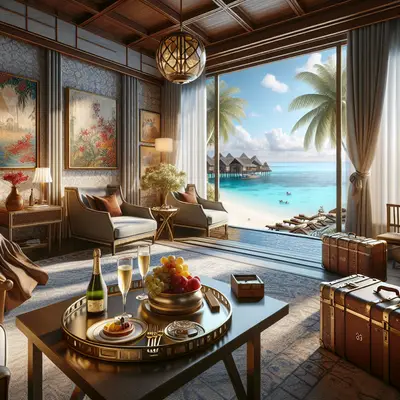
For the seasoned traveler, architecture is no longer just backdrop—it is strategy. Thoughtful design can create an immediate sense of calm, even before the first welcome drink or turndown service. The most sophisticated properties understand that privacy is not only about seclusion, but also about the choreography of sightlines, sound, and movement.
Luxury travelers are increasingly drawn to hotels and residences where layout does the heavy lifting: discreet secondary entrances, suites that eliminate corridor noise through clever angling, and public spaces that feel animated yet never crowded. Architectural privacy also extends to spatial zoning—a private plunge pool separated by landscaping rather than walls, dining alcoves set just far enough from the main room to allow conversation without isolation, spa suites with direct elevator access from guest floors.
In this context, a premium lifestyle means choosing spaces designed with a near-obsessive attention to human behavior. It is the difference between a beautiful lobby and a lobby that understands how you want to arrive: unhurried, unseen, and instantly oriented. Luxury travelers are now evaluating properties less on their square footage and more on how intelligently that space protects their peace.
Insight 2: Bespoke Service Has Become Quietly Anticipatory
Traditional notions of luxury service—formal greetings, scripted interactions, a parade of staff—are being replaced by something far more refined: the ability to anticipate needs without intruding. For the private jet set and villa habitués, the most memorable stays are often defined by what does not need to be requested.
This anticipatory service begins long before check-in. Preferred sleep temperature, lighting levels, minibar curation, and even how you like your luggage unpacked are increasingly captured and retained across stays. The most advanced hospitality teams build silent profiles not to sell, but to serve: ensuring your favored tea is already steeping at arrival hour, that your car is stocked with a specific brand of sparkling water, or that your suite lighting is preset to the exact warmth you chose on your last visit.
Discreet luxury is no longer about saying “yes” to every request; it is about removing the need to ask at all. In-flight crews who schedule meals around your internal clock rather than local time zones, yacht staff who plan tender runs just before neighboring boats do the same, concierge teams who rearrange your day around a delayed aircraft without a word—this is the level at which true premium living operates. The traveler feels not attended to, but understood.
Insight 3: Culinary Access Now Extends Far Beyond the Table
For those accustomed to premium cabins and invitation-only lounges, the true culinary privilege is no longer merely about extraordinary plates. It is about narrative, access, and authorship. The most discerning travelers are seeking experiences that move beyond the reservation—into the kitchens, the producers, and the landscapes that shape each dish.
Luxury travel itineraries now increasingly include visits to private vineyards at dawn, harvests with Michelin-starred chefs sourcing ingredients in real time, or late-night menus designed just for one party and never served again. The best properties curate introductions to small-scale farmers, coastal fishers, or heritage bakers whose products never appear in mainstream channels. Menus become living documents rather than static offerings, tailored not only to dietary preferences, but to mood, schedule, and even jet lag.
In-flight dining on premium carriers and private charters is evolving in the same direction. Rather than defaulting to caviar and champagne, culinary programs are turning toward terroir-driven selections, chef collaborations, and pairings that reflect the journey itself—champagne from the departure region, spirits or teas from the destination. For the luxury traveler, the most memorable meals are no longer just served; they are composed around their preferences and context, quietly tethered to where they have been and where they are going.
Insight 4: Time Management Has Become a Form of Design
Among those who measure distance in flight hours rather than miles, time is both the rarest asset and the most carefully sculpted. The premium lifestyle is now defined as much by what one does not do as by what one does. This is not productivity culture; it is temporal design.
Savvy luxury travelers are increasingly viewing their days through the lens of energy, not availability. Morning hours are defended for clarity-heavy decisions, late afternoons reserved for movement or recovery, and evenings structured around intimacy—whether with family, partners, or trusted circles. Premium services, from private aviation to tailored concierge teams, are selected not solely for comfort but for how effectively they compress friction: accelerating boarding, eliminating unnecessary waits, and pre-arranging every interaction that could otherwise demand attention.
The most sophisticated itineraries are built with negative space: deliberate gaps that allow for spontaneous experiences without compromising the overall arc of the journey. This might mean chartering a slightly longer route to ensure a quiet refueling stop, choosing a property for its ability to provide in-villa wellness and dining, or arranging meetings in locations with seamless arrival and departure options.
Time, in this context, is curated as carefully as wine or art. The premium choice is often the one that returns an extra hour of ease, a protected pocket of stillness, or the ability to move through the world without a visible sense of rush.
Insight 5: Discretion Is the Ultimate Indicator of Belonging
In an era defined by overexposure, the new luxury is the ability to live and move without broadcast. The most privileged experiences are rarely documented publicly; they are recognized through codes, not captions. For the seasoned luxury traveler, discretion has evolved from preference to principle.
This discretion is architectural (private entrances, unmarked elevators, villas hidden behind clean facades), but it is also cultural. Staff at the highest-caliber properties and carriers are trained not only in service, but in silence: no names mentioned in public spaces, no photographs taken without explicit consent, no visible reaction to the presence of public figures or high-profile guests. Guest lists are protected with the same intensity as financial data.
The most sophisticated travelers reciprocate this discretion. They favor properties and services that do not rely on celebrity or visibility, choosing instead those quietly known within their circles. Experiences are recommended in person rather than tagged online, and the most meaningful spaces—those where they truly relax—rarely appear in curated feeds.
In this world, the greatest luxury is not being recognized everywhere; it is being recognized precisely where it matters, by teams who know you deeply and never need to say so aloud.
Conclusion
A premium lifestyle, in its most elevated form, is a series of intentional choices about space, service, time, access, and discretion. For luxury travelers who already move through the world with ease, the next frontier is not escalation but refinement—selecting experiences that are increasingly aligned with their internal rhythms, not external expectations.
The quietest decisions often yield the most powerful upgrades: a property chosen for its architectural calm, a crew selected for its anticipatory intuition, an itinerary designed for energy rather than spectacle. In an environment where almost anything can be acquired, the true privilege lies in how gracefully each moment is shaped—and how little of that grace needs to be explained.
Sources
- UNWTO – International Tourism Highlights – Overview of global tourism trends and behavior among higher-spend travelers
- Virtuoso – 2024 Luxe Report – Insights into evolving preferences of luxury travelers and premium experiences
- Forbes Travel Guide – Standards and analysis of five-star service, hospitality design, and luxury property performance
- Condé Nast Traveler – How Hotels Are Redefining Luxury – Editorial perspective on modern luxury hospitality and shifting guest expectations
- Harvard Business Review – The Future of Customer Service Is Anticipatory – Examination of anticipatory service models and their impact on high-end client experiences
Key Takeaway
The most important thing to remember from this article is that this information can change how you think about Premium Lifestyle.