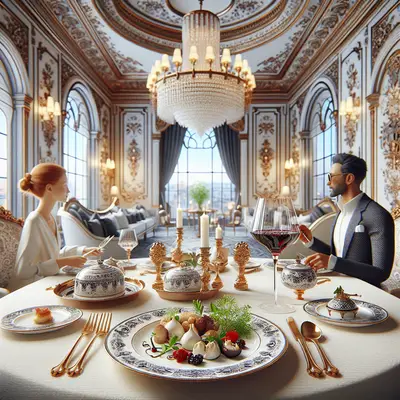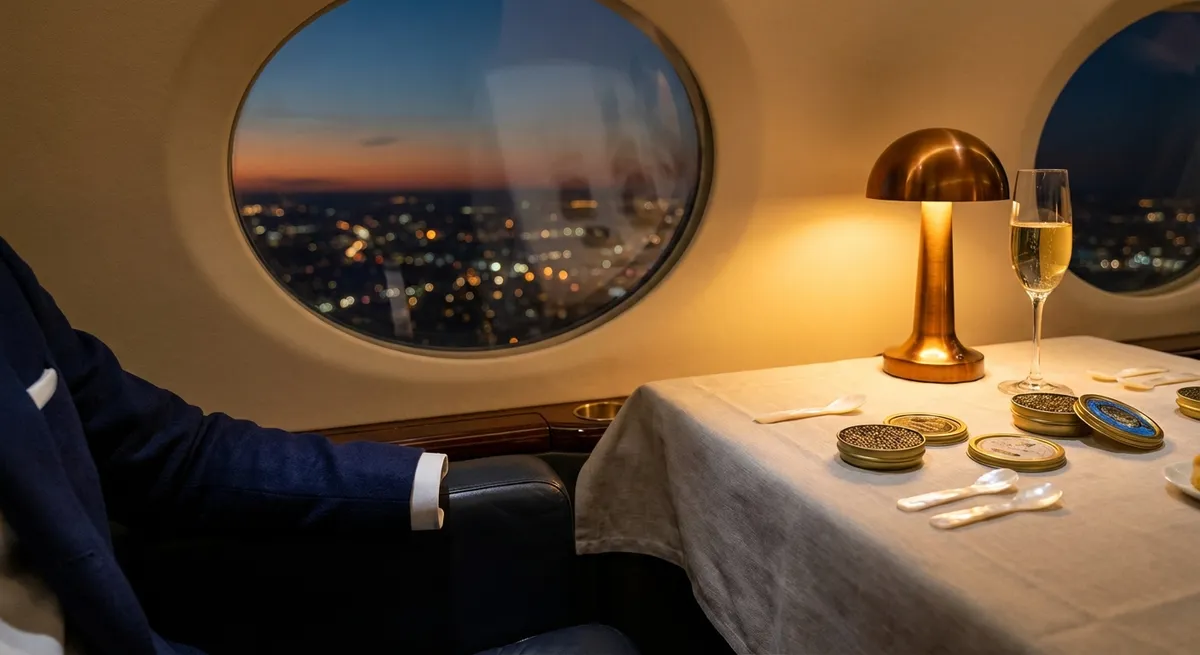
Fine dining for the frequent flyer is no longer about white tablecloths and tasting menus alone—it is about orchestration. For the luxury traveler, the most memorable meals are those that align seamlessly with time zones, itineraries, and an unspoken preference for precision. At this level, the restaurant is not just a destination; it is a finely tuned instrument in the broader symphony of a journey. What distinguishes a merely excellent restaurant from a truly world‑class experience is rarely on the menu—it’s in the choreography behind it.
Below, five discreet insights for travelers who expect their dining to match the altitude of their lifestyle.
1. The Pre-Flight Palate: Dining Designed Around Jet Lag
At the top end of hospitality, the finest restaurants are increasingly calibrating menus to how and when their guests travel. For a traveler stepping off an overnight flight, a 12‑course extravaganza is often less appealing than a precisely sized menu that respects fatigue, hydration, and body clock.
Savvy diners now share flight details with their concierge or private travel advisor well in advance. With this, a chef can adjust the rhythm of a meal: lighter, hydrating courses after a long-haul arrival, or more structured, protein-forward dishes before a red‑eye. Some Michelin-starred properties will quietly adjust sodium levels, lean into omega‑3‑rich seafood after lengthy air travel, or avoid heavy sauces for guests arriving from multiple time zones.
The luxury lies in the feeling that the restaurant understands not only your tastes, but your circadian reality. When the amuse-bouche arrives as a refreshing, precise reset rather than an indulgent overload, you know the kitchen has read more than the reservation—they’ve read your journey.
2. Invisible Choreography: How Elite Restaurants Anticipate You
In the world’s most sophisticated dining rooms, service operates on a nearly cinematic level of timing and foresight. For the jet-ready traveler, this invisible choreography is vital: you are balancing conference calls, departures, and sometimes security details. The restaurant that understands your cadence earns your loyalty.
At the highest tier, front-of-house teams build a “profile of presence”—a silent dossier captured across visits and sometimes across continents within a hospitality group. They note whether you favor mineral water over still, whether you tend to decline bread, your preferred table distance from the kitchen pass, or how quickly you like courses paced before an evening flight.
The discreet question, “Do you have a time you’d like to be finished by?” is not a formality; it’s the key to customizing the entire tempo of the evening. A 3-hour culinary narrative can be elegantly re-edited to 90 minutes without ever feeling rushed, if timing is managed from the outset. Travelers who recognize this will often signal their constraints clearly at booking—knowing that elite teams treat time as the most precious course.
3. Off-Menu Mastery: The Private Language Between Guest and Chef
For the truly seasoned traveler, the most memorable dishes are often those never printed on the menu. Off-menu requests, when handled with respect and discretion, form a quiet dialogue between guest and chef—a shared language of trust.
This is not about entitlement; it is about connection. Regulars at top restaurants will often email ahead with soft preferences—“a focus on late-summer vegetables,” “no strong game,” or “room for a single, exceptional cheese course.” In response, chefs may build a micro‑menu inside the tasting menu, introducing a dish that appears for no one else that evening, or reworking a signature plate to better match your travel rhythm.
The sophistication lies in subtlety. The best off-menu gestures are not ostentatious but deeply personal: a reinterpreted dish you loved on a previous visit, or a local ingredient that echoes a region you’ve just flown in from. For luxury travelers, this is where fine dining transcends performance and becomes a kind of correspondence—course by course.
4. The New Geography of Taste: Layering Cities Through Their Tables
Discerning travelers increasingly use restaurants as cartographers once used maps: a way to understand the contours of a city. One fine dining room gives you architecture and technique; three, chosen well, give you a portrait of an entire culinary culture.
Instead of chasing star counts alone, luxury travelers now curate a spectrum within a destination: a high‑concept, globally recognized flagship; an intimate counter or chef’s table with limited seats; and a refined, almost hidden local institution known more to residents than to lists. Viewed together, these experiences trace a narrative of place—from its markets and producers to its design language and evolving tastes.
This layered approach requires planning, often via hotel concierges, private travel consultants, or direct outreach to restaurants months in advance. The reward is a sense that you have not merely eaten “in” a city, but eaten “through” it—your table acting as a lens on its history, ambition, and everyday life. For the jet-set diner, this is how cities become more than stopovers; they become chapters in a personal atlas of taste.
5. Quiet Luxury in the Glass: Curated Cellars for the Global Traveler
For travelers accustomed to private aviation and bespoke itineraries, the wine list becomes more than a catalogue—it is a statement of philosophy. At the elite level, the most compelling cellars are moving beyond grand labels toward provenance, personality, and precision.
The most sophisticated restaurants now build cellars with a global traveler in mind: vintages chosen to pair with local ingredients, half-bottles for diners keeping an eye on early departures, and rarities served by the glass via Coravin or equivalent systems. This allows a guest to experience a benchmark Burgundy or an aged Riesling without committing to a full bottle, preserving clarity before a late-night flight.
Increasingly, world-class sommeliers will also ask a single, elegant question: “How would you like to feel when you leave the table?” The answer—refreshed, contemplative, celebratory—often guides their recommendations more than price or prestige. For luxury travelers, this is the quiet evolution of fine wine service: less about displaying the label, more about curating your state of mind between takeoff and landing.
Conclusion
For the Jet Ready traveler, fine dining is no longer a standalone indulgence—it is an integral, precisely tuned component of the journey. The most exceptional experiences are not necessarily the most theatrical, but the most attuned: to your time zone, your schedule, your preferences, and the unspoken details that define how you move through the world.
When a restaurant anticipates your pace, when a chef creates a dish that exists only for you that evening, when a sommelier matches not just your palate but your itinerary—this is where dining truly rises to the level of your travel. In that space between the runway and the table, luxury becomes something quiet, exacting, and deeply personal.
Sources
- Guide Michelin – About the MICHELIN Guide - Background on the criteria and philosophy behind Michelin-rated fine dining establishments
- World’s 50 Best Restaurants – The List - Reference for globally recognized restaurants that often define top-tier dining trends
- Cornell University School of Hotel Administration - Hospitality research insights on service design, guest experience, and restaurant operations
- Harvard T.H. Chan School of Public Health – Healthy Eating Plate - Evidence-based guidance on balanced eating, relevant to discussions of menu design around travel and health
- Coravin Official Website - Details on preservation technology enabling premium wines by the glass in fine dining settings
Key Takeaway
The most important thing to remember from this article is that this information can change how you think about Fine Dining.