The modern premium lifestyle is no longer defined by visible excess, but by deliberate calibration—of time, space, attention, and access. For today’s luxury traveler, the true asset is not the logo but the latitude to live precisely as one chooses, wherever one happens to be in the world. This is a life composed less of spectacle and more of carefully orchestrated moments, where privacy, narrative, and sensory nuance shape every decision. What follows is an exploration of that world: five exclusive, quietly powerful insights that inform how the most discerning travelers now move, choose, and inhabit their journeys.
The New Luxury: Curating Time, Not Things
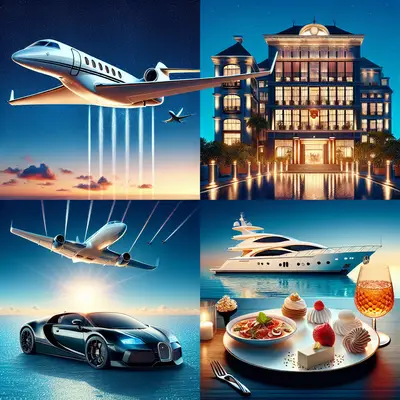
For the sophisticated traveler, the rarest commodity is no longer a coveted watch or a sold‑out suite—it is unscripted, high-quality time. The truly premium lifestyle has shifted from ownership to orchestration: the ability to step off a transatlantic flight and into a day that has been edited for friction, noise, and obligation.
This approach begins long before boarding. It’s felt in the seamless choreography of private airport transfers that bypass the main terminal, the pre-cleared documentation that erases immigration queues, and the quiet assurance that every element—driver, check-in, restaurant, wellness reservation—has been pre-aligned to your natural rhythm. Time is protected, not filled.
The most discerning travelers now choose partners—concierge services, aviation providers, destination specialists—on a single defining metric: how effectively they compress inconvenience and expand discretionary hours. A “premium” property or experience that consumes more time than it liberates, no matter how visually impressive, is simply off-brief.
The new benchmark is this: your schedule moves around you, not the other way around. Flights, meetings, and private experiences are layered with enough elasticity that you feel guided, never herded. In this geometry of time, luxury is not about doing more; it is about doing less, with far greater intention.
Invisible Infrastructure: The Quiet Architecture Behind Ease
Behind every effortless premium journey lies an infrastructure you rarely see—but always feel. The most elevated experiences are engineered, not improvised, via a mesh of relationships, local expertise, and meticulous contingency planning that protects you from both inconvenience and exposure.
This invisible architecture might be the hotel that pre-cools your suite based on regional weather and your past preferences, or the private aviation team tracking airspace congestion in real time to recalibrate departure by minutes, not hours. It appears in the restaurant that has your preferred table and lighting without you needing to ask, because your travel specialist communicated this quietly in advance.
Where mass-market travel relies on standardized systems, the premium traveler benefits from bespoke ones: personalized security protocols, discreet ground logistics, and destination intelligence that anticipates disruptions before they become visible. The true privilege is not simply skipping the line; it is never encountering the line to begin with.
Understanding this invisible infrastructure—and choosing partners who invest in it—is one of the most powerful differentiators in a premium lifestyle. Ease is not an accident; it is engineered. And for those who value discretion, the greatest luxury is when that engineering remains elegantly out of sight.
Sensory Precision: Designing How a Place Feels, Not Just Looks
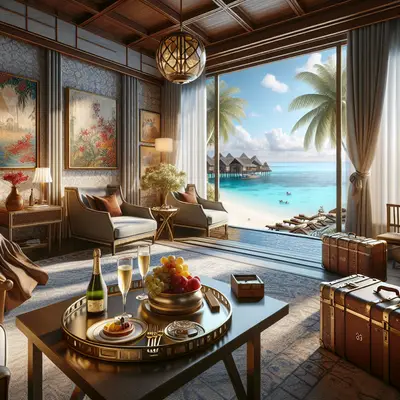
Sophisticated travelers no longer chase only iconic views; they curate how those views feel. The premium lifestyle is increasingly synesthetic—a precise orchestration of sound, scent, light, texture, and temperature that transforms a room or a journey into a deeply personal environment.
This is why certain suites seem inexplicably restorative, and others—however vast—feel flat. The difference is sensory intention: blackout shades that truly erase jet lag, acoustics that soften city noise without deadening life, linen weight chosen to match climate and season, water pressure that invigorates rather than merely functions. These details signal that someone has considered not just your stay, but your nervous system.
The most forward-thinking hospitality brands and private clubs are now partnering with sleep researchers, sound engineers, and lighting designers to refine these micro-experiences. Circadian-friendly lighting sequences, adjustable scent profiles, and hyper-customizable climate zones are no longer indulgent extras; they are the baseline for those who treat performance and recovery as non-negotiable.
For premium travelers, the insight is clear: always look beyond the photograph. Ask how spaces are tuned rather than simply how they are furnished. The true luxury is inhabiting environments that leave you clearer, calmer, and more capable than when you arrived.
Access as a Private Language, Not a Public Statement
In the previous era of luxury, access was performative: the right table, the visible upgrade, the front-row seat. Today, the most valued forms of access are often invisible to anyone but the person experiencing them. The distinction is subtle but profound.
Modern premium travelers seek entry not to the loudest spaces, but to the right ones—the private gallery viewing before opening hours, the museum curator who walks you through a collection without fanfare, the perfumer who composes a scent with you in mind, the chef who quietly rearranges the menu around your preferences without announcing it to the room.
This kind of access is less about status and more about intimacy with a place, its culture, and its creators. It shifts the narrative from “I was there” to “I understood what was happening there.” It is not about being seen in the world’s coveted settings, but about experiencing their depth without the filter of the crowd.
For those living a premium lifestyle, the most treasured reservations and introductions are rarely posted or tagged. They are arranged through trusted networks, sustained by reciprocity and discretion, and remembered more for their emotional resonance than their photogenic appeal. The ultimate privilege is to move through the world with a keyring of doors that do not appear to exist for others.
The Edited Wardrobe: Mobility as the New Status Symbol
In a world of near-constant movement, the most telling indicator of a premium life is not the size of one’s wardrobe, but its precision. The refined traveler operates from an edited system: garments, accessories, and tools that function impeccably across climates, time zones, and contexts—without announcing themselves.
This is not minimalism for its own sake; it is strategic optimization. Fabrics are chosen not only for appearance but for recovery time after a flight, resistance to creasing, and adaptability from informal to formal environments with minor adjustments. Footwear is selected for both architectural cities and remote properties, with silhouettes that transition from private jet to gallery opening without losing proportion or polish.
The contemporary premium wardrobe often leans toward restrained palettes, impeccable tailoring, and discreet craftsmanship—pieces that disappear into a room until examined closely. Logos, if present, are subtle to the point of near-invisibility. The statement is not that one has access to everything, but that one needs very little to be impeccably prepared.
This philosophy extends beyond clothing. Luggage is modular and considered, technology is streamlined to a small ecosystem of reliable devices, and personal care items are curated more like a travel pharmacy than a vanity. The reward is mobility: the ability to leave at short notice, arrive composed, and feel at home—elegantly and efficiently—anywhere.
Conclusion
The premium lifestyle, particularly for the modern luxury traveler, has evolved into a quiet mastery of alignment: of time with intention, of access with authenticity, of design with well-being. It is less about what is visible from the outside, and more about what feels impeccably attuned on the inside—how a day flows, how a space restores, how a journey reveals a place without exhausting the person experiencing it.
At its highest expression, this way of living is both refined and resolutely personal. It values curation over accumulation, intimacy over exposure, and quality of attention over quantity of activity. For those who understand it, luxury is no longer a destination or a purchase; it is a sustained standard of experience, carried quietly from one city, one sky, one keycard, to the next.
Sources
- [McKinsey & Company – The State of Fashion 2023](https://www.mckinsey.com/industries/retail/our-insights/state-of-fashion) – Analysis of shifting luxury consumer priorities from product ownership to experiences and time value
- [Bain & Company – Luxury Goods Worldwide Market Study](https://www.bain.com/insights/luxury-goods-worldwide-market-study-fall-winter-2023/) – Insight into experiential luxury, discreet consumption, and evolving expectations of high-net-worth travelers
- [Harvard Business Review – The Future of Customer Experience](https://hbr.org/2020/10/the-future-of-customer-experience) – Discussion of invisible service design, frictionless journeys, and the impact of seamless infrastructure on perceived value
- [World Travel & Tourism Council (WTTC)](https://wttc.org/research/insights) – Research on high-end travel trends, personalization, and the growing demand for exclusive, tailored experiences
- [Cornell University School of Hotel Administration – Center for Hospitality Research](https://sha.cornell.edu/faculty-research/centers-institutes/chr/research/) – Hospitality studies on guest experience, sensory design, and the premiumization of service environments
Key Takeaway
The most important thing to remember from this article is that this information can change how you think about Premium Lifestyle.