Luxury travel today is less about where you are seen and more about how you arrive—mentally, physically, and emotionally. The modern premium traveler is not chasing spectacle; they are curating states of being. Every touchpoint, from the car that collects them at dawn to the linen on a late-night turn-down, is part of an orchestrated experience that feels effortless, precise, and deeply personal.
Jet Ready’s audience understands that true luxury is not loud. It is composed, intentional, and exquisitely calibrated. What follows are five exclusive, quietly powerful insights that are reshaping how discerning travelers design their journeys—and how they measure what “premium” truly means.
The Architecture of Time: Treating Hours as a Design Material
For the informed traveler, time is no longer a constraint; it is a material to be shaped with care.
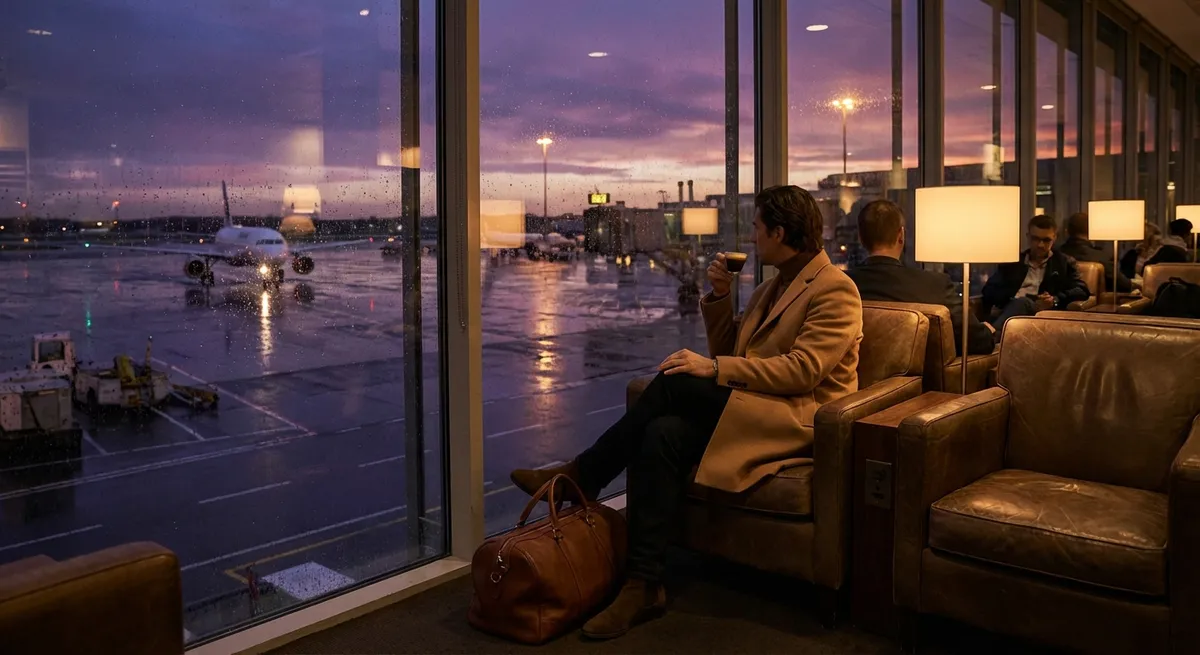
Premium itineraries are now engineered around energy, not simply logistics. Red-eyes are minimized not because they are inconvenient, but because they compromise cognitive clarity on arrival. A well-designed journey may deliberately include a six-hour layover in Zurich or Singapore—used not as dead time, but as a structured reset with spa access, quiet workspaces, and sophisticated dining that restores equilibrium.
This approach extends beyond flight selection. Savvy travelers now negotiate early check-ins and late check-outs as a non-negotiable part of their booking—not as a perk, but as architecture. Arrival is timed to coincide with natural light, avoiding late-night disruptions when the body is least prepared to adjust. Meetings are set a full day after landing, not immediately on arrival, acknowledging that high performance requires recovery.
In this model, premium travel is judged by how gently it moves you across time zones, not how quickly. The new badge of sophistication is the ability to arrive not depleted, but fully present.
Curated Friction: Choosing Where Not to Optimize
The most discerning travelers have learned a quiet truth: a perfectly optimized journey is often a forgettable one.
Premium experiences increasingly embrace what might be called “curated friction”—small, intentional imperfections that create texture and memory. This might mean choosing a historic hotel with fewer amenities but a richer narrative over a brand-new property that feels internationally interchangeable. Or opting for a chauffeured vintage car over a faster private transfer, because the vehicle becomes part of the story of place.
Exclusive travelers are also reevaluating the endless pursuit of convenience. They might decline automatic upgrades to the highest room category, preferring a suite with a specific view or architectural detail that aligns with their sensibility. They may bypass a hyper-efficient hotel in favor of a property where the staff writes handwritten notes, remembers preferred wines, and occasionally makes human, forgivable mistakes that reveal genuine care.
This curated friction is not inefficiency; it is deliberate texture. It is the difference between being processed and being hosted—between a frictionless journey that blurs into memory, and a considered one that lingers.
Private Worlds Within Public Spaces
One of the most coveted luxuries now is not seclusion, but selective permeability: the ability to move between public spaces and private worlds without visible effort.
Premium travelers are increasingly designing their itineraries around layered access. This might mean a first-class or private aviation experience to avoid congested terminals, followed by stays at urban properties with discreet club floors, private entrances, and guest-only lounges above the city’s noise. In resort environments, it often manifests as villas with separate staff access, plunge pools shielded from neighboring sightlines, and private dining set-ups that feel integrated rather than staged.
The most sophisticated properties understand this and are evolving accordingly. They offer elevated micro-environments—a library that feels like a private members’ club, a reserved section of the terrace bar with its own menu, a concierge who functions less like a service point and more like a dedicated curator. The traveler can choose, moment to moment, how porous their world should be.
What has changed is that exclusivity is no longer only about being hidden; it is about controlling visibility with elegance. The premium traveler wants to see the city, the resort, the restaurant—but to be seen only when, and how, they choose.
Precision in the Invisible: The New Standard of Service
The most powerful expressions of luxury often leave no visible trace. They are felt, not announced.
Elite travelers increasingly assess a property, airline, or service partner not by the obvious markers—lobby scale, brand names, showpiece amenities—but by the invisible infrastructure of care. Was the room pre-set to their preferred temperature upon arrival? Did housekeeping anticipate a late wake-up and adjust service times without being asked? Did the hotel’s digital system remember a pillow preference from a stay three years ago, halfway across the world?
This is where technology and hospitality meet at their most refined point. Biometric boarding, seamless customs fast-tracking, and app-based room controls are no longer novelties; they are baselines. True differentiation comes from how these tools are orchestrated to feel intuitive rather than intrusive. The traveler should feel known, never surveilled; supported, never managed.
The people behind the experience matter as much as the systems. The premium traveler notices whether staff are empowered to deviate from script, waive a fee, or improvise a solution without waiting for managerial approval. They recognize when a property has invested not just in training, but in judgment—and that is where loyalty quietly solidifies.
Meaning as the Ultimate Upgrade
The most exclusive insight of all is perhaps the simplest: luxury travel, at its highest level, is no longer satisfied with being merely pleasurable. It must be meaningful.
For many premium travelers, the question has shifted from “What can I access?” to “What will this change in me?” This might take the form of wakeboarding at dawn with a former Olympian coach, a privately arranged visit to a conservation project with a scientist, or a tasting menu that functions as a narrative of a region’s culture rather than an exercise in excess.
The value now lies in experiences that recalibrate perspective. A meticulously planned journey may include a day of complete unstructured time, forcing a reset from an over-curated life. A yacht charter might build in a day anchored near a remote village, with a meaningful, respectful cultural exchange rather than a staged “local experience.” Even in ultra-urban settings, the premium traveler seeks depth—a walk with an architectural historian, an after-hours gallery viewing with the curator, a private recital in a hidden venue.
At this level, the real “upgrade” is not to a larger suite or a better table, but to a richer sense of connection—to place, to people, and to one’s own priorities.
Conclusion
Premium travel is undergoing a quiet but profound refinement. It is no longer defined simply by price point, square footage, or brand prestige, but by intelligence, intentionality, and the choreography of details that most travelers will never see—but the right traveler will always feel.
For those who move through the world with discernment, the question is no longer “How far can I go?” but “How precisely can I arrive?” The future of luxury belongs to those who design journeys that honor time, embrace selective friction, create private worlds, perfect the invisible, and pursue meaning as their highest form of return.
Sources
- International Air Transport Association (IATA) – Business Travel Trends – Industry reports and press releases on evolving premium and business travel behaviors
- Skift – The Future of Luxury Travel – Ongoing analysis of global luxury travel trends, guest expectations, and brand strategies
- Virtuoso – Luxury Travel Trends & Insights – Insights from a leading luxury travel network on how high-end travelers are redefining value and experience
- McKinsey & Company – The Comeback of Corporate Travel – Research on changing expectations around productivity, well-being, and experience in premium and corporate travel
- Condé Nast Traveler – Future of High-End Hospitality – Features and reporting on evolving standards in luxury hotels, resorts, and service design
Key Takeaway
The most important thing to remember from this article is that this information can change how you think about Premium Lifestyle.