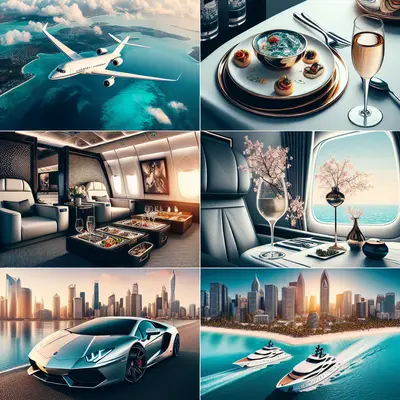
Luxury travel is no longer a question of how far you can go, or how fast. It is about the deliberate decision to slow the world down to your tempo—curating places, people, and moments that feel meticulously aligned with who you are. At Jet Ready, we see modern luxury not as volume, but as precision: fewer check-ins, more resonance; less spectacle, more intention. What follows is a considered exploration of how the most discerning travelers are quietly redesigning the way they move through the world—and five exclusive insights that sit just beneath the surface of a truly elevated journey.
Luxury as Curation, Not Excess
Today’s most sophisticated travelers are stepping away from a “more is more” mindset and embracing a curated approach to their itineraries. Rather than visiting six cities in ten days, they may choose two—and experience each with a depth that used to be reserved for residents, not visitors. The hotel is no longer just a base; it’s a carefully chosen platform for how you want to feel and who you want access to. The question is no longer, “What can I see?” but “What is worth my uninterrupted attention?” This shift has given rise to stays where a single, impeccably designed room, a view that changes with the light, and a well-timed in-house experience (a chef’s quiet tasting, a sommelier’s off-list cellar pour, a private gallery viewing arranged by the concierge) becomes the true definition of value. In this lens, luxury is the confidence to edit, not accumulate.
The New Compass: Quietly Strategic Destination Choices
For the well-traveled, destination choice has become a highly strategic, often data-informed decision rather than a simple aspiration board. Savvy travelers now examine seasonality with a surgical eye, targeting cities and coastlines in their “shoulder moments,” when the destination is still itself but between crowds. Mediterranean enclaves in late September, alpine villages in early spring, and cultural capitals in their museum-dense, post-holiday calm are favored over peak-season theatrics. Flight connectivity, airport experience, and time-zone alignment with home commitments are also part of the calculus, ensuring that long weekends feel expansive rather than compressed and that jet lag becomes a manageable nuance, not a trip-defining burden. Ultimately, the question becomes: where does your presence feel additive—to you and to the place—rather than extractive?
Five Exclusive Insights for the Discerning Traveler
Discreet luxury travelers often share a set of quiet practices that never make it to social feeds but absolutely define their experience. These five insights live in that private ledger of know-how—small in appearance, decisive in impact.
1. Treat the Hotel GM as Your Silent Co-Designer
Behind every truly seamless stay is a general manager—or senior guest relations lead—working several steps ahead. Instead of waiting to arrive and “see how it goes,” serious travelers initiate a brief, thoughtful dialogue well before check-in. A concise email outlining your preferences (morning light vs. blackout, sensitivity to fragrance, preferred pillow density, privacy expectations, dietary nuances) allows the property to tailor your stay before you even land.
This one action often unlocks quiet privileges: rooms with optimally oriented views, introductions to key staff who actually remember your name, and access to experiences that never appear on websites—early-access spa appointments, off-menu dishes, or private tastings with the head bartender. The most refined luxury is not the visible upgrade; it’s the feeling that the property was lightly rearranged around you.
2. Reserve One Night for the Hotel, Not the City
In cities rich with culture and dining, it is easy to spend every evening outside the hotel—and miss the very reason you chose that property. Discerning travelers now intentionally reserve one evening solely for the hotel: dinner on property, a slow drink at the bar, perhaps a late swim or a quiet hour in the library. That night becomes a calibration point, a way of absorbing the property’s full atmosphere instead of merely passing through it.
This practice often reveals details easily overlooked in a rushed itinerary: the rhythm of service as the lobby empties, the way the bar team shifts from classic service to more personal conversation, the subtlety of the hotel’s soundscape. That single evening frequently becomes the reference memory for the entire stay—the moment the hotel transitions from “accommodation” to “place you briefly lived.”
3. Use Flight Time as a Deliberate Reset, Not Dead Time
For many, flights are something to be endured; for the seasoned luxury traveler, they are the rarest resource of all: protected time. Rather than fragment the journey with endless in-flight entertainment and half-finished tasks, the most refined approach is to define a “flight ritual” in advance.
This might include a specific reading list reserved only for flights, a sequence of hydration and skincare tailored to cabin conditions, and a strict rule of digital disconnection for at least part of the journey. Long-haul business or first becomes the equivalent of a moving retreat: gourmet yet measured dining, a carefully chosen sleep window, and a quiet hour before landing to set intentions for the days ahead. When flight time is seen as an integral chapter of the trip, not a preface, arrival itself feels composed rather than disoriented.
4. Seek Access, Not Spectacle
In many destinations, the most photographed experiences are rarely the most rewarding. Discerning travelers increasingly prioritize access over spectacle: not the front-row table everyone posts, but the after-hours access to a gallery; not the most famous vineyard, but the second-generation estate that rarely hosts the public. Instead of asking, “What’s the best restaurant?” they ask, “Who is the chef that other chefs respect?” and then quietly follow that thread.
This pursuit of access also means collaborating with local experts who understand your taste rather than following generic “top 10” lists. Private guides who know curators by first name, fixers who can arrange closed-door atelier visits, and concierges with longstanding relationships in the city can all convert a standard itinerary into something that feels quietly privileged rather than loudly exclusive.
5. Design an Exit as Carefully as an Arrival
Most itineraries are front-loaded with attention to arrival, and then taper into a rushed departure. Sophisticated travelers reverse this pattern, giving equal weight to how they leave. This can mean scheduling the final night closer to the airport in an unexpectedly refined property, ensuring that departure morning is measured rather than frantic. It might also involve a deliberate “closing ritual”: a final early walk, a last coffee at a favorite corner, a short note left for a staff member who made a difference.
They also manage the re-entry to daily life with intention—avoiding red-eye landings that force an immediate return to meetings, building in a buffer day, or arranging airport services that make the journey home as composed as the trip itself. When departure is elevated, the memory of the journey remains intact, not overshadowed by logistical fatigue.
The Subtle Architecture of a Trip Well-Lived
At its highest expression, luxury travel is not about collecting places; it is about designing atmospheres—in the air, in the room, at the table, and in your own internal pace. It is the decision to exchange volume for precision and noise for texture. The most memorable journeys rarely hinge on a single dramatic moment; they are built from dozens of exquisitely handled details that never need to announce themselves.
As you plan what comes next, consider not just where you wish to go, but how you wish to move: who will quietly co-design your stay, which evening you will reserve for the hotel itself, what rituals will define your time in the air, and how intentionally you will choose your entrances and exits. The destinations will change; the architecture of a truly refined journey will not.
Sources
- Virtuoso: 2024 Luxe Travel Trends - Industry insights into how high-net-worth travelers are redefining luxury experiences
- Condé Nast Traveler – The Future of Luxury Travel - Exploration of evolving expectations among luxury travelers
- Forbes – Why High-End Travelers Want Authenticity, Not Excess - Analysis of the shift from conspicuous consumption to meaningful, curated experiences
- American Express Travel: Global Travel Trends Report - Data-backed overview of emerging preferences among premium cardmember travelers
- Skift Research: The State of Luxury Travel - In-depth report on luxury travel behavior, motivations, and spending patterns
Key Takeaway
The most important thing to remember from this article is that this information can change how you think about Luxury Travel.