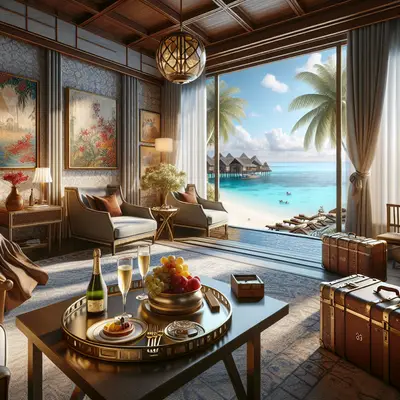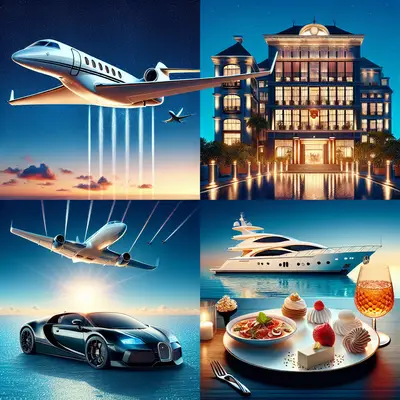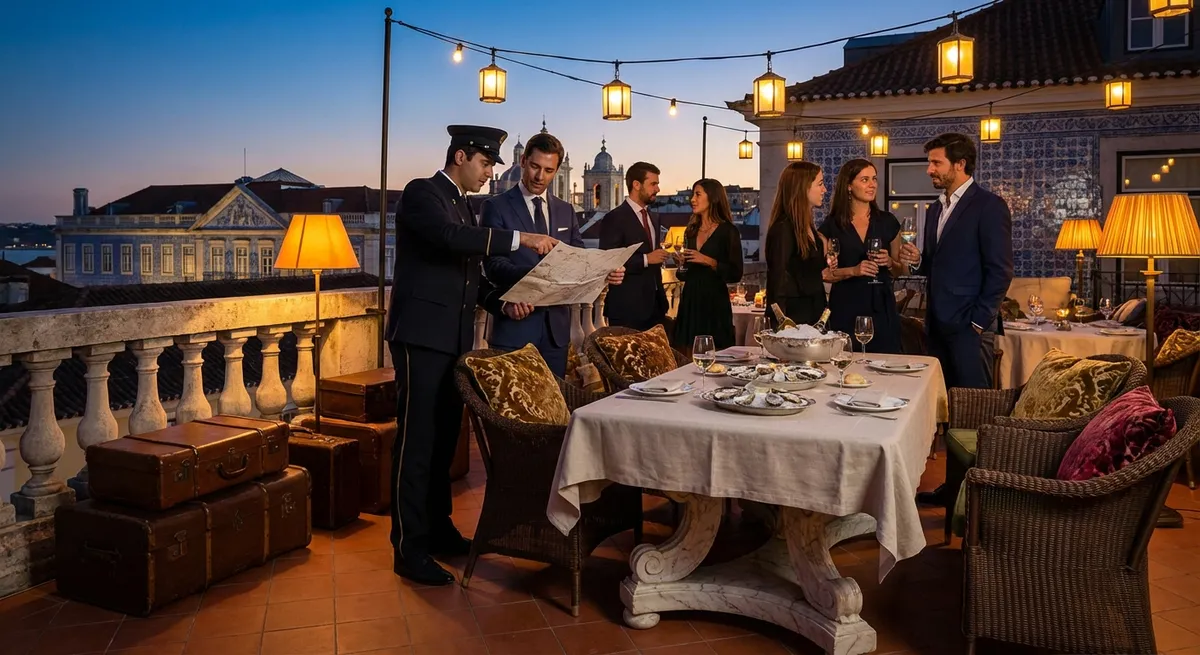
The most discerning travelers no longer chase status symbols; they curate states of mind. Premium lifestyle today is defined less by logos and square footage, and more by the choreography of time, attention, and experience. What emerges is a quieter, deliberately composed way of moving through the world—one in which every detail is intentional, every interaction considered, and every journey feels exquisitely unscripted yet flawlessly orchestrated.
Below are five exclusive insights shaping how luxury travelers are living, booking, and experiencing the world now—subtle shifts that separate the merely expensive from the truly exceptional.
1. The New Luxury: Time as the Ultimate Currency
For the modern high-end traveler, time is no longer something to be spent; it is something to be curated. The most coveted itineraries today are not the busiest but the most breathable—designed with generous margins for serendipity, recovery, and reflection. Instead of racing between attractions, premium travelers are seeking fewer, deeper experiences with longer stays and slower transitions.
This shift is visible in the growing preference for extended residencies over whirlwind weekends. A three-week stay in a single city, anchored in an understated private residence, offers something a packed, multi-country itinerary never can: familiarity, rhythm, and an almost local intimacy with a place. Time also shows up as a luxury in service design—private airport transfers that eliminate friction, in-villa check-ins that replace lines with welcome rituals, late check-outs negotiated quietly in advance.
The most sophisticated itineraries now include protected “white space” on the calendar: afternoons with no agenda, entire days where the only entry is “wander.” This deliberate under-programming isn’t laziness; it’s a recognition that true indulgence is not how much you do, but how fully you inhabit what you choose.
2. Invisible Service: When Excellence Leaves No Fingerprints
If the last decade of luxury hospitality was defined by visible opulence, this one is being defined by a new aesthetic: invisible service. For the most discerning guests, the highest compliment is not dramatic flourish, but the seamless absence of friction—where everything is handled before it becomes a need, and yet nothing feels intrusive or performative.
This invisible service relies on quiet mastery rather than spectacle. Guest preferences are learned and remembered discreetly: pillow firmness, preferred water temperature, the angle of a reading lamp, the exact espresso order timed to appear just as a guest finishes their morning call. Technology plays a role, but only as a silent enabler; the premium experience is never about the app, the interface, or the gadget, but about the ease they create in the background.
What differentiates true premium service is restraint. The team knows when not to knock, when not to call, when not to ask, “How is everything?” for the fourth time. Luxury travelers increasingly value privacy over performance—choosing environments where the staff is omnipresent yet never obvious, where a sense of calm continuity replaces the constant choreography of attention.
3. Precision Personalization: Experiences Built Around a Single Individual
Generic VIP treatment—welcome drinks, handwritten notes, late check-out—is now considered baseline. The contemporary premium traveler expects a level of personalization that feels less like templated hospitality and more like a bespoke commission. The most memorable journeys are no longer “for couples” or “for families”; they are for one specific person or one specific group, with nuances tailored to their particular rituals and rhythms.
This can mean itineraries built around one defining obsession: contemporary art in remote spaces, small-producer natural wines, night-sky viewing far from light pollution, or even access to specialist artisans in fields like watchmaking, perfumery, or bespoke tailoring. Itineraries are shaped to reflect not only interests but energy patterns: morning people receive sunrise experiences and early-access bookings; night thinkers are given late dinners, private museum viewings after hours, and silent late-night transfers.
Premium operators now build dossiers not just on preferences, but on patterns: how a person travels for work versus leisure, their tolerance for spontaneity, their appetite for social interaction. The most elevated form of personalization is anticipatory—designing experiences a traveler did not know they wanted, but recognize instantly as “exactly right” when they unfold.
4. Layered Privacy: Crafting Worlds Within the World
Privacy has evolved from “no one can see me” to “only the right people can reach me.” For high-end travelers, premium lifestyle now hinges on a sophisticated concept of layered privacy—creating nested experiences where access, exposure, and connection are curated intentionally at every level.
This shows up physically in the choice of accommodations: stand-alone villas or private floors within major properties, residential-style suites with discreet entrances, or yacht charters that offer complete control over environment and guest list. But layered privacy is also digital and social. Dedicated communication channels, private concierges, and secure, pre-vetted networks of drivers, guides, and hosts create a perimeter of trust that travels with the guest from city to city.
Luxury travelers are increasingly seeking places where they can move between modes: public when desired, protected when needed, invisible when necessary. A lounge where they can watch the world; a terrace where they can observe without being observed; a dining room where the table feels both integrated into and insulated from the energy around it. The most refined environments offer adjustable privacy—spaces and services that can expand or contract in visibility and access at a moment’s notice.
5. Quiet Sustainability: Responsible Indulgence Without Compromise
For the contemporary premium traveler, sustainability is no longer a marketing differentiator; it is an expectation. Yet the most sophisticated guests are not interested in being preached to or asked to sacrifice comfort. Instead, they seek an alignment of values expressed through quietly responsible indulgence—thoughtful decisions layered into the fabric of the experience without fanfare.
This can manifest as hyper-local sourcing that shortens supply chains while elevating quality: linens woven by regional artisans, ingredients sourced from nearby farms or coastal fisheries, onboard menus designed around seasonal abundance. It also means working with properties and operators who treat environmental certifications and social impact partnerships as table stakes, not headline features.
Discerning travelers are beginning to ask more granular questions: How is staff housing managed? What is the resort’s relationship with the surrounding community? Are conservation projects meaningful and measurable, or merely decorative? The most compelling answer is not a sustainability report left on a coffee table, but the feeling that one’s presence is part of a thoughtful, regenerative ecosystem—where pleasure and responsibility are not at odds, but elegantly intertwined.
Conclusion
The new premium lifestyle is less a collection of things and more a collection of finely tuned decisions. Every choice—of destination, partner, property, and pacing—becomes a quiet declaration of values: time over spectacle, depth over volume, subtlety over display. For luxury travelers, the true privilege is no longer simply access, but authorship: the ability to move through the world on their own terms, supported by invisible infrastructures of care, precision, and trust.
In this evolving landscape, the most memorable journeys are not the ones that look impressive from the outside, but the ones that feel impeccably calibrated from within—a private dialogue between place, person, and possibility.
Sources
- Skift: The Future of Luxury Travel - Industry analysis on evolving expectations of high-end travelers
- Virtuoso: 2024 Luxe Report - Insights on personalization, extended stays, and emerging luxury travel trends
- Forbes Travel Guide: What Defines Modern Luxury - Criteria illustrating how invisible service and refined details shape premium hospitality
- World Travel & Tourism Council – Sustainability in Travel & Tourism - Overview of how sustainability and responsibility are integrated into high-end travel
- Harvard Business Review: The Future of Customer Service Is Invisible - Exploration of anticipatory, low-friction service models relevant to luxury experiences
Key Takeaway
The most important thing to remember from this article is that this information can change how you think about Premium Lifestyle.