Fine dining today is less about spectacle and more about a precise orchestration of details that only fully reveals itself to those who know where to look. For luxury travelers, the most rewarding meals are no longer defined only by Michelin stars or famous chefs, but by an interplay of discretion, craftsmanship, and quiet intelligence. The restaurants that matter most to this new generation of global diners are those that understand how to turn a table into a complete, immersive environment—one that respects your time, anticipates your needs, and offers a sense of place that lingers long after the final course.
Below are five exclusive, often unspoken insights that shape the world’s most compelling fine dining experiences—nuances that seasoned luxury travelers will recognize and seek out.
1. The Architecture of Arrival: How the Room Frames Your Experience
In the most considered dining rooms, your experience begins several meters before you see your table. The path from entrance to seat is deliberately choreographed: light levels shift subtly, sound softens, and visual noise disappears. Top-tier restaurants use this sequence to reset your senses after transit, meetings, or city chaos—essentially building a decompression tunnel into the architecture.
Notice how the host controls your first sightline. In forward-thinking properties, you rarely walk directly into the busiest part of the room. Instead, you catch glimpses: a reflective bar, the outline of an open kitchen, an arrangement of florals that hints at the restaurant’s seasonal narrative. The best houses never overexpose the room at once; they allow it to unfold.
For luxury travelers, this matters because the “architecture of arrival” signals whether the establishment understands the modern premium guest: someone managing screen fatigue, jet lag, and compressed schedules. A nuanced arrival ritual—unhurried greeting, immediate relief of outerwear, a discreet check of dietary profiles—suggests that the house has designed not only a menu, but a state of mind.
2. The Quiet Intelligence of Service: Reading You, Not Performing at You
Traditional fine dining service often relied on ceremony: synchronized cloches, choreographed silverware changes, memorized speeches. Contemporary high-end rooms are replacing that with something more sophisticated—service that edits itself to the guest in real time.
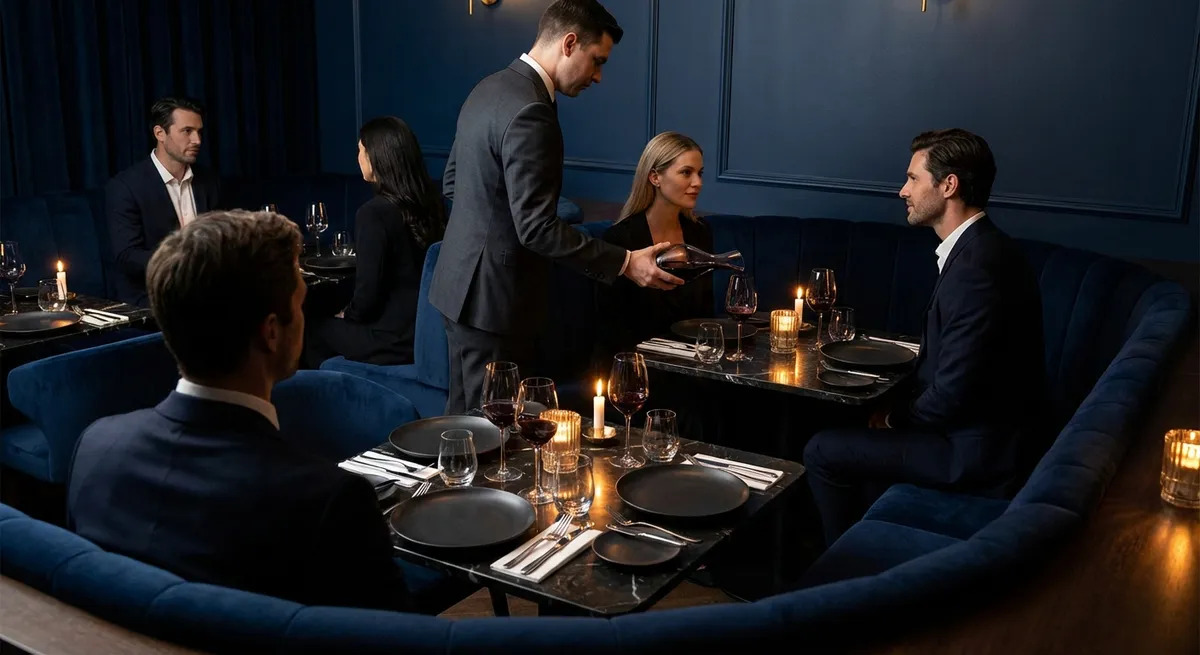
In the best restaurants around the world, teams are trained less like waitstaff and more like highly observant hosts. They read wristwatches to pace the meal, laptop bags to anticipate power outlets, and language cues to switch seamlessly between formality and familiarity. With frequent travelers, a skilled captain will often open with a few precise questions—“Do you prefer to decide course‑by‑course, or would you like us to propose a narrative?”—and then adjust the entire tone of the evening based on your answer.
This “quiet intelligence” is especially prized by luxury travelers moving between time zones and cultures. A truly premium dining room can decode your energy within the first five minutes: shortening briefings if you are clearly fatigued, elongating moments if you’re in a celebratory mood, filtering recommendations through your past preferences if you’re a returning guest. Service becomes less about scripted perfection and more about calibrated intuition.
3. Beyond the Plate: The New Language of Terroir and Time
For years, the language of fine dining revolved around ingredients and techniques: wagyu, truffle, fermentation, sous-vide. Today, the most forward-looking kitchens speak equally fluently about terroir and time—where things come from, and when they are at their most expressive.
Elite travelers will notice a distinct shift: menus that read like cartography and chronology rather than grocery lists. A simple vegetable course might anchor you to a very specific valley, tide line, or micro‑season. The restaurant is not merely “sourcing locally”; it is curating a sequence of ingredients that could only exist in that place, in that moment. This is particularly powerful when you are in transit: a single meal can give you a more meaningful sense of a region than a dozen tourist experiences.
Another emerging marker of serious intent is transparency. Many restaurants at the top of the global conversation now highlight regenerative agriculture, traceable seafood, and lower‑impact luxury ingredients. For the international guest, this is more than a moral checkbox; it is a guarantee that the restaurant is connected to a deeper ecosystem of quality—fishermen, growers, vintners—whose work you can taste on the plate and, perhaps, visit on a future trip.
4. The Cinematography of Pairing: Moving Beyond Wine as Default
The traditional wine pairing model—a glass with every course, often climbing in intensity—no longer suits every modern luxury traveler. Between long flights, demanding schedules, and an increased focus on wellness, many guests now seek nuance over volume. Leading restaurants have responded with a new “cinematography” of beverages: sequences that use alcohol, extraction, temperature, and texture the way a filmmaker uses light, shadow, and pacing.
In this new language, a pairing might open with a low‑ABV aperitif infused with local botanicals, transition into a single, immaculate glass of aged white, then detour into a house‑fermented tea, a clarified juice, or an aromatized water served at cellar temperature. Alcohol becomes one of several tools, not the sole protagonist.
For discerning travelers, these programs serve three purposes. First, they allow you to experience the full narrative of the menu without leaving the table overwhelmed. Second, they showcase elements of local terroir that wine alone might miss—indigenous herbs, regional fruits, traditional non‑alcoholic preparations. Third, they respect the reality that tomorrow may involve a boardroom, a flight deck, or an early departure. The finest restaurants today can build a pairing that fits your evening, your physiology, and your itinerary with equal sensitivity.
5. Discretion as Luxury: Managing Privacy, Pace, and Presence
In the upper tiers of hospitality, privacy is no longer a side note; it is a design principle. For global travelers who blend business, leisure, and public visibility, the true luxury of a restaurant often lies in what is not seen and not heard.
The best houses engineer privacy through both architecture and choreography. Tables are spaced for conversation, but also angled to limit sightlines. Host stands are positioned so arrivals feel welcome, not displayed. For guests who require it, there may be side entrances, private corridors to restrooms, or the option to settle the bill seamlessly without an obvious check drop.
Equally important is the management of presence: how often a server approaches, how long your table is yours, how subtly the room guides your pace. Leading restaurants track your trajectory from the moment you sit—how quickly you finish a glass, how engaged you are with your companions, whether you glance at your watch—and adjust the service tempo without ever forcing you to declare you’re rushing or lingering.
For luxury travelers, this level of discretion is a powerful filter. It reveals which establishments understand fine dining not just as cuisine, but as a complete, protective environment: one where you can seal a deal, share something personal, or simply remain partially off‑stage while still feeling exquisitely looked after.
Conclusion
Fine dining, at its highest level, has moved decisively beyond white tablecloths and elaborate plating. For the contemporary luxury traveler, the truly memorable restaurants are those that operate with layered intelligence: choreographing your arrival, reading your unspoken cues, connecting you to a specific time and place, curating beverages as narrative, and protecting your privacy without ostentation.
What emerges is not just a meal, but a precisely tuned interval in your journey—a controlled, beautifully crafted pause. In a world of perpetual motion, that ability to suspend time, even for a few hours, is the ultimate luxury.
Sources
- Michelin Guide – Fine Dining Trends – Overview of evolving global fine dining practices and guest expectations
- The World’s 50 Best Restaurants – Articles & Insights – Coverage of leading restaurants and emerging directions in gastronomy
- Harvard T.H. Chan School of Public Health – The Nutrition Source: Beverages – Context on changing attitudes toward alcohol and low‑ABV or non‑alcoholic options
- James Beard Foundation – Sustainability in Fine Dining – Discussion of sourcing, regenerative practices, and responsible luxury in restaurants
- UNESCO – Intangible Cultural Heritage of Food and Gastronomy – Insight into culinary traditions, terroir, and the cultural context of high‑end dining experiences
Key Takeaway
The most important thing to remember from this article is that this information can change how you think about Fine Dining.