The most interesting luxury today is not what can be seen, but what is quietly arranged, gracefully omitted, or precisely timed. For the traveler who considers their life an ongoing, impeccably paced composition, “premium” is less a category and more a choreography—of time, attention, privacy, and atmosphere. This is the realm where itineraries read like private scores, where service is conversational rather than ceremonial, and where every detail seems to anticipate a preference you hadn’t yet articulated.
Below are five exclusive, under-discussed insights reshaping how discerning travelers experience the world—not as spectators, but as co-authors of their own refined narrative.
The New Signature: Curated Ambience as a Personal Standard
The most sophisticated travelers no longer chase marquee names; they curate ambience as a personal signature. They think less in terms of “Which hotel?” and more in terms of “Which atmosphere belongs to this week of my life?”
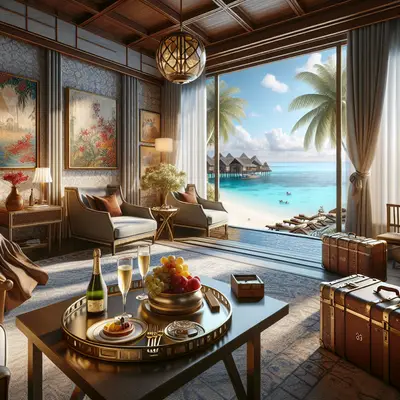
This begins with sensory literacy. Light temperature, soundscape, scent profile, and spatial proportions all shape how quickly you decompress when you arrive. A warm, dimmable lighting scheme paired with natural materials will lower your heart rate faster than any welcome drink. Soft-close doors in a suite, heavy drapery, and well-insulated walls translate into rest that feels non-negotiable. Even the layout of a lobby—whether it funnels guests into a central bar or discreetly diffuses them into quiet corners—signals whether the property is designed for spectacle or for sanctuary.
Seasoned travelers benchmark properties against their own personal “ambient baseline” instead of star ratings: the softness of morning light, the absence of intrusive background music at breakfast, the tactile satisfaction of well-chosen linens, the intuitive placement of power outlets where a laptop naturally lands. A premium life in motion is one where each space you inhabit feels immediately legible because it has been pre-selected to echo your preferred emotional tempo.
Time as the Ultimate Suite Upgrade
For those accustomed to priority lines and premium cabins, the next frontier is not speed—it is control. Luxury travelers are recasting time as the most precise upgrade of all, asking: “What would this look like if every minute felt intentional?”
This can be as subtle as structuring arrival windows to avoid peak check-in traffic or choosing secondary airports where immigration is measured in minutes, not queues. Private transfers are valued not only for privacy but for pacing: a car that arrives five minutes after you exit customs is more luxurious than one waiting 45 minutes too early, silently pressuring you as you navigate the terminal.
On the ground, high-net-worth travelers increasingly use “time buffering” as a quiet power move. Restaurant bookings are secured at shoulder hours when chefs and staff are fresh and dining rooms are half-full; spa appointments are deliberately scheduled in that quiet, post-lunch lull when facilities feel semi-private. Even sightseeing is re-framed as “time-design” rather than box-ticking: revisiting a single favorite gallery at a tranquil hour may deliver more richness than attempting to conquer an entire city in a day.
Where others chase velocity, the premium traveler pursues cadence. The true luxury is not doing more; it is doing only what feels precisely right for this chapter of your life, without the friction of haste.
The Intelligence of Discretion: Data, Preferences, and the Right Kind of Remembering
As hospitality becomes more personalized, the most discerning travelers are not rejecting data—they are editing it. The real privilege is no longer simply recognition, but intelligent discretion: knowing what a property remembers and, crucially, what it chooses to forget.
Elite guests are increasingly curating “preference portfolios” across their trusted ecosystem of airlines, hotels, and private services. Room temperature, pillow density, minibar configuration, in-room workout preferences, and even coffee rituals can be standardized so that each property begins already fluent in your baseline needs. But the highest level of refinement is when these details are executed silently, without ceremonial mention or over-familiarity.
There is, however, an emerging etiquette of boundaries. Savvy travelers specify what not to track: no automatic replication of past dining companions, no extrapolations about personal relationships, no assumptions about social media habits. They appreciate a hotel that recalls their favored corner suite, yet does not comment on past stays or name-check former guests. In aviation, the most sophisticated carriers and private operators now emphasize secure handling of passenger data, with teams trained to protect not just identity, but narrative.
The new standard of premium is this: your preferences are exquisitely remembered, while your story remains entirely your own to disclose—or not.
Quiet Infrastructure: The Hidden Systems Behind Effortless Journeys
What feels seamless on the surface is almost always underpinned by invisible rigor. The most elevated travel experiences are not defined by marble lobbies or logo placement, but by understated infrastructure designed to absorb complication before it reaches you.
Behind an apparently simple airport arrival may lie a synchronized choreography: real-time tracking of your flight, a liaison coordinating with immigration services, a car service receiving live updates, and a guest relations team adjusting restaurant bookings if your aircraft’s ETA slips by 20 minutes. In fine resorts, power redundancy, water purification systems, and air filtration are often more significant differentiators than any design flourish, especially in remote or emerging destinations.
Sophisticated travelers increasingly ask different questions during planning: How does this property manage medical emergencies? What is the evacuation plan in case of weather or geopolitical disruption? How reliable is connectivity, and is there a backup? These queries are not about anxiety; they are about preserving the continuity of a life that cannot afford careless interruption.
At the premium level, luxury is what still works when something goes wrong. The most memorable experiences often derive their calm, unhurried grace from layers of disciplined, unseen engineering.
The Art of Under-Programming: Leaving Space for Serendipity
The highest expression of a premium lifestyle is knowing when not to fill your calendar. As global travel accelerates and experiences become more “packaged,” the new privilege is a schedule with deliberate negative space—beautifully empty hours that invite serendipity.
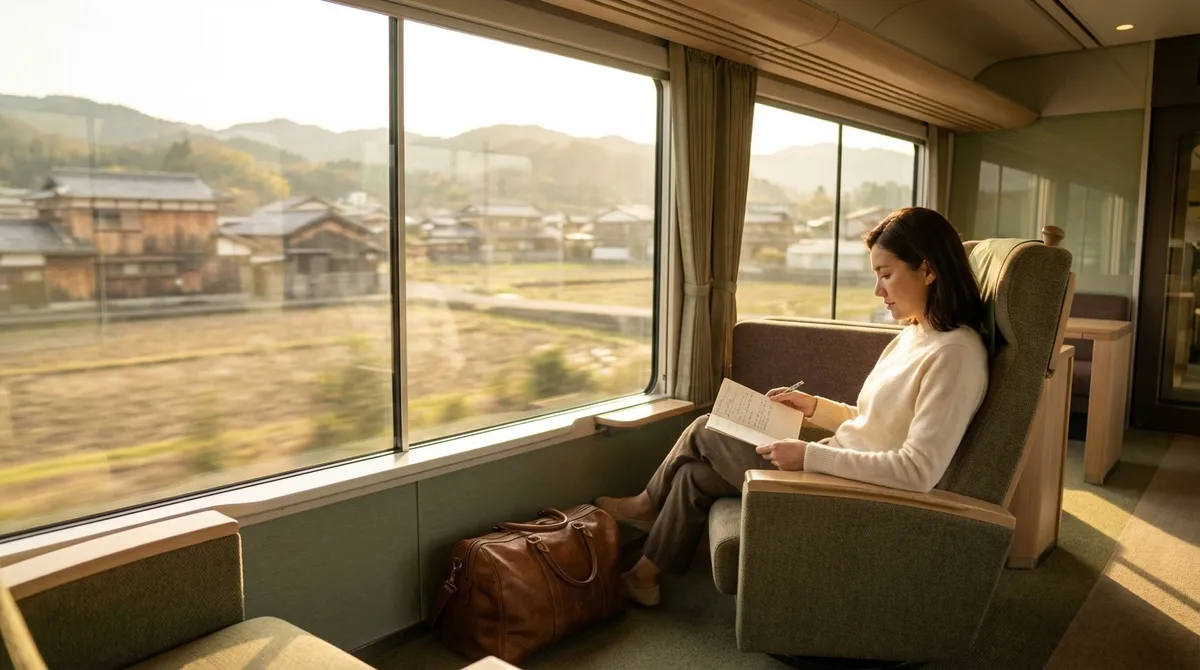
Luxury travelers are working with advisors not simply to book reservations, but to curate absence: one or two key anchors in a day, with long, intention-rich intervals left untouched. In practice, this might mean securing only a late lunch and sunset sail in a Mediterranean port and allowing the hours in between to be governed by instinct—a spontaneous atelier visit, an unplanned tasting in a side-street wine bar, a quiet hour reading in an unexpectedly perfect courtyard.
Under-programming is not laziness; it is a highly refined trust in your own curiosity and a belief that not every moment must be optimized to be meaningful. It also reflects a deeper confidence: that you have seen enough of the world’s “musts” and are now more interested in your own evolving sense of what is essential.
For those living a premium life in motion, the most resonant souvenirs are less likely to be purchased than discovered—often in the unscripted intervals that a conventional itinerary would have surrendered to obligation.
Conclusion
The contemporary premium lifestyle is less about acquiring access than about curating alignment—between your inner pace and the outer world you move through. It is the choice to value atmosphere over spectacle, cadence over speed, discretion over visibility, resilience over ornament, and open space over overfilled calendars.
For the traveler who lives at this level, each journey becomes another chapter in a carefully edited life: one where the rarest privilege is not constant opulence, but a sustained, quiet coherence between who you are and how, exactly, you move through the world.
Sources
- World Travel & Tourism Council – High Net Worth Travel Trends – Overview of evolving expectations and behaviors among affluent travelers
- McKinsey & Company – The Future of Personalized Customer Experience – Insight into data-driven personalization and privacy expectations
- Harvard Business Review – The Value of Customer Experience in Service Industries – Analysis of how refined experience design impacts loyalty and spend
- International Air Transport Association (IATA) – Passenger Data and Privacy – Frameworks and standards for secure passenger data handling
- Cornell University School of Hotel Administration – Research on Luxury Hospitality Trends – Academic research on evolving definitions of luxury and guest expectations in high-end hospitality
Key Takeaway
The most important thing to remember from this article is that this information can change how you think about Premium Lifestyle.