Fine dining for the luxury traveler is no longer about glittering rooms and theatrical plates alone. It is about calibration—of light, of sound, of pacing, of provenance. It is a choreography designed for those who notice what others overlook: the way a wine list is structured to invite conversation, how a chef’s restraint can say more than a flourish, how a room can be full yet feel entirely yours. For the Jet Ready audience, the most memorable meals are quiet masterpieces, anchored in craft and lifted by discretion.
Below are five exclusive, nuanced insights that shape how the most informed travelers now experience fine dining around the world.
The Invisible Architecture of the Dining Room
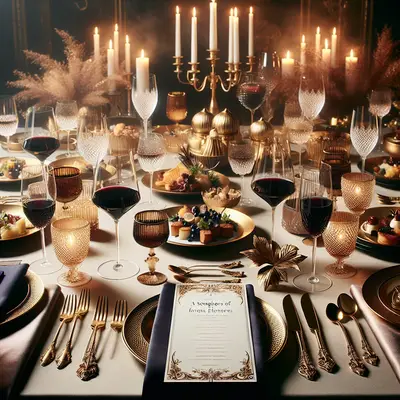
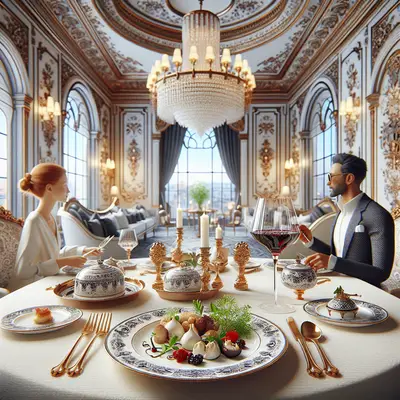
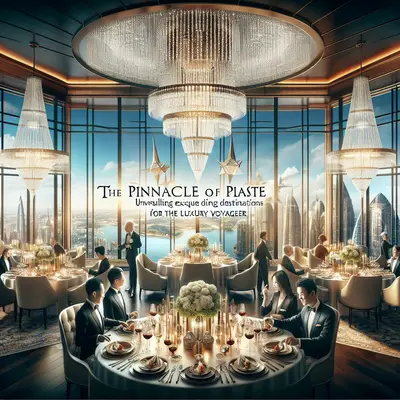
A truly elevated restaurant is built as much on its invisible architecture as on its menu. Before a guest tastes anything, the room has already begun its work. The best dining rooms are tuned—acoustically, spatially, and visually—to create a sense of soft privacy even in a crowded service. Tables are placed to offer clear sight lines without eye contact, with distances measured not just in inches but in conversations: close enough for intimacy, far enough to protect it. Lighting is layered rather than bright, with pools of warmth around each table and cooler tones at the periphery, subtly directing focus to the plate and the company.
Luxury travelers increasingly pay attention to these details: the feel of the chair over a three-hour tasting menu, the temperature that allows Champagne to stay perfectly chilled without becoming unpleasant for bare shoulders, the absence of drafts, reflections, and glare. In world-class rooms, the music is calibrated to disappear into the background, designed not to be heard but to be felt—a buffer against unwanted intrusion. The result is a dining space that functions almost like a private capsule in a public world, an effect that can be appreciated only when one has experienced its opposite.
Provenance with Discretion: Reading Between the Lines of the Menu
Today’s sophisticated diners are less impressed by extravagant ingredients in capital letters and more drawn to quiet precision in sourcing. The real luxury lies in the restaurant that doesn’t need to shout “caviar” or “wagyu” on every line, because the provenance is understood from the relationships behind the scenes. A concise menu that reads cleanly—just three or four elements per dish—often signals deep confidence and clarity in the kitchen.
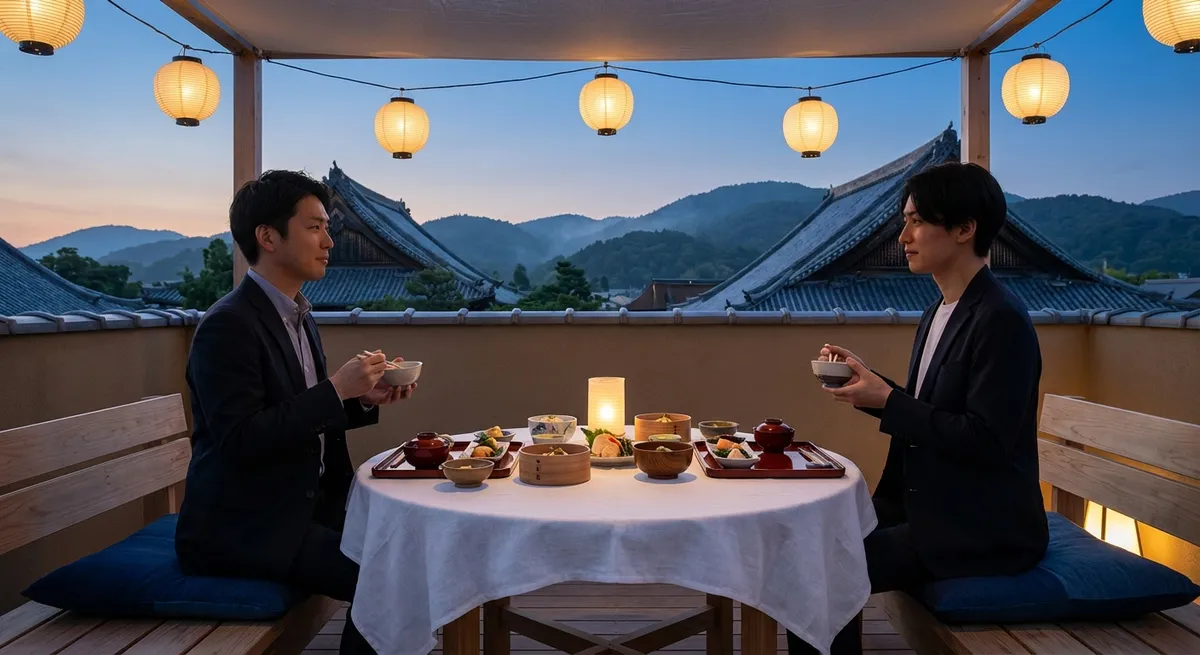
Experienced travelers now “read” a menu the way a collector reads a catalogue: noticing which regions are referenced, how seasons are expressed, and where restraint replaces spectacle. A dish anchored on a single flawless vegetable, or a minor fish prepared with extraordinary tenderness, can say more about a chef’s philosophy than the most opulent shellfish tower. Look for menus that acknowledge producers by name or region, but do so sparingly: a specific dairy in the Alps, a single orchard in Normandy, a heritage grain mill in Hokkaido. These are quiet signatures of authenticity and long-standing partnerships.
Beyond ingredients, linguistic choices matter. Extremely flowery descriptions can mask lack of focus, while hyper-minimalist phrasing may indicate a confidence that the staff will narrate the experience in person. The refined traveler understands the menu not only as a list of options, but as a coded essay on the restaurant’s ethics, geography, and ambitions.
Service as Private Concierge: The New Standard of Attentive Distance
For the premium traveler, service is no longer about constant attention; it is about intelligent invisibility. The most accomplished front-of-house teams function like a private concierge layered into the meal—always present, almost never seen approaching. Plates arrive and disappear as if the table were operating on an internal clock; napkins are refolded during a brief visit to the restrooms with such ease that you remember the gesture, not the person who performed it.
Luxury travelers notice a different caliber of anticipation. Preferences mentioned casually at the bar before being seated are already known at the table. A guest’s inclination toward lighter reds or aversion to overt oak quietly reshapes the sommelier’s recommendations. Time constraints are handled with discretion: a shortened tasting sequence appears instead of a formal “we must rush.” This is service that reads the guest’s energy—whether they want conversation, silence, or technical detail—and adjusts without forcing a scripted performance.
A particularly telling marker is how a restaurant handles the unexpected. A misstep in temperature, a delayed course, or a flawed wine becomes an opportunity to demonstrate standards: the issue is resolved before the guest has to ask, and the recovery feels proportionate, thoughtful, and unpublicized. In the current era of premium travel, the highest expression of luxury service is a meal where you never have to advocate for yourself—and yet always feel in control.
The Modern Wine Program: From Trophy Bottles to Tailored Narratives
Wine lists in the world’s most refined dining rooms are increasingly designed less as static inventories and more as living narratives. For the cultivated traveler, the pleasure lies not in securing the most expensive label on the page, but in discovering a bottle that feels almost improbably well-suited to the moment. This shift has elevated the role of the sommelier from knowledgeable server to curator of experience, weaving together region, vintage, and style into a storyline that matches the guest’s mood and travel context.
A truly sophisticated list often carries a few quiet signals: thoughtful representation of both classic and emerging regions; depth in certain areas that reveal the sommelier’s personal obsessions; fair pricing on older vintages; and a meaningful selection of half-bottles and magnums for more precise pacing. Increasingly, there is also serious attention to non-alcoholic pairings—fermented teas, distilled botanicals, and low-sugar infusions that receive the same care and glassware as wine. For travelers who cross time zones regularly, this dimension is more than a trend; it is a way to experience high gastronomy while respecting sleep, performance, and wellness.
The very best sommeliers today speak less in technical jargon and more in textural, emotional language: wines that feel “vertical” or “silky,” that mirror the salinity of the coastline just beyond the window, that tell a story about a family farm rather than a marketing campaign. For the Jet Ready reader, the winelist becomes not a test of connoisseurship, but an invitation to participate in a dialogue that can be as discreet or as deep as desired.
Time as the Ultimate Luxury: Pacing, Flight Schedules, and Post-Dining Comfort
For the luxury traveler, dinner is rarely an isolated event; it is one point in a larger journey, often bracketed by arrivals, meetings, early departures, or private flights. The most attuned restaurants understand this and treat time as their most valuable ingredient. A flawless experience is not simply “unhurried”; it is precisely calibrated to the guest’s circumstances, known or unspoken.
In leading international cities, some kitchens are now comfortable designing modular tasting menus that can expand or contract around a guest’s schedule without feeling compromised. A full progression might be elegantly compressed into a two-hour window without any sense of rush through strategic course pairing, kitchen coordination, and a different approach to interludes. For travelers preparing for an early departure, desserts might skew lighter, with reduced sugar and dairy, and digestifs might be offered in measured half-pours or as fragrant non-alcoholic alternatives.
Experienced diners quietly share their time constraints with the maître d’ in advance, enabling the restaurant to orchestrate an experience that respects flight times, ground transfers, and the natural rhythm of the body clock. Post-dining comfort is part of this equation: a considered approach to portion sizes on longer tasting menus, sensitive seasoning for those managing jet lag, and even the temperature of coffee or tea calibrated not to linger when guests need to rest. In this context, fine dining becomes seamlessly integrated into the journey rather than an indulgence paid for in fatigue.
Conclusion
Fine dining, at its highest expression, is no longer a spectacle staged for the room; it is a finely tuned, deeply personal experience designed for those who move through the world with intention. The luxury traveler today seeks refinement not in obvious excess, but in the quiet alignment of details: a room that protects conversation, a menu that speaks in clear, confident lines, service that anticipates without intruding, a wine program that narrates rather than flaunts, and a meal that respects both body and itinerary.
For the Jet Ready audience, these five insights are less a checklist than a lens—a way of seeing, and of selecting, the tables around the world that still understand dining as an art form in which the guest remains, discreetly and unmistakably, at the center.
Sources
- Michelin Guide – What Makes a Restaurant a Michelin Star Restaurant? - Insight into the standards and criteria that define top-tier restaurants worldwide
- World’s 50 Best Restaurants – The World’s 50 Best Restaurants List - Overview of leading fine dining destinations and evolving global trends
- Court of Master Sommeliers – About the Court and the Role of the Sommelier - Background on the training and philosophy that underpin world-class wine service
- Harvard T.H. Chan School of Public Health – Healthy Beverage Guidelines - Context for the rise of sophisticated non-alcoholic pairings and mindful consumption
- U.S. Department of Transportation – Jet Lag and Air Travel Tips - Guidance on managing jet lag, relevant to timing and design of dining experiences for frequent travelers
Key Takeaway
The most important thing to remember from this article is that this information can change how you think about Fine Dining.