For a certain stratum of traveler, the destination is no longer the headline—it is the hush between arrivals. Exclusive resorts have shifted from ostentatious showcases to meticulously choreographed sanctuaries where privacy, precision, and personal rhythm matter more than spectacle. This is not about being seen in the right place; it is about being quietly, impeccably cared for in a setting that feels almost imagined for you alone.
Below are five under-the-radar insights shaping how discerning travelers experience the world’s most exclusive retreats—details that rarely make the brochure, but define whether a stay feels merely luxurious or genuinely exceptional.
The Architecture of Absence: Designing for Invisible Privacy
The most coveted resorts no longer rely on grand lobbies and sweeping gestures. Their real magic lies in what you don’t see.
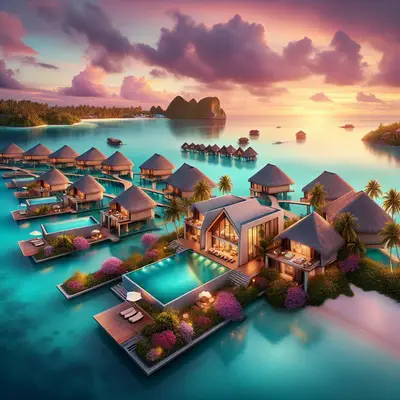
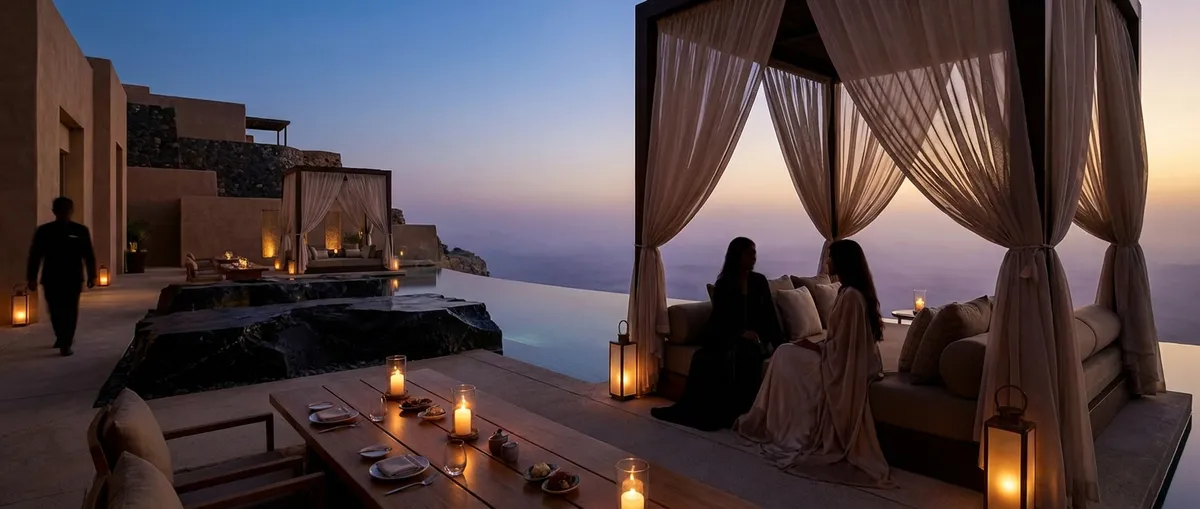
At the very top end, privacy is not a locked door—it is an architectural strategy. Villas are positioned so that sight lines never intersect. Pathways are subtly tiered, curved, or landscaped so neighboring guests feel theoretical rather than present. Public areas are broken into a series of intimate vignettes: a cabana recessed just enough from the main pool, a reading terrace shielded from conversation but open to the horizon.
The concept of “invisible service” is embedded into the design. Staff circulation routes are hidden, allowing butlers and attendants to appear and disappear without disrupting the atmosphere. Housekeeping may access suites through secondary entrances, and service corridors are soundproofed so a property can run at full capacity while feeling perpetually half-empty.
Exclusive travelers have begun to look beyond square footage and amenities, asking more nuanced questions: How many keys share this pool? Are there dual routes to my villa—one for guests and one for staff? Can every meal be enjoyed in a different private corner without repetition? The elevated resort understands that real luxury is the sense that the entire property is quietly conspiring to protect your solitude.
The New Currency: Time Personalization, Not Just Itineraries
At elite properties, itineraries have transitioned from lists of activities to finely tuned calibrations of tempo. The most sophisticated resorts no longer ask simply, “What would you like to do?” but, “When and how do you actually want to feel?”
For high-performing guests whose lives are run in 15‑minute increments, a resort that understands energy management is far more valuable than one that simply offers a long menu of experiences. This may take the form of:
- Arrival decompression rituals designed around your flight profile—hydration, light exposure, and breathing routines adapted for the number of time zones crossed.
- Activity placement by circadian rhythm, timing ocean swims, hikes, or yoga sessions when your body is most likely to benefit, not just when the resort schedule allows.
- Micro-moments of recovery curated throughout the day: a bespoke tea infusion delivered unannounced at the exact time you tend to lose focus, or a suggested 12-minute stretch and sound session integrated into your in-villa technology.
The most exclusive stays quietly track preferences—not just what you book, but when you cancel, when you tend to dine, whether you linger over breakfast or rush through it. Over two or three stays, a kind of temporal fingerprint emerges. For those in the know, this is the real differentiator: resorts that don’t just remember your favorite champagne, but your preferred pace of existence.
Precision Wellness: When Spa Rituals Become Performance Science
Wellness at the highest level of hospitality has outgrown the language of candles and cucumber water. The new frontier, especially in ultra-private resorts, is where spa culture intersects with performance medicine and longevity science.
In these properties, a massage is rarely just a massage. It may begin with a biometric scan, heart-rate variability reading, or breath analysis. Facials are tailored using data from your skin’s actual condition rather than a generic category. Some resorts work with external medical or performance partners to create protocols that bridge relaxation with measurable outcomes: improved sleep efficiency, reduced inflammation markers, or accelerated jet lag recovery.
Subtler still is how these resorts weave wellness into seemingly ordinary moments. A post-flight welcome drink might be formulated for mitochondrial support rather than simply “refreshment.” In-room pillows, mattresses, and blackout systems are chosen not for trendiness, but for documented impact on deep sleep cycles. Chefs collaborate with nutritionists to quietly shift your macronutrient profile over the course of your stay, so you leave feeling sharper and lighter without ever feeling “restricted.”
Guests at this level rarely want a wellness bootcamp; they want frictionless alignment between indulgence and longevity. The most advanced resorts offer both—a sunset martini in hand, and a sleep score the next morning that quietly validates every design decision behind your villa.
Culinary Unscripted: Beyond Tasting Menus and Into Narrative Dining
For seasoned luxury travelers, the classic fine-dining arc—aperitif, tasting menu, wine pairing—can begin to blur from one destination to the next. The rarest resorts are responding with culinary programs that feel less like meals and more like narratives that unfold across spaces, days, and even climates.
Rather than funneling every guest into a single signature restaurant, these properties employ the entire resort as a dining canvas. One evening might begin with a course served under an ancient tree, chosen for its scent at that hour; the next might be a barefoot dinner composed entirely around ingredients harvested within walking distance that same day. The chef appears not as a celebrity but as a discreet storyteller, adjusting menus in real time based on what has just come off the boat or out of the soil.
The most exclusive touch is often what never surfaces on Instagram: a quietly arranged lunch in a part of the property the general guest never sees, or a dish constructed around an ingredient that evokes your personal history—a spice from your grandmother’s country, a wine from a region tied to your first major career milestone.
Here, the menu is not the attraction; the guest is. And the question shifts from “What is the chef showcasing tonight?” to “What memory or mood are we curating specifically for you, tonight?”
The Quiet Network: How Relationships, Not Reservations, Unlock Access
In the realm of exclusive resorts, the most valuable amenity is often not on the website at all: it is the network that sits behind your stay.
At a certain level, availability becomes a negotiation of reputation. Rooms may never appear on public booking engines. Access is routed through a handful of trusted conduits—family offices, private aviation services, discreet advisors, or select membership circles. Past behavior matters as much as rate: how you travel, how you treat staff, how you respect (or disregard) privacy protocols.
The most sophisticated guests understand that loyalty is no longer just about points but about a pattern of conduct. Frequenting a property with consistency, traveling with the same inner circle, and expressing your preferences with clarity but respect all contribute to a kind of informal, human-centric “status tier.”
This quiet network also extends horizontally. An exceptional resort GM, once they understand you, can become a subtle curator of your wider travel life, connecting you to sister properties, private homes, or even invitation-only experiences that never make it into print. In this world, the most powerful phrase you can hear is a simple, “Allow me to introduce you to someone I trust there.”
Exclusive travelers increasingly treat these relationships as a form of capital—nurtured deliberately, protected carefully, and never flaunted.
Conclusion
Exclusive resorts are evolving away from demonstrative luxury and toward something far more nuanced: the orchestration of privacy, time, wellness, taste, and human connection into a stay that feels impossibly precise and yet utterly effortless.
For those who live between departures, the true measure of an exceptional property is no longer how loudly it announces its luxury, but how quietly it understands you. The veiled horizon is not just the view from your terrace—it is the discreet, finely tuned ecosystem behind the scenes, ensuring that for a few rare days, the world bends elegantly to your preferred way of being.
Sources
- World Travel & Tourism Council – “Global Trends in Travel & Tourism” - Industry insights into evolving luxury traveler expectations and behavior
- Virtuoso – “2024 Luxe Report: Trends in Luxury Travel” - Analysis of high-end travel trends, including privacy, personalization, and wellness
- Forbes Travel Guide – “What Defines a Luxury Hotel Today?” - Discussion of modern luxury standards in hospitality and service design
- Harvard Business Review – “The Future of Luxury: Personalization & Experience” - Examination of how personalization and experiential value are reshaping luxury sectors
- Mayo Clinic – “Jet lag disorder: Symptoms & Causes” - Medical context for time zone fatigue and wellness strategies relevant to high-frequency travelers
Key Takeaway
The most important thing to remember from this article is that this information can change how you think about Exclusive Resorts.