For the modern luxury traveler, the most coveted destinations are no longer the ones everyone talks about, but the ones almost no one can describe. Exclusive resorts have moved beyond glossy lobbies and predictable “five-star” promises into something subtler: a private language of service, access, and atmosphere that only reveals itself once you arrive—and often, only if you know how to look. This is not about spectacle. It is about precision, restraint, and the quiet confidence of knowing you are exactly where you are meant to be.
The Silent Concierge: Anticipation Over Attention
In the world of exclusive resorts, true luxury is not measured by how often someone asks if you need anything, but by how rarely you have to ask at all.
At the most discreet properties, the “concierge” is no longer a desk in the lobby but an invisible choreography of data, observation, and intuition. Your preferences—lighting levels, pillow density, the precise temperature at which you like your room when you return from dinner—are learned quickly and acted upon silently. Your morning routine shapes the timing of housekeeping; your reading habits influence which books appear pre-selected on the bedside table or in the in-room library.
This style of service is intentionally understated. You feel observed but never watched, recognized but never displayed. The best resorts cultivate staff who remember names for years, note the champagne you preferred on your last stay, and quietly adjust airport transfers when your inbound flight lands early. For the luxury traveler, this anticipation creates a sense of seamless continuity: each visit feels less like a booking and more like a return to a private residence that understands you on a granular level.
Geography of Discretion: Destinations That Hide in Plain Sight
The most exclusive resorts rarely announce themselves. Their power lies in a kind of cultivated invisibility.
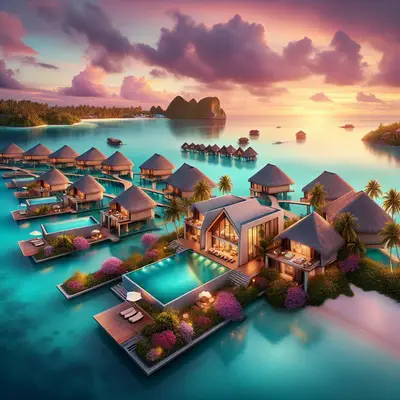
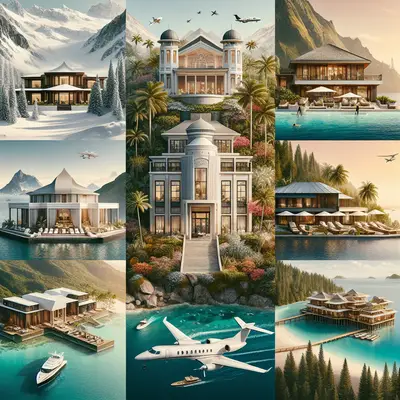
Rather than dominating skylines or crowding shorelines, these properties often dissolve into their landscapes—cliffside villas that appear as extensions of rock, desert retreats that mirror the colors of the sand, or alpine lodges embedded into the terrain as if they had always been there. Signage is minimal; entrances are unassuming; access roads are often indistinguishable from local routes. Guests arrive through secondary terminals, private marinas, or helipads located just outside the public gaze.
This calibrated anonymity serves two purposes. First, it protects privacy—both of high-profile guests and those who simply prefer not to be on display. Second, it heightens the traveler’s sense of discovery. Approaching a resort that reveals itself only at the final turn of the road or the last bend of a coastal approach feels akin to being given directions to a private estate, not a conventional hotel. For the discerning traveler, that nuance matters: it signals a space curated for the few, not engineered for the many.
Time as a Private Asset: When Schedules Disappear
At the premium end of hospitality, the rarest commodity is not view, square footage, or even privacy—it is control of time.
Exclusive resorts increasingly function as environments where traditional schedules are dissolved. Breakfast may be served whenever you rise, not within a restricted window. Spa treatments shift to meet your day’s rhythm rather than dictating it. Activities—sunset cruises, guided hikes, private tastings—are often designed to begin “when you are ready” rather than at fixed times. Even check-in and check-out become flexible, structured around your flight plans instead of the property’s housekeeping grid.
This temporal elasticity requires significant back-end sophistication: agile staffing, generous buffer times, and a willingness to operate below maximum occupancy to preserve calm. But for the guest, the result is a rare sensation: your day is not being negotiated with a schedule board or an app. Instead, your time returns to being fully yours—a quiet but profound form of luxury for those whose daily lives are ruled by calendars and alerts.
Curated Serendipity: Experiences That Feel Discovered, Not Delivered
The most memorable moments at an exclusive resort rarely feel like something you “booked.” They feel like something you happened to find at exactly the right time.
This is not accidental. Leading properties design layers of optional discovery throughout the estate: a small library tucked behind an unmarked door, a late-afternoon tea ritual that only appears if you linger in a particular courtyard, a staff member who offers to show you a “favorite spot” that just happens to be an extraordinary, unscheduled sunset vantage point. These experiences are not heavily branded or photographed for social feeds; they are quiet, almost fragile, and often resist mass replication.
Behind the scenes, guest profiles, travel histories, and prior stay data inform which “serendipities” you encounter. A returning guest who loves local culture might find a private studio visit with a regional artist arranged with minimal fanfare; a guest known for early-morning walks might be gently introduced to a hidden path used primarily by the staff. For the luxury traveler, this creates a sense of personal narrative: the resort is not only a place you stay, but a place that seems to unfold uniquely around you.
The New Index of Luxury: Texture, Not Spectacle
In a world saturated with infinity pools and overproduced villa photography, exclusive resorts are redefining luxury through texture rather than spectacle.
This manifests in a thousand quiet decisions: the way a door handle feels cool and substantial to the touch; the acoustics of a room designed so that closing a wardrobe makes no sharp sound; the particular weave of linen chosen for its feel against sun-warmed skin rather than its thread count alone. Materials are often sourced with equal attention to heritage and sustainability—stone from nearby quarries, woods from certified forests, textiles from local artisans working at a high level of craft.
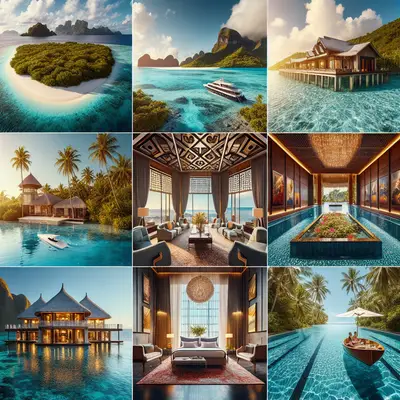
Design is less about ostentation and more about coherence. Lighting is layered to create depth instead of brightness. Scents are restrained, often custom-developed, never overwhelming. Technology is present but discreet: switches are intuitive, interfaces require no explanation, and remote controls are replaced where possible by natural gestures—drawing a curtain, sliding a door, stepping onto a terrace to shift your view instead of a screen. For the discerning traveler, the takeaway is clear: true luxury is not what the property shows you, but what it lets you feel without having to think about it.
Conclusion
Exclusive resorts today are evolving into something more nuanced than a high-end escape. They are becoming finely tuned environments where privacy, time, place, and detail are curated with an almost editorial precision. Anticipatory service replaces constant attention, geography becomes an instrument of discretion, schedules dissolve into personal tempo, experiences are quietly scripted to feel discovered, and design is measured in textures and silences rather than spectacle.
For the luxury traveler, recognizing these five signals—silent concierge, discreet geography, liberated time, curated serendipity, and textured design—is the difference between simply staying somewhere expensive and inhabiting a world built with you specifically in mind. In that distinction lies the real horizon of contemporary exclusivity.
Sources
- Forbes Travel Guide – What Makes a Hotel Truly Luxurious? - Explores core elements of modern luxury hospitality and service standards
- Virtuoso – The Future of Luxury Travel - Insights from a leading luxury travel network on evolving expectations of high-end travelers
- Condé Nast Traveler – Why Ultra-Private Hotels Are in Demand - Discusses the rise of privacy, discretion, and exclusive experiences in top-tier resorts
- Skift Research – The Rise of Transformational and Experiential Luxury Travel - Analyzes how experiential and highly personalized stays are reshaping premium hospitality
- Cornell University School of Hotel Administration – Studies in Hotel Luxury and Service Design - Academic research on luxury hotel operations, service design, and guest experience
Key Takeaway
The most important thing to remember from this article is that this information can change how you think about Exclusive Resorts.