There is a quiet echelon of travel that doesn’t advertise itself. It does not shout with gold-plated fixtures or theatrical lobbies. Instead, it reveals itself slowly—through the way a resort edits sound, frames a horizon, choreographs arrival, and anticipates a guest’s unspoken preferences. This is the private architecture of exclusive resorts: an interplay of design, service, technology, and environment that feels less like a stay and more like being momentarily woven into a perfectly calibrated world.
For the discerning traveler, the distinction is no longer about “luxury” as a label; it is about precision, privacy, and a particular kind of cultural intelligence. Below are five refined insights that increasingly define the upper tier of exclusive resort experiences—details that seasoned travelers notice, and that the best properties obsess over long before you arrive.
1. The Curated Threshold: How Arrival Sets the Entire Stay
In the rarefied world of exclusive resorts, the arrival sequence is never accidental. It is a carefully orchestrated transition designed to take you from transit to tranquility in a matter of minutes, without ever feeling rushed or performative.
The most sophisticated properties design their approach routes as deliberately as their suites. Sightlines are curated so that the first view is not the parking area or reception desk, but a perfectly framed tableau—a single palm against the bay, a courtyard lantern, or the filtered light of a shaded colonnade. Check-in often dissolves into the background, conducted in a private lounge, a villa, or even en route from the airstrip, so that you never feel like a “guest on arrival”; you feel expected.
Temperature, scent, and sound are subtly tuned: glass doors that create an almost imperceptible pressure change, absorbing heat and street noise; discreet botanical fragrances that echo the local landscape; acoustic design that reduces echoes, so conversations never feel exposed. At the highest levels, arrival feels less like entering a building and more like stepping into a pre-edited version of the world—one where every element has been quietly optimized on your behalf.
2. Spatial Privacy as a Design Language, Not a Feature
True exclusivity is not merely about size or price; it is about how precisely a space allows you to exist unobserved. The leading resorts approach privacy as a design language in its own right, rather than a checklist item.
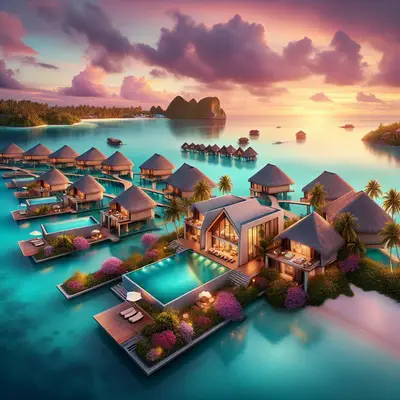
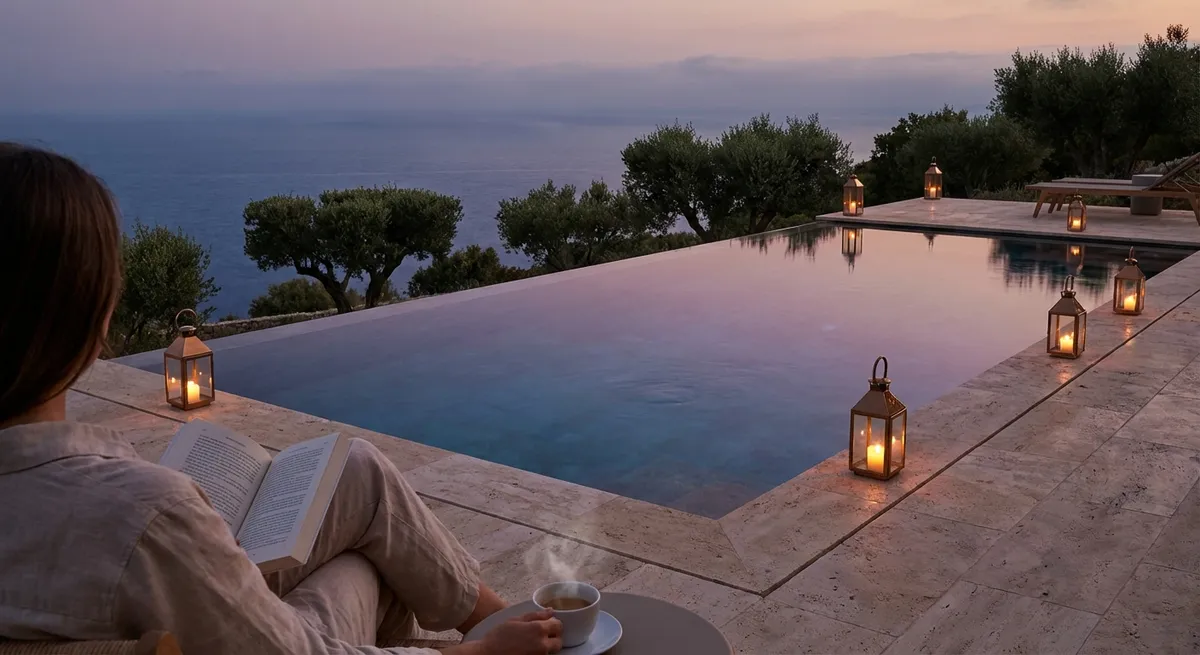
Architecture plays the first and most obvious role. Villas are positioned along topography and vegetation lines to preserve sightline privacy while still embracing views. Infinity pools may be angled just off the main axis of a cliff or lagoon, ensuring that you feel completely exposed to nature and entirely invisible to neighbors. Pathways are staggered and gently curved, so that guests rarely cross paths unless they choose to.
But spatial privacy extends beyond walls and foliage. Smart glazing technologies filter not just heat and light, but the sense of being on display; terraces may be slightly recessed, partially shaded, or cleverly tiered. Even interior layout is crafted to allow staff to access pantries, minibars, and service zones from discreet corridors, so that replenishment happens as if by magic, never disturbing the illusion that your suite is a perfectly sealed world.
For repeat guests, this privacy is further personalized. Housekeeping windows are aligned with your preferred rhythms, outdoor areas are subtly reconfigured, and certain pathways are reserved or suggested, enabling you to inhabit the property almost as if it were a private estate.
3. Cultural Intelligence: Beyond Décor and Into True Context
The most elevated resorts are no longer content to “reference” local culture through textiles and a few curated books. Today’s sophisticated traveler can recognize when a property has offered only surface-level gestures versus when it has invested in genuine cultural intelligence.
This begins with context rather than style. Design teams research vernacular building techniques—how local communities have historically oriented structures for breeze, shade, and sound control—and reinterpret these principles rather than simply importing a global design vocabulary. Rooflines might reference traditional forms, not as pastiche, but as high-performance structures using local materials and climate-responsive engineering.
Programming also shifts from generic “local experiences” to nuanced, relationship-based encounters. Instead of a standard market tour, guests might be invited into an architect’s studio, a family-run vineyard closed to the public, or a conservation briefing with marine biologists monitoring the surrounding reef. These are not staged performances; they are windows into the living infrastructure of the destination.
The quiet luxury traveler values this kind of authenticity—not for bragging rights, but because it creates a deeper sense of place. An exclusive resort that invests seriously in local partnerships, environmental stewardship, and cultural preservation is not just a backdrop for leisure; it becomes a meaningful node in a global network of responsible, beautifully executed hospitality.
4. Precision Hospitality: Service That Anticipates, Then Disappears
At certain properties, you never quite see the work, only the result. This is precision hospitality: a mode of service that is hyper-attentive yet nearly frictionless, engineered so that your preferences are met before you articulate them and never presented as a performance.
The process starts long before arrival. Data—handled discreetly and with care—is used to build a living profile, not a static file. Preferences evolve with each visit: the firmness of your pillows, a favored tea at turn-down, whether you are traveling for recalibration or celebration, your tolerance for social interaction. Advanced resorts integrate this information across departments, so that your wellness therapist, sommelier, and private driver all operate from the same, quietly updated understanding of who you are.
But the real differentiator is restraint. The most refined service cultures know when not to appear. Staff are highly trained in micro-observation: they note whether you angle a book toward the sun, how quickly a glass empties at lunch, whether you prefer walking unescorted along the property. Interventions are subtle—an umbrella placed just inside the door before an unexpected shower, a portable speaker removed when they sense you prefer natural sound, a late check-out confirmed before you even ask.
Technology supports this invisibility. Messaging platforms allow for understated communication, while discreet sensors manage climate, lighting, and shading without manual input. The result is a kind of experiential compression: fewer decisions, fewer requests, fewer interruptions—yet a heightened sense of being exquisitely looked after.
5. Time as the Ultimate Luxury: The New Pace of Exclusive Retreats
In the highest tier of resort design, the rarest commodity is no longer space or amenities—it is time, and the quality of how it is experienced. The most sophisticated properties treat time as a material to be shaped.
Rather than overwhelming guests with endless activity lists, itineraries are structured with intentional light and shadow: moments of curated intensity followed by expanses of considered stillness. A morning might begin with a tightly choreographed private excursion—access to a normally restricted archaeological site or a sunrise sail on an untrafficked stretch of water—followed by an afternoon designed with no hard edges at all: flexible spa appointments, extended dining windows, and the freedom to drift between terrace, pool, and shoreline.
Wellness, too, is reframed through the lens of time. Instead of prescriptive retreats packed with back-to-back sessions, leading resorts now favor modular programs that respect guests’ existing rhythms. Sleep is prioritized through circadian-aware lighting, sound insulation, and in-room rituals that subtly encourage earlier unwinding. Even check-in and check-out are softened; arrival and departure times are negotiated to align with your personal schedule, not the property’s convenience.
The effect is profound. When time is treated as something to protect, not to fill, the resort experience becomes less about “what you did” and more about “how you felt.” The memory that remains is often not a single highlight, but a pervasive sense of being briefly removed from the usual economy of clocks and obligations—a recalibration that quietly continues long after you’ve returned home.
Conclusion
Exclusive resorts at the highest level do not announce their sophistication; they encode it into every layer of the guest experience. From the choreography of arrival to the choreography of absence, from carefully engineered privacy to deeply informed cultural engagement, the true markers of privilege are increasingly subtle, often invisible, and always intentional.
For the traveler who values refinement over spectacle, this is the new benchmark: properties that understand your time, your privacy, and your sense of place as assets to be meticulously guarded. In these environments, luxury is no longer the accumulation of features, but the artful subtraction of friction—leaving only what is essential, rare, and precisely right for you.
Sources
- [World Travel & Tourism Council – High-Net-Worth Travelers Report](https://wttc.org/research/insights/high-net-worth-travellers) – Overview of evolving expectations and behaviors among affluent travelers
- [Forbes Travel Guide – What Defines a Five-Star Hotel](https://www.forbestravelguide.com/about/ratings) – Insight into the service and design standards behind top-tier properties
- [Cornell School of Hotel Administration – Hospitality Research](https://sha.cornell.edu/faculty-research/research/centers-institutes/chr/research/) – Academic perspectives on hotel design, service innovation, and guest experience
- [United Nations World Tourism Organization (UNWTO)](https://www.unwto.org/tourism-data) – Data and trends shaping global luxury and experiential travel
- [Aman Resorts – Brand Philosophy](https://www.aman.com/about-aman) – An example of how an ultra-luxury brand conceptualizes privacy, place, and discreet service
Key Takeaway
The most important thing to remember from this article is that this information can change how you think about Exclusive Resorts.