There is a tier of travel that never appears in glossy brochures or mass-market campaigns—a quiet constellation of properties known only through whispered recommendations, private member circles, and the kind of concierges who never advertise what they can actually do. These are not simply “luxury resorts.” They are sanctuaries engineered around anonymity, anticipation, and the unhurried pleasure of being exquisitely understood. For travelers who measure value in privacy rather than spectacle, the true question is no longer where to go, but how a place is curated around the life they want to live—if only for a week.
Below, five exclusive insights reveal how the world’s most rarefied resorts are now designing stays that feel less like bookings and more like beautifully staged intervals in one’s private narrative.
1. The Pre-Arrival Choreography: Luxury That Begins Before the Boarding Pass
By the time a discerning traveler arrives at an ultra-exclusive resort, the most important work has already been done. The quiet sophistication of these properties is rarely about a dramatic entrance; it is about the subtle choreography that begins weeks before check-in.
In the top echelon, pre-arrival teams behave more like cultural attachés than reservation agents. They study preferences in silence—through travel histories, dining patterns, even time-of-day communication habits—to create a framework for the stay. Instead of generic pre-arrival questionnaires, they may arrange a private call at the guest’s convenience, not to ask what they want, but to infer what they value: spontaneity or structure, solitude or social access, ritual or adventure.
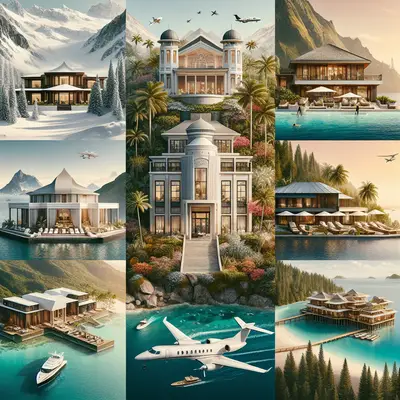
Private aviation logistics are often integrated into this choreography, from coordinating customs fast-track services to tailoring onboard menus that seamlessly echo the resort’s culinary philosophy. Arrival windows are managed to avoid overlap with other high-profile guests, ensuring that privacy is never coincidental—it is engineered. The most exclusive resorts even “edit” the property before a guest sets foot on it: rotating art in the suite, pre-stocking reading material aligned with their interests, and adjusting lighting scenes and scent profiles to match their circadian rhythm and typical environment.
In this echelon, the stay does not begin with a welcome drink. It begins with the feeling, somewhere between gate and jet bridge, that someone has already taken the next three steps on your behalf—without needing to ask.
2. Architecture of Privacy: Designing Space for the Art of Disappearing
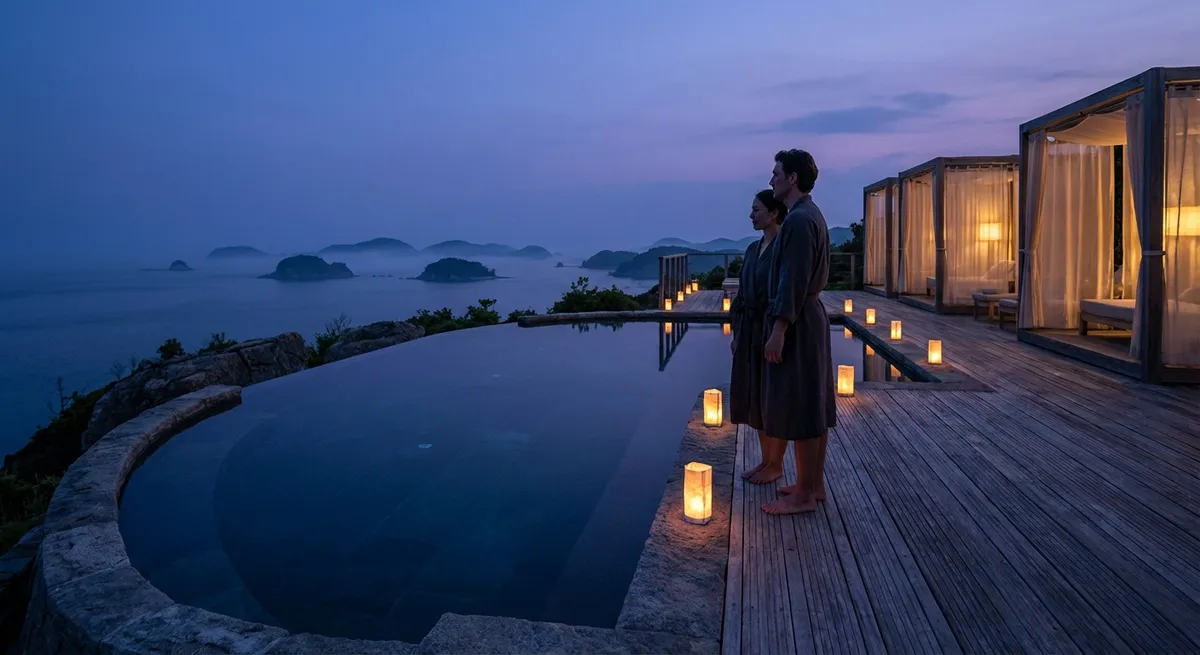
At truly exclusive resorts, privacy is not a feature; it is the organizing principle. From how a villa is sited on a hillside to the angle of an infinity pool’s edge, every design decision serves one essential brief: provide vistas without witnesses.
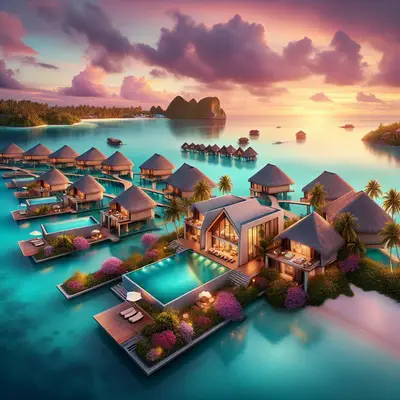
The architecture of these sanctuaries tends toward low, horizontal structures that dissolve into the landscape—cliffside villas accessed by private paths, overwater suites sequenced to prevent direct sightlines, forest pavilions where only the treetops know you are there. Window placement follows a discreet geometry: floor-to-ceiling glass oriented toward ocean, desert, or jungle views while turning a deliberate blind eye to neighboring accommodations.
Sound design is equally critical. Landscaping is used as an acoustic barrier—dense foliage, water features, and topographical changes mute the distant hum of other guests. Public spaces are conceived less as “common areas” and more as intersecting private corridors; a beachfront may be technically shared, yet carefully zoned so that no one ever feels observed.
In the most rarefied properties, privacy extends to operational logistics. Service routes are physically separated from guest paths, allowing staff to move invisibly. Private docks, helipads, and separate arrivals for villa owners, members, and transient guests ensure that the experience of seclusion is not compromised the moment you enter or leave. The outcome is an architecture that is not ostentatious, yet immaculately intentional—a stage on which disappearing feels completely natural.
3. The New Butler: From Service to Silent Stewardship
The notion of a butler at an exclusive resort has evolved from white-gloved formality to something more nuanced: a quiet steward of time, preference, and mood. The best of these professionals are less visible attendants and more like guardians of a guest’s mental load, intuitively removing friction before it registers as inconvenience.
In this elevated tier, the butler is not a single point of contact but the face of a tightly choreographed micro-team. One might orchestrate dining and off-property experiences, another manages wardrobe care and packing, while a third coordinates wellness, spa, and in-villa treatments—all under a single, seamless identity. The guest experiences one presence, but benefits from many.
These stewards are trained not only in hospitality protocols but in intercultural fluency, privacy etiquette, and emotional intelligence. They know when to appear with a chilled towel and when to blend into the scenery. They log micro-preferences—how you take your espresso, whether you prefer turn-down to happen while dining or later, your inclination for firm or generous pours—and adjust the subsequent day accordingly.
What distinguishes world-class butler service is not extravagance but discretion. A missed call is returned before it is noticed; a rain shower triggers an automatic reconfiguration of outdoor plans; a last-minute craving for a particular vintage becomes an opportunity rather than an inconvenience. The modern butler’s art lies in making the guest feel less managed and more gently, continuously understood.
4. Curated Solitude: Experiences Designed for a Single Audience
The most coveted experiences at ultra-exclusive resorts are not the ones everyone is talking about; they are the ones almost no one will ever know occurred. These properties increasingly design moments not meant to be shared with the world, but to belong solely to the guest and their immediate circle.
Private use of extraordinary spaces is the new currency. It could be a secluded cove rendered, for one evening, into a temporary open-air restaurant; a museum-quality wine cellar opened exclusively for a midnight tasting; or an off-menu wellness ritual performed at a time when the resort appears to be asleep. These are not “bookable activities” in the conventional sense, but mutable experiences elevated to the level of a finely tuned performance.
Cultural immersion follows this same principle of intimacy. Rather than scheduled group excursions, elite resorts cultivate relationships with local artisans, chefs, historians, and naturalists who engage with only one party at a time. A private tasting with a regional winemaker, a closed-door gallery visit with the artist present, or a sunrise ceremony led by a local elder—each framed not as spectacle, but as genuine encounter.
The design of these experiences acknowledges that for the truly well-traveled guest, scarcity is not about price or setting; it is about access and scale. To be the only audience changes the tempo of interaction. Time stretches, attention sharpens, and memory imprints more deeply. For these travelers, the absence of an audience is the highest form of luxury.
5. Sustainability as Discretion: The Invisible Ethics of Ultra-Luxury
For the new generation of high-net-worth travelers, sustainability is no longer a marketing point—it is a quiet expectation. Yet the most advanced resorts do not trumpet their environmental and social initiatives; they weave them so seamlessly into the experience that guests feel the benefit without ever confronting the infrastructure.
Architectural design favors low-impact materials and local craftsmanship, often drawing on vernacular building methods that respond naturally to climate rather than overwhelming it with technology. Renewable energy, advanced water treatment, and waste systems are embedded out of sight, ensuring that the sensory impression is of untamed nature, not managed utility.
Culinary programs increasingly embrace regenerative agriculture and hyper-local sourcing—not as rustic novelty, but as gastronomic refinement. Chefs work with small-scale producers, on-site gardens, or even their own working farms to compose menus that are not only seasonal but deeply rooted in place. The guest experiences this as immaculate produce, nuanced flavors, and unexpected pairings; the sustainability narrative, while real and robust, never needs to dominate the table.
Equally significant is social sustainability. The most conscientious resorts invest in education, training, and leadership opportunities for local staff, creating upward mobility instead of dependency. Partnerships with community organizations, cultural preservation efforts, and scholarships often sit behind a discreet veil, shared only when a guest’s curiosity invites a deeper conversation.
In this strata of hospitality, responsibility is not branded; it is simply practiced. For travelers who prefer their values to align invisibly with their indulgences, this discreet ethics is not a bonus—it is part of why they return.
Conclusion
The future of exclusive resorts is not louder, brighter, or more elaborate; it is more attuned. As privacy becomes increasingly scarce and time more contested, the most coveted properties are those that offer not just seclusion, but precision: in space, in service, in experience, and in values. For the traveler who moves easily between jet cabins, boardrooms, and private villas, luxury is no longer about accumulation. It is about the rare privilege of inhabiting a place so thoughtfully designed that one can, for a brief interval, move through it as if it were created for them alone.
In that quiet alignment—between guest, setting, and unseen orchestration—the true horizon of modern exclusivity comes into view.
Sources
- [Virtuoso – 2024 Luxe Report](https://www.virtuoso.com/travel/articles/virtuoso-2024-luxe-report) – Insights into evolving preferences among luxury travelers and the rise of privacy- and experience-led stays
- [Forbes Travel Guide – What Defines Luxury Hospitality Today](https://www.forbes.com/sites/forbesbusinesscouncil/2023/06/20/what-defines-luxury-in-hospitality-today/) – Discusses modern luxury expectations, personalization, and high-end service models
- [Condé Nast Traveler – The Future of High-End Hotels](https://www.cntraveler.com/story/the-future-of-luxury-hotels) – Explores design, privacy, and experiential trends in top-tier hotels and resorts
- [World Travel & Tourism Council – Sustainability in Travel & Tourism](https://wttc.org/Initiatives/Sustainability) – Provides context on sustainability practices and expectations within luxury and broader hospitality
- [Cornell University School of Hotel Administration – Research on Luxury Hospitality Trends](https://scholarship.sha.cornell.edu/hospitality_pubs/) – Academic publications examining service design, guest experience, and operational excellence in high-end hospitality
Key Takeaway
The most important thing to remember from this article is that this information can change how you think about Exclusive Resorts.