The most coveted resorts rarely announce themselves. They exist in a quieter register of luxury—where privacy is curated as meticulously as cuisine, and where every detail is engineered not to impress, but to gently disappear. For Jet Ready travelers, these places are less about spectacle and more about precision: the right villa angle to capture the last light, the exact firmness of a mattress after a transatlantic flight, the unspoken choreography between staff and guest.
This is the world of exclusive resorts as it is actually lived, not marketed: a realm defined by discreet systems, invisible craftsmanship, and subtle privileges that only become apparent when you know where to look. Below are five insider perspectives that seasoned luxury travelers increasingly treat as non‑negotiable.
1. The Real Currency: Architectural Privacy, Not Just Square Footage
In the luxury tiers of hospitality, square meters are a baseline, not a benefit. What separates exclusive resorts from merely expensive ones is a nuanced command of privacy through design.
It begins with sightlines. True high-end properties are masterful at controlling what can be seen and from where: landscaped berms instead of obvious walls; villas oriented so no neighboring terrace faces another; pathways that wind just enough to obscure movement without feeling like a maze. The aim is not isolation, but the feeling of being alone without ever being abandoned.
Sound management is equally crucial. Premium travelers increasingly look for quiet that feels natural, not imposed—achieved through the placement of water features to soften ambient noise, discreetly padded door frames, and materials that absorb rather than reflect conversation. Resorts at the top of the market invest heavily in acoustic planning long before the first stone is laid.
The best properties also understand visual privacy in transit. Private arrival courts separate from the main entrance, direct villa access from a side drive, or even secondary paths to the spa or beach that bypass the central social areas—these elements turn a stay into something that feels more like being hosted in a private estate than booked into a hotel.
For Jet Ready guests, evaluating a resort now means looking past the villa size and into the blueprint itself: How many opportunities are there to be seen when you may prefer not to be?
2. Micro-Climates of Comfort: How the Best Resorts Master Time and Weather
At the uppermost levels of hospitality, “good weather” is no longer left to chance; it is curated moment by moment. The most refined resorts think in micro-climates—on the level of a single terrace, plunge pool, or deck chair.
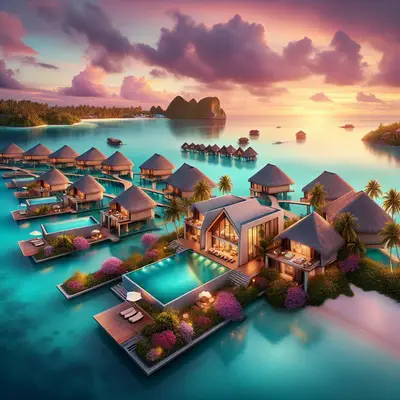
Sun exposure is orchestrated with near-scientific rigor. Villas are positioned to catch the soft morning light while shielding terraces from the harshest afternoon sun. Retractable shading, layered drapery, and textured screens allow each guest to subtly edit their own environment. At beach properties, the savviest travelers favor resorts where loungers, cabanas, and sundowner spots are oriented to the exact angle of sunset for that time of year—not simply lined up perpendicular to the shoreline.
Temperature is equally curated. Indoor–outdoor flow is designed so that transition never feels abrupt: slightly cooled corridors, shaded atriums, ceiling fans positioned where a breeze is expected to die. High-caliber resorts will adjust in-villa climate based on your arrival pattern and the season, considering jet lag, humidity, and your likely state after a red-eye or long-haul private flight.
The most exclusive properties also manage time experientially. Lighting is programmed to support circadian rhythms; pathways gently illuminated to encourage evening strolls rather than funnel guests to a lobby bar; sunrise vantage points quietly recommended for those shifting time zones. This is comfort as a form of temporal design—where the resort not only responds to the environment, but edits it in your favor.
3. The Private Network: How Top Resorts Orchestrate Access Beyond the Property
The true measure of an exclusive resort is rarely contained within its gates. For experienced travelers, the property is a platform—an elegant base from which a private network of access is quietly activated.
At this level, concierge is an inadequate word. The best resorts maintain longstanding relationships with local stakeholders: marine biologists who open protected reefs before public hours, chefs who close their dining rooms for a single off-menu lunch, conservators who unlock private wings of museums or heritage sites. These connections are not transactional add-ons but carefully cultivated relationships, built over years of consistent collaboration and trust.
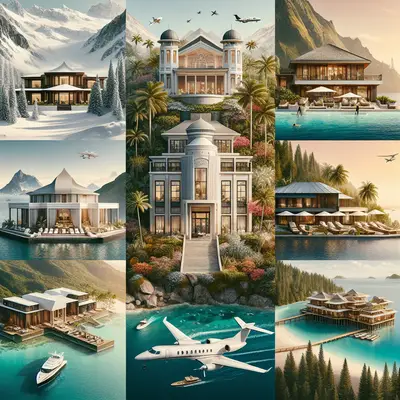
For the Jet Ready guest, what matters is discretion and fluidity. A last-minute yacht repositioned to chase better weather. A helicopter flight rescheduled to align with a clearing in the clouds over a remote glacier. A boutique owner opening doors after closing time for an unhurried fitting, away from cameras and crowds. Properly managed, these experiences feel effortless, but every pivot is underpinned by an invisible architecture of favors, reliability, and goodwill.
The most future-forward resorts are deepening this ecosystem through impact-focused partnerships: privately arranged visits to conservation projects, research centers, or cultural foundations that do not appear on public tour menus. These experiences resonate with travelers who expect not just access, but meaning—where the privilege of entry is balanced by a thoughtful contribution to the place itself.
4. Bespoke Wellness as Strategy, Not Amenity
Spas used to be a pleasant diversion; for serious travelers managing intense schedules, wellness at exclusive resorts has become a strategic asset. The most refined properties are evolving from pampering to performance—as attuned to recovery and longevity as to indulgence.
This begins before arrival. Leading resorts quietly collect preferences and fundamentals: time zones crossed, typical sleep patterns, training routines, dietary boundaries. Upon arrival, the wellness journey may already be pre-aligned: a sleep-optimized villa setup, minibar tailored to your actual regimen, and appointments scheduled not when the spa has space, but when your body needs them.
Advanced properties now integrate evidence-based modalities: medical-grade sleep diagnostics, functional movement assessments, targeted IV therapy, and nutrition calibrated to inflammation, digestion, and energy levels rather than generic “healthy options.” Yet the sophistication remains restrained; the guest experience is seamless and attentive, not clinical.
The telltale sign of a truly elevated resort is continuity. Recommendations and learnings from one stay gracefully carry over to the next, even if months or years apart: therapists who remember which pressure points eased your jet lag, trainers who track your progress, chefs who refine dishes based on what you actually finished last time. Your wellness profile becomes an evolving dossier, quietly updated in the background.
For the Jet Ready traveler, wellness is less about spa menus and more about whether a resort can meaningfully improve how you feel—not only during your stay, but in the weeks after you leave.
5. The Aesthetic of Absence: Understated Service That Anticipates Without Interrupting
In the world of exclusive resorts, service has shifted from opulence to invisibility. The most valued skill is not the dramatic gesture, but the art of being present without ever being intrusive.
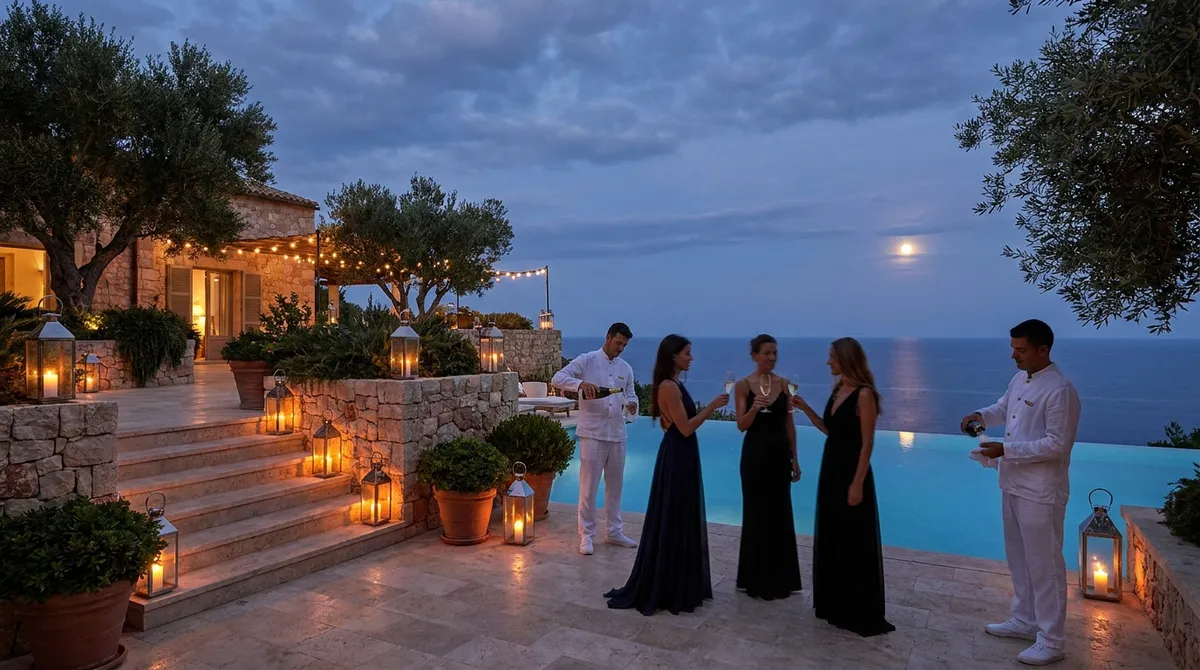
At this level, personalization is quiet. Staff avoid performative familiarity; names are used sparingly, and only when appropriate. Orders are remembered and pre-aligned—your preferred tea appearing unrequested at the time you usually ask, villa lighting subtly adjusted during dinner to match your reading habits, housekeeping timing itself to your natural rhythms rather than a rigid schedule.
Technology serves as an invisible exoskeleton to human intuition. Preferences logged across stays, allergies noted and automatically communicated to off-property partners, transfer details synchronized so you never re-enter information. Yet interfaces remain minimal; the most exclusive resorts resist the urge to bury guests in apps and QR codes. Instead, a single point of contact—often a butler or villa host—absorbs the operational complexity so the experience feels analog, human, and fluid.
The true luxury is unbroken flow. You never sign a check in public areas; children’s needs are met a few minutes before they become urgent; security is pervasive yet subtly dressed as hospitality. When done well, you notice only the outcome: an absence of friction, of waiting, of explanation.
For seasoned Jet Ready travelers, this “aesthetic of absence” has become the new metric of excellence. Not how much the resort does for you—but how little you need to ask.
Conclusion
Exclusive resorts today are less about visible extravagance and more about invisible mastery. They are defined by architectural privacy rather than sheer size, by micro-managed climate and time rather than generic sunshine, by networks of access rather than isolated amenities, by strategic wellness rather than spa theatrics, and by service so attuned it feels almost like telepathy.
For the discerning traveler, recognizing these subtle signatures transforms how you choose where to stay—and how you measure value. The ultimate luxury is no longer simply being looked after, but inhabiting a world so thoughtfully engineered around you that you can forget, for a brief time, how much work it takes to make everything feel this effortless.
Sources
- Forbes Travel Guide – What Makes a Five-Star Hotel – Outlines the rigorous criteria behind top-tier luxury properties, including service and design standards
- Virtuoso – 2024 Luxe Report – Industry insights into what high-net-worth travelers seek in exclusive experiences and resorts
- American Hotel & Lodging Educational Institute – Luxury Service Standards – Background on training and standards that underpin elevated, discreet service in hospitality
- Harvard T.H. Chan School of Public Health – Sleep and Health – Evidence-based context for the growing focus on sleep and recovery in luxury wellness offerings
- World Travel & Tourism Council – Luxury Travel Trends – Research and reports on evolving expectations in high-end travel and resort experiences
Key Takeaway
The most important thing to remember from this article is that this information can change how you think about Exclusive Resorts.