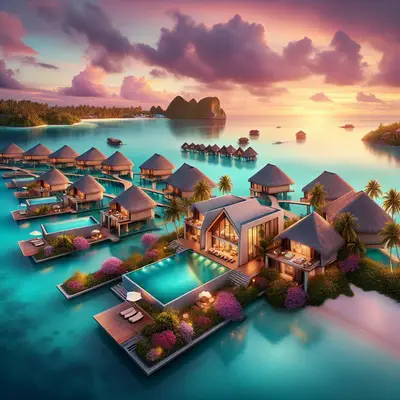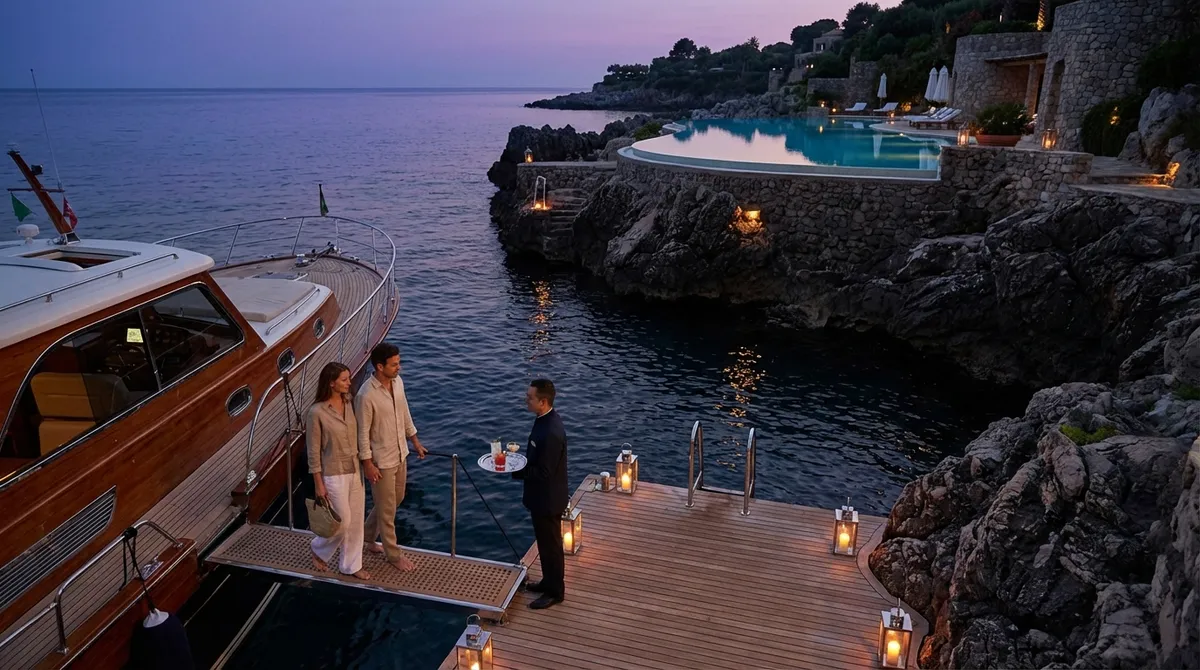
The most rarefied resorts do not advertise what their most discerning guests actually value. Beyond glossy photography and predictable promises of “privacy” and “personalization,” there exists an unspoken operating system—quiet mechanisms, relationships, and design decisions that separate a pleasant escape from a truly exceptional one. For those who collect experiences the way others collect objects, understanding this hidden logic is the key to choosing destinations that feel less like bookings and more like belonging.
Below, we explore five exclusive insights that seasoned luxury travelers use to read between the lines—and quietly secure a stay that feels precisely, almost uncannily, tailored.
1. The Invisible Hand of Genuine Fixers
In the world of exclusive resorts, the most valuable amenity never appears on the website: the discreet fixer. This is the person who can reroute a yacht tender at dusk, secure a private gallery viewing after hours, or have a pilot on standby when the weather decides not to cooperate.
The true test is not whether a resort has a “concierge,” but whether that role feels more like a private office than a front desk. The best properties cultivate long-term relationships with local authorities, artisans, and cultural gatekeepers—people who will open doors that do not exist for the public, no matter the price. Their value is measured not in spectacle, but in seamlessness: a delayed arrival that somehow still dovetails into a sunset tasting; a last-minute change of plans that appears on your itinerary as if it had been the intention all along.
When evaluating a property, pay more attention to the language around “connections” than amenities. Are they speaking in generalities about recommendations, or in specifics about orchestration? Quiet competence—not performative enthusiasm—is the truest hallmark of a resort with serious, behind-the-scenes capability.
2. Privacy by Design, Not Policy
Every resort can promise “privacy”; only a small fraction understand how to engineer it. In the most thoughtfully conceived properties, discretion is built into the architecture, landscaping, and circulation patterns long before a guest arrives.
You will notice subtle markers: arrival routes that avoid the main pool and restaurant, villa orientations that shield terraces from neighboring sightlines, and soundscaping that ensures conversations remain private even outdoors. Staff appear precisely when needed and vanish when not, thanks to back-of-house routes that keep service flows invisible rather than intrusive.
The difference lies in intention. A resort that simply offers “secluded villas” has thought about privacy as a product. A resort that has modeled sightlines, tested acoustic profiles, and choreographed arrival paths has considered privacy as a discipline. The discerning guest feels this immediately—not in what they see, but in what they do not see: no crowds, no collisions, no accidental audience.
Choosing such properties means looking beyond square footage and plunge pools. Seek out resorts that discuss master planning, landscape design, and guest flow in their materials or interviews. When privacy is embedded in the blueprint, it does not need to be loudly promised; it is quietly lived.
3. Time as the Ultimate Luxury—Not Just Flexibility
At the uppermost tier of hospitality, time is treated less as a schedule and more as a medium. The finest resorts understand that their role is not to fill your days, but to sculpt them with a cadence that feels almost therapeutic.
Rather than pushing a rigid sequence of “must-do” activities, these properties design days with intentional rhythms: unhurried mornings, slow rituals around coffee or tea, gradually intensifying experiences as daylight fades, and evenings that never feel rushed by reservations or turn times. Breakfast hours that stretch late, spa appointments that flex to your natural waking patterns, and experiences that can shift with weather or mood—all without a single apology or visible rearrangement.
Truly elevated resorts often assign a single point of contact whose quiet task is to protect your time. They will gently filter suggestions, shield you from interruptions, and adjust pacing before you even realize it needs adjusting. Over several days, you notice that nothing feels urgent, yet everything somehow happens: the dive, the tasting, the hike, the tasting menu, the impromptu sail.
When assessing a property, look for clues in how they speak about itineraries and experiences. Do they emphasize “choice” and “options,” or do they demonstrate a point of view on how time should feel? The distinction is small but profound: one fills your calendar; the other curates your energy.
4. Culinary Experiences Beyond the Plate
For travelers accustomed to Michelin stars and chef collaborations, another tasting menu is rarely the reason to book. Instead, what separates the truly exceptional resorts is not the complexity of the cuisine, but the integrity of the ecosystem that supports it.
The most compelling culinary programs begin long before a dish reaches the table. They involve quiet partnerships with local farmers and fishers, on-site gardens and fermentation rooms, and menus that move with tides, seasons, and microclimates rather than fixed signatures. The chef knows which orchard the apricots came from not because it sounds romantic, but because there is an ongoing dialogue with the grower about ripeness, yield, and weather.
Guests are invited into this ecosystem only if they wish: a walk through the kitchen garden at dawn with the horticulturist, a conversation with a winemaker in the cellar rather than a generic “tasting,” or a simple bowl of broth whose depth reveals the time invested in stocks, bones, and patient reduction. Luxury here is not spectacle; it is rigor.
When researching a resort, look beyond the prominent chef name. Seek signs of continuity: multi-year relationships with producers, seasonal menus that actually evolve, and a willingness to quietly serve something profoundly simple when it is perfect—and to leave it off the menu when it is not.
5. The Art of Effortless Personalization
Personalization has become an overused term in hospitality, worn thin by algorithmic gestures and generic “preferences on file.” At a truly exclusive resort, personalization is not a series of obvious surprises; it is an ongoing negotiation between what is known, what is intuited, and what is respectfully left undiscovered.
The finest properties read guests with a curator’s eye. They notice how you move through space, the pace at which you dine, the time you naturally gravitate toward the pool or the sea. Over the course of a stay, these observations translate into subtle adjustments: a changed turn-down time, a revised pillow selection that appears without comment, a wine pairing recalibrated after understanding your palate—not after you fill out a form.
You will rarely be asked, “Is everything okay?” because the answer has already been anticipated. At the same time, boundaries are honored; there is no insistence on arranging your “perfect day” if your pleasure lies in quiet anonymity. The success of personalization is measured by how little you have to request—and how little you feel observed while receiving it.
To identify resorts operating at this level, pay attention to the nuance of staff interactions from the very first inquiry. Are questions generic, or are they calmly targeted around how you like to spend your time, how you restore, how you celebrate? The depth and subtlety of those early conversations often foreshadow the quality of the stay itself.
Conclusion
The world of exclusive resorts is crowded with polished claims and familiar promises. Yet for those who approach travel as an art form, the true distinction lies beneath the surface—in the quiet choreography of people, space, and time. The most remarkable properties are not defined by their thread counts or their views, but by the unseen systems that allow you to feel utterly yourself, in a place that feels temporarily, but convincingly, yours.
Understanding these hidden dimensions—the fixers behind the scenes, privacy embedded in design, time treated as a luxury, culinary integrity, and personalization that respects your intelligence—turns the act of choosing a resort into an exercise in discernment. It is the difference between being impressed, and being deeply, quietly satisfied.
Sources
- [Forbes Travel Guide: What Makes a Hotel Truly Luxurious](https://www.forbes.com/sites/forbestravelguide/2018/02/20/what-makes-a-hotel-truly-luxurious/) - Insight into the standards and nuances that define high-end hospitality
- [Condé Nast Traveler: How to Tell if Your Hotel Is Actually Five-Star](https://www.cntraveler.com/story/how-to-tell-if-your-hotel-is-actually-five-star) - Explores the hidden markers of genuine luxury in hotels and resorts
- [Virtuoso: The Future of Luxury Travel](https://www.virtuoso.com/travel/articles/future-of-luxury-travel) - Discusses evolving expectations of affluent travelers, including personalization and time
- [World Travel & Tourism Council (WTTC) Luxury Travel Trends](https://wttc.org/research/insights) - Research-backed perspectives on premium travel behaviors and expectations
- [Relais & Châteaux Vision & Commitments](https://www.relaischateaux.com/us/vision) - Details how top-tier properties approach culinary integrity, local sourcing, and guest experience
Key Takeaway
The most important thing to remember from this article is that this information can change how you think about Exclusive Resorts.