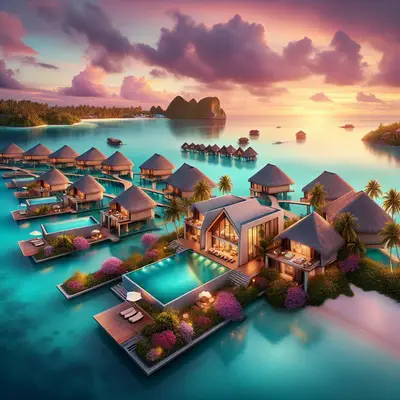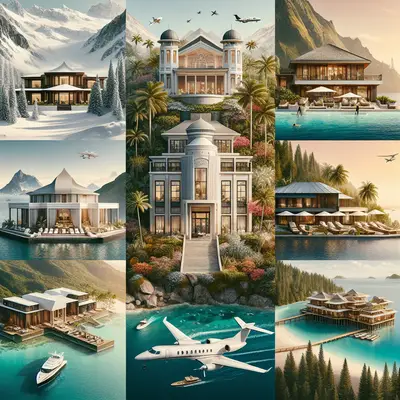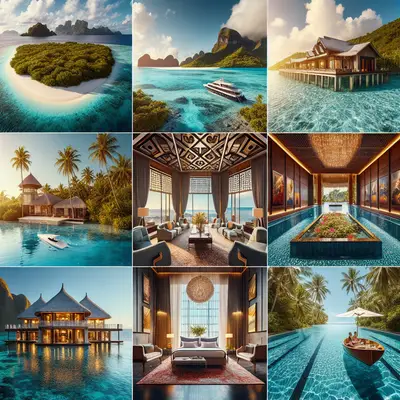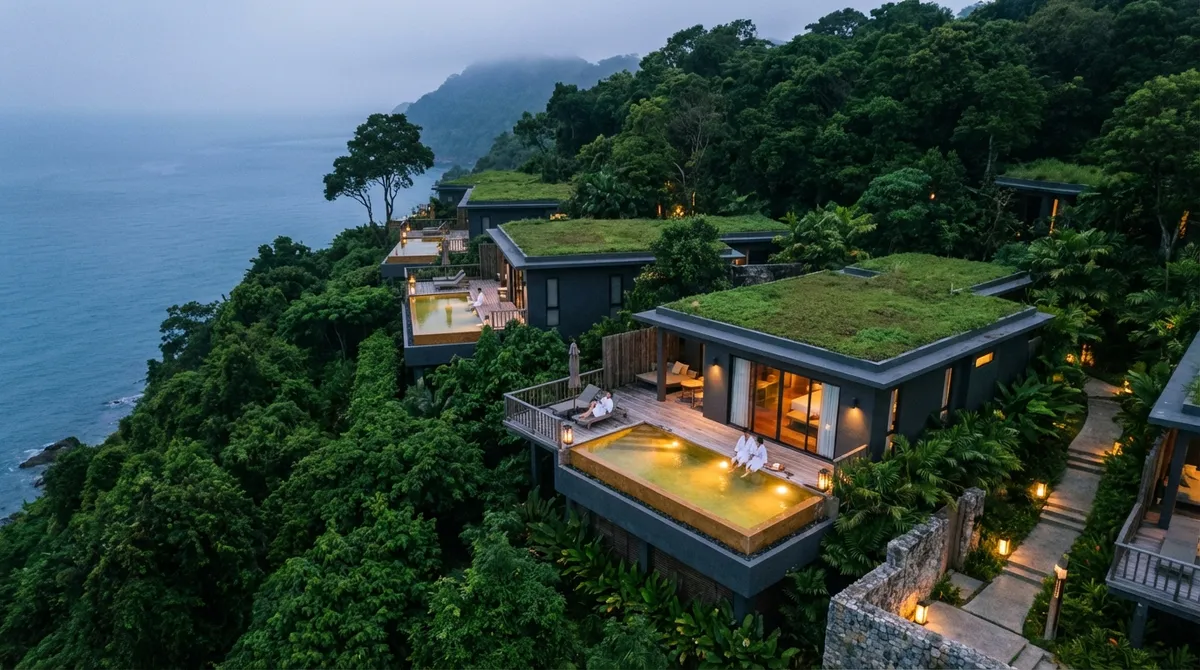
For a certain kind of traveler, “exclusive” no longer means marble lobbies and visible opulence. It means somewhere your name is never spoken at check‑in, where the staff already knows the yacht’s tender, where every window frames a view that cannot be booked at scale. This is the quiet frontier of contemporary luxury: private resorts that function less as destinations and more as carefully edited worlds, tuned to a guest’s rituals, rhythms, and privacy thresholds.
Below, five nuanced insights shaping how the most coveted properties are truly experienced today—details that rarely appear on a booking page, yet define the difference between elevated and exceptional.
1. The Architecture of Privacy: More Than Just a Private Pool
In the most coveted retreats, privacy is not an amenity; it is a design principle.
The layout of a villa, the placement of pathways, and even the orientation of decks are orchestrated so that guests can exist almost invisibly to one another. Top properties commission architects and landscape designers not simply for aesthetics, but to choreograph sight lines, sound travel, and movement. Tree canopies mask terraces without blocking ocean views; arrival points are separated from living spaces to ensure that staff can move with minimal disruption; outdoor showers are framed so that you feel immersed in nature, yet utterly unseen.
This architectural discretion extends to operational details. Some resorts now allow guests to define “visibility profiles”: how often they wish to see staff, whether they prefer turndown at a precise time or only when leaving the villa, even which paths staff may use to avoid intersecting with private moments. For those accustomed to presidential suites and private jets, the true mark of exclusivity is no longer abundance—it is the ability to live at one’s preferred distance from the world.
2. Destination as Curator: Properties That Edit the Region for You
At the upper tier of exclusive resorts, the property itself behaves like a curator—screening the destination and presenting only its most compelling facets, filtered through your preferences.
Rather than a menu of standard excursions, the most refined resorts maintain a living “ledger” of regional artisans, naturalists, winemakers, collectors, and cultural custodians. A day might mean a private visit to a vineyard typically closed to the public, guided by the owner’s second generation; a sunrise hike on a trail only accessible with local conservation teams; or a cooking session with a chef whose restaurant has no signage and no online presence.
The key distinction is intentional scarcity. These experiences are not simply hard to book; they are often structurally limited—available only to a handful of guests each season to protect ecosystems, preserve authenticity, or honor local customs. When done well, the resort becomes less a buffer from the surrounding community and more a translator, ensuring that your presence is both meaningful and finely measured.
3. The Rise of the Invisible Team: Hyper‑Competent, Light‑Touch Service
In truly exclusive environments, service has become almost cinematic: a series of precise cues and well‑timed entrances that never break the spell of privacy.
Top private resorts now invest heavily in anticipatory service training—teaching staff to read micro‑signals (the way a guest rearranges a lounge chair, what they leave on the bedside table, how quickly they finish a glass) and respond without interrupting. Preferences are recorded but never paraded; a particular green tea appears one morning on your terrace without explanation, simply because you asked about it the previous night.
Many properties have evolved beyond the traditional “butler” model to a distributed, multi‑specialist service approach. One contact might manage logistics (transfers, clearances, timing), another quietly handles wellness and daily rhythm, while a third appears only for culinary or wine decisions. The guest experiences this as one coherent presence: a team that seems to know when you wish to be engaged and when silence is the ultimate amenity.
4. Wellness as Atmosphere, Not Appointment
Wellness at the highest tier of exclusive resorts is shedding its spa‑menu origins. Rather than isolated treatments, it is increasingly woven into the architecture, pacing, and sensory environment of the stay.
Air and light are treated almost as spa assets—rooms oriented to capture circadian‑friendly sunrise, glass calibrated to manage glare without heavy drapery, and ventilation systems designed for silent, clean airflow. Nutrition is less about “healthy options” and more about alignment with individual biomarkers, sleep patterns, and travel fatigue; some properties now collaborate with visiting clinicians or nutritionists to calibrate menus to a traveler’s specific needs, sometimes even before arrival.
Movement is equally reframed. Instead of a scheduled 9 a.m. yoga class, a private instructor might quietly adapt to how you used the space the day before—suggesting an in‑villa stretch sequence after a long-haul flight, a low‑impact coastal walk in place of a strenuous hike, or a breathwork session timed to the least windy moment on the deck. Wellness becomes less an activity to book and more a continuous, ambient refinement of how your body moves through the place.
5. Time as the Ultimate Luxury: Frictionless Transitions and Soft Itineraries
If exclusivity once meant access, it now increasingly means the absence of friction. The finest private resorts understand that their most valuable offering is not a view or a villa—it is your reclaimed time.
This starts well before arrival. Immigration fast‑track, private transfers, and coordinated jet or yacht logistics are becoming standard at the ultra‑high end, but the most sophisticated properties go further: they sync with your pilot or captain, monitor weather and runway conditions, and adjust plans quietly to ensure that you step into the property’s “bubble” with minimal cognitive load. Check‑in is not a process but a feeling: a cool towel, the right temperature in your room, your preferred playlist already at a barely audible volume.
Once in residence, itineraries are held lightly. Rather than locking days into rigid schedules, the resort team maintains a dynamic “canvas” of possibilities. A sunrise expedition can slide to sunset without penalty if jet lag lingers; an elaborate tasting menu can become a simple, perfectly cooked dish on your terrace if the mood shifts. Every change is absorbed by the property, not the guest. The net effect is subtle but profound: a stay that feels less like a program and more like time expanding, calibrated to your energy rather than the clock.
Conclusion
Exclusive resorts, at their most considered, are no longer built on spectacle. They are built on discernment—of what to reveal and what to withhold, of when to appear and when to vanish, of which experiences are best left unpublicized. For the traveler who values discretion, depth, and control over their own tempo, these veiled sanctuaries offer something beyond luxury: a rare sense of being fully accommodated without ever feeling managed.
In this quiet echelon of travel, excellence is measured not in how much is offered, but in how little you have to ask for.
Sources
- [Virtuoso: The Future of Luxury Travel](https://www.virtuoso.com/travel/articles/the-future-of-luxury-travel) - Industry insights on evolving expectations of high-net-worth travelers
- [Forbes Travel Guide: What Luxury Travelers Want Now](https://www.forbes.com/sites/forbes-travel-guide/2023/05/23/what-luxury-travelers-want-now/) - Analysis of current trends in premium hospitality and service
- [Aman Resorts Official Site](https://www.aman.com) - Example of ultra‑luxury properties emphasizing privacy, curated experiences, and discreet service
- [Four Seasons Private Retreats](https://www.fourseasons.com/private_retreats/) - Illustrates how leading brands conceptualize private villas, bespoke services, and residential‑style stays
- [Cornell University School of Hotel Administration: Hospitality Industry Perspectives](https://sha.cornell.edu/faculty-research/centers-institutes/chr/research/hospitality-industry-perspectives/) - Research-based perspectives on service design and guest experience in high-end hospitality
Key Takeaway
The most important thing to remember from this article is that this information can change how you think about Exclusive Resorts.