There’s a story making the rounds right now: at a new sales job, an employee brought in his own $1,800 Herman Miller Aeron chair—only to find a colleague repeatedly “borrowing” it until HR got involved and police were eventually called. The internet is fascinated: not just by the audacity, but by the idea that a work chair can quietly cost as much as a long‑weekend city break.
For ultra‑discerning travelers, that detail isn’t absurd—it’s familiar. The same mindset that justifies a four‑figure office chair also shapes how the global elite fly, stay, and move through the world. True luxury isn’t about visible logos; it’s about an invisible, meticulously engineered layer of comfort and control, whether you’re in a corner office, a G650, or a penthouse suite in Paris.
Below, five exclusive insights from this moment of “chair drama” that speak directly to how luxury travelers are designing their lives—and their journeys—right now.
1. Comfort as Capital: The Same Logic Behind a $1,800 Chair and a $25,000 Flight
That Aeron chair—designed by Don Chadwick and Bill Stumpf, obsessively engineered for posture, circulation, and long‑term health—mirrors the thinking behind first‑class suites and private cabins from airlines like Emirates, Singapore Airlines, and Qatar Airways. The principle is identical: comfort isn’t a perk; it’s an asset that protects your most valuable resource—your attention.
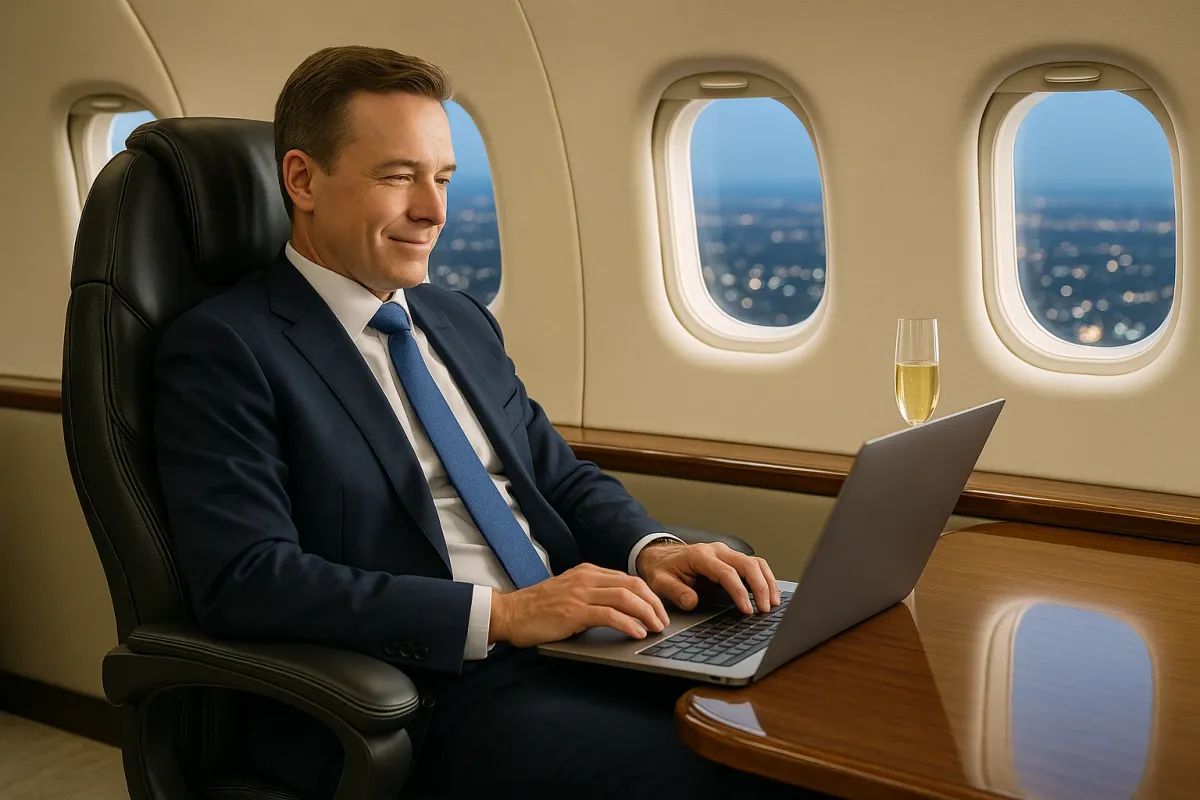
High‑level travelers increasingly measure journeys in quality of hours, not quantity of miles. A 14‑hour flight in a fully flat, well‑designed suite with customized bedding, circadian‑aware lighting, and chef‑curated menus is not “excess”—it is a portable workspace and recovery chamber. Just as the Aeron converts an ordinary desk into an ergonomically intelligent environment, premium cabins convert transit time into performance time.
For those used to this logic, the behavior in that office makes a twisted kind of sense: once you’ve experienced the difference between generic and precision‑tuned comfort, everything else feels like a downgrade. This is exactly why luxury travelers are willing to pay multiples for private or first‑class experiences that the uninitiated still consider “just a seat.”
2. The New Discreet Status Symbol: High Performance, Low Profile
What unsettled many about the office incident wasn’t just the price tag—it was how quietly luxurious the object was. An Aeron doesn’t scream wealth. It looks like a serious, functional tool. This is the aesthetic increasingly favored by global elites in how they travel.
We’re seeing the same philosophy in:
- Understated luggage: Think Rimowa in matte finishes, Globe‑Trotter in heritage neutrals, or custom aluminum cases without visible branding. The connoisseurs know; everyone else sees restraint.
- Timepieces over tech flex: A steel Patek Philippe Aquanaut or a pre‑owned A. Lange & Söhne Saxonia is a quiet nod to discernment—far more nuanced than the latest hyped smartwatch.
- Low‑logo travel wardrobes: Loro Piana travel knits, The Row outerwear, Brunello Cucinelli tailoring—pieces that register more as texture and silhouette than branding.
Like the Aeron, these objects signal to a small, well‑informed circle rather than to the masses. For premium travelers, the ultimate luxury now is to move through airports, hotel lobbies, and private terminals with an aura of ease and precision, not spectacle.
3. Personal Ecosystems: Why the Elite Are Now Traveling With Their Own Environment
The man in the news story did something that feels almost quaint yet deeply current: he brought his own chair into a standardized corporate space to make it livable on his terms. Increasingly, ultra‑high‑net‑worth travelers are doing exactly this with their journeys—curating a personal ecosystem they transport from office to aircraft to villa.
This might include:
- Portable wellness infrastructure: From Theragun devices and custom orthotic insoles to compact air purifiers and travel‑sized aromatherapy kits to neutralize hotel room scent profiles.
- Sleep architecture: Monogrammed pillowcases, specific fabric weaves (such as 600‑thread‑count cotton sateen or cool percale), eye masks shaped to avoid lash compression, and custom melatonin or magnesium protocols.
- Curated soundscapes: Custom in‑ear monitors or flagship noise‑cancelling headphones paired with personally designed playlists or soundscapes—replacing the generic airline audio experience.
On private jets and in top‑tier suites, brands are catering to this shift by allowing guests to pre‑load their space with personal preferences—from minibar contents to humidity levels. The $1,800 chair at a generic desk is a symbol of this broader move: the wealthy are no longer adapting to environments; they are making environments adapt to them, wherever they are.
4. The Real Luxury Is Control—And That’s Changing How People Book and Fly
Beneath the viral amusement, the workplace story is about control: who has the authority to define their conditions, and who must accept what’s given. In travel, that same tension is driving a quiet but fundamental shift away from even the best commercial first‑class experiences towards semi‑private and fully private solutions.
We see this in:
- The rise of membership‑based jet models: Companies like VistaJet, Flexjet, and Wheels Up (despite recent turbulence in the sector) offer something business class never can—control over schedule, route, and who shares your cabin.
- Ultra‑selective villa and residence programs: Rather than rotating through branded hotel suites, some travelers are buying into curated residence clubs that guarantee a controlled, repeatable environment across global locations.
- Airport bypass infrastructure: From private terminals and VIP fast‑track services to discreet security channels, the aim is to remove friction points that even top‑tier frequent‑flyer status can’t erase.
The man who brings his own Aeron to a new job is making a statement: “I do not accept default settings.” The most sophisticated travelers are making the same declaration to airlines, hotels, and even entire destinations—and building portfolios of services that ensure every journey reflects their standards rather than the industry’s.
5. When Objects Become Boundaries: Why the Best Travelers Protect Their Space Ruthlessly
The viral chair dispute escalated because one person saw an expensive object as communal, while its owner viewed it as an extension of his personal domain. That misunderstanding is magnified in the rarefied world of premium travel, where objects and spaces often function as quiet but firm boundaries.
Elite travelers increasingly deploy physical and procedural boundaries to maintain psychological sovereignty on the move:
- Dedicated “travel‑only” pieces: From a specific cashmere wrap to a particular pair of slip‑on shoes, these items signal—both internally and externally—that the wearer is in transit mode, not available for casual access.
- Controlled social exposure: Choosing boutique properties or private villas over grand iconic hotels, not for lack of means, but to curate exactly who they encounter and how often.
- Negotiated privacy protocols: High‑net‑worth guests now specify everything from photography bans to staff approach rules (no unsolicited conversation, specific knock patterns, defined service windows).
What looks like fussiness from the outside is, in reality, a refined understanding of how subtly environments drain—or protect—mental energy. Just as the Aeron’s owner refused to let someone else appropriate his carefully chosen instrument of comfort, sophisticated travelers are increasingly unwilling to let their time, space, and attention be casually borrowed by poorly designed experiences.
Conclusion
The internet may laugh at a $1,800 office chair, but for those who live and travel in the premium lane, the story is less about entitlement—and more about philosophy. The same principles that justify an investment in an ergonomically perfect seat underpin every serious decision about how, where, and with whom to travel.
Luxury, at its sharpest edge, is not ostentation. It is the deliberate refusal to accept default discomfort. It is comfort as capital, design as armor, objects as boundaries, and environment as a personally curated operating system. Whether in a fluorescent‑lit office or a sun‑washed terrace overlooking the Aegean, the question is the same: are you sitting in the seat that the world handed you—or the one you chose, designed, and, if necessary, defended?
Key Takeaway
The most important thing to remember from this article is that this information can change how you think about Premium Lifestyle.