There is a certain elegance in the way culture moves: a film about a rat in a Parisian kitchen becomes, almost two decades later, a reference point for the world’s most discerning diners. As Ratatouille trends again today—thanks to a fresh wave of online nostalgia and a viral breakdown of its hidden details—its influence has quietly resurfaced in the very places that once dismissed it as “just a cartoon”: the dining rooms of Michelin-starred restaurants and chef’s tables booked months in advance.
Luxury travelers, always a step ahead of the mainstream, have started to seek not just rare ingredients or impossible-to-secure reservations, but experiences that feel as art-directed, layered, and emotionally resonant as that animated Paris. The renewed conversation around Ratatouille is more than a pop-culture moment; it is a reminder that the future of fine dining lies at the intersection of story, memory, and meticulous craft.
Below, five refined insights—shaped by this cultural resurgence—that are quietly redefining how sophisticated travelers approach the world’s most coveted tables.
Narrative-Driven Menus: When Dinner Feels Like a Film
The renewed fascination with Ratatouille’s hidden details—Easter eggs tucked into kitchen scenes, subtle nods to French culinary history, meticulous visual research of Parisian bistros—mirrors a rising expectation among luxury diners: a meal should unfold like a narrative, not a checklist of courses.
At the very top end, chefs are crafting tasting menus with the same deliberate pacing as a screenplay. Think of how restaurants like Alain Ducasse at The Dorchester, Disfrutar in Barcelona, or Tokyo’s Den choreograph not just flavors, but emotional beats: a surprising amuse-bouche that disarms, a nostalgic main that feels strangely familiar, a dessert that arrives with a quiet, cinematic finality. In Paris, where Ratatouille is once again being nostalgically reappraised, you can feel this shift most acutely—at places like Septime or Table by Bruno Verjus, a tasting menu isn’t a parade of technique; it’s a story about place, season, and personality.
For the luxury traveler, the insider move now is to look beyond awards and rankings and ask a different question when choosing where to dine: does this chef have something to say? Menus that read like chapters, courses introduced with context rather than clichés, and pairings that reference personal memories or local culture are becoming the true markers of a destination restaurant. The best meals of 2025 are less about excess and more about narrative coherence—quietly echoing the way Ratatouille made even the simplest dish feel like the climax of a well-told story.
Elevated “Peasant” Dishes: The New Marker of Culinary Confidence
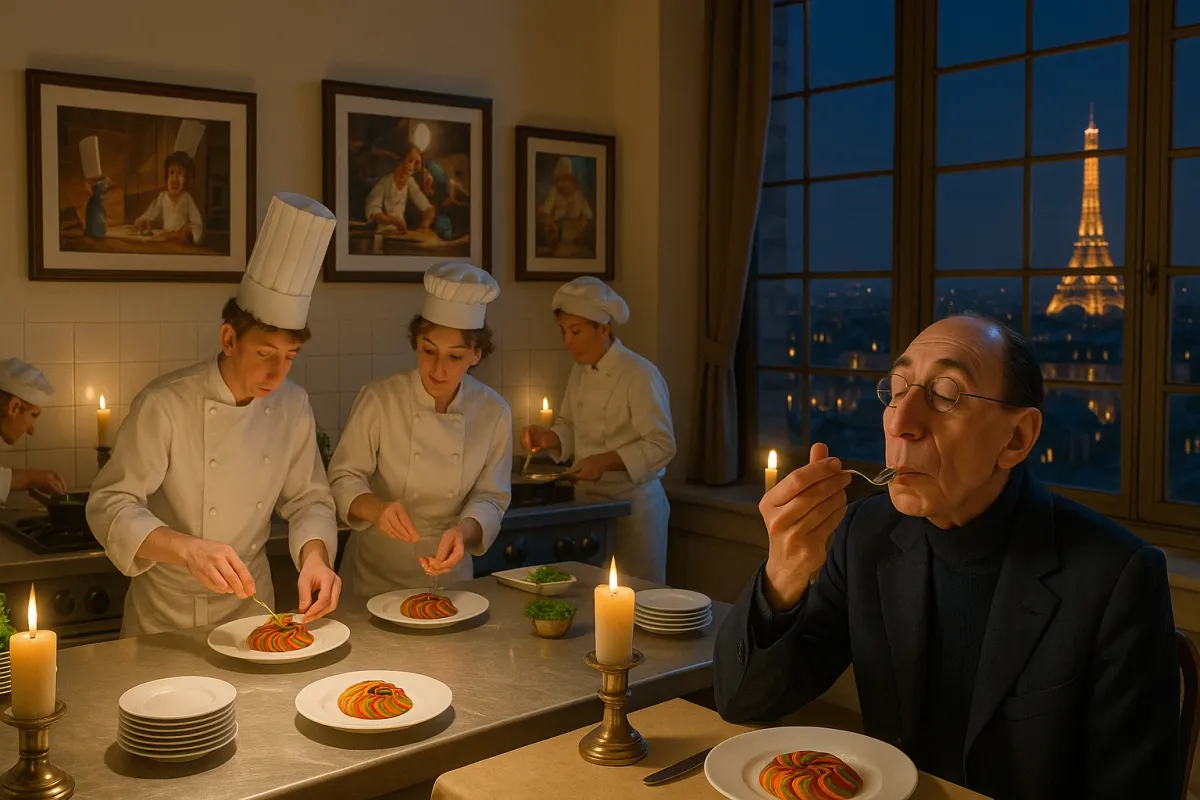
One of the enduring images resurfacing online today is Anton Ego being transported back to childhood by a humble plate of ratatouille. That scene, currently being shared across social media alongside breakdowns of the film’s tiny culinary accuracies, has become a shorthand for a powerful truth high-end restaurants are finally leaning into: sophistication is no longer measured solely in caviar grams or truffle shavings.
In Paris, Copenhagen, Mexico City, and beyond, luxury travelers are noticing something that would have seemed almost radical a decade ago: the most coveted tables are increasingly serving elevated versions of “peasant” dishes. A rustic cassoulet distilled into a single, profoundly flavored bite. A grandmother’s stew reimagined with modern technique but identical soul. In Provence, you might find ratatouille itself presented as a meticulously layered mille-feuille of vegetables, each slice glossed with olive oil sourced from a single hillside. In Italy, osterie that once felt too casual for the high-end set are now anchoring ultra-luxury itineraries, precisely because of their unapologetically humble dishes.
For the discerning traveler, the new luxury is recognizing when a kitchen is secure enough in its identity to embrace the simple. The question to ask is not “What’s the most expensive item on the menu?” but “Which dish here would have meant the most to the chef’s younger self?” Book the places where that answer appears on the plate—those are the restaurants quietly defining the next chapter of fine dining.
Hidden Kitchens and Open Brigades: Behind-the-Scenes Is the New Front Row
As Ratatouille trends again, food-savvy viewers are dissecting its kitchens with almost forensic intensity—spotting accurate copper pans, properly knotted aprons, and the disciplined ballet of a brigade in motion. That renewed attention is perfectly aligned with another shift in luxury dining: the growing appetite for access to what used to be private.
Across global culinary capitals, the most coveted seats are no longer just by the window, but facing the kitchen itself. In New York, London, and Hong Kong, chef’s counters and hidden test kitchens are opening to an elite tier of guests—inviting them into the quiet chaos normally seen only by staff and critics. In Paris, some of the city’s most respected fine-dining rooms now offer behind-the-scenes experiences: a pre-service walkthrough of the kitchen, a glass of Champagne at the pass while the brigade assembles, a debrief with the chef after dessert.
For luxury travelers, securing these experiences requires more nuance than simply requesting “a kitchen tour.” The real value lies in observing the choreography: the near-silent communication, the respect between front and back of house, the absence of performative shouting that belongs to a previous era of gastronomy. Just as Ratatouille subtly taught a generation about the hierarchy of a French kitchen, today’s most refined restaurants are allowing a carefully curated glimpse behind the curtain—knowing that, for a certain clientele, witnessing the discipline and grace of service is as intoxicating as the wine list itself.
Hyper-Local, Cinematic Cities: Dining as a Lens on Place
Part of why Ratatouille is once again capturing attention is its obsessive love letter to Paris—narrow streets at dusk, zinc rooftops, the glow of a bistro sign reflected in rain-slicked pavement. As commentators online revisit those frames, they’re noticing how deeply the film ties cuisine to a sense of place. That sensibility has become central to how elite travelers now curate their own dining agendas.
The most compelling fine-dining experiences in 2025 are not interchangeable “global tasting menus” but deeply rooted narratives of locale. In Paris, that might mean a restaurant that sources from the Île-de-France and tells you, without fanfare, exactly which urban farm your herbs came from. In Kyoto, it’s kaiseki that reflects not just the season, but a specific temple garden’s mood that week. In San Sebastián, it’s a counter where the chef’s relationships with local fishermen dictate the night’s offerings more than any fixed menu.
For travelers, the smart strategy is to treat dining as the most efficient and elegant way to understand a city’s present tense. Seek out chefs who are in active conversation with their surroundings—those whose menus read like dispatches from the markets, coastlines, and farms that shape their days. When Ratatouille resurfaces on your feed this week, it’s an invitation to remember: the finest restaurant in any city is the one that couldn’t possibly exist anywhere else.
Animation, Aesthetics, and the New Visual Language of Dining
One reason Ratatouille continues to resonate—in think pieces, social threads, and nostalgic rewatches dominating feeds today—is its visual luxuriance: the way steam curls, sauces glisten, and Paris glows in impossible twilight. That heightened aesthetic has subtly influenced how the hospitality world thinks about visual storytelling, especially now that every course risks becoming content.
The top tier of fine dining has absorbed this not by chasing virality, but by elevating its visual language to a cinematic level. Lighting is softer, more intentional—dishware matte or subtly reflective, chosen to make food appear almost animated in its saturation and texture. Some restaurants now collaborate with set designers and visual directors to ensure that the journey from entrance to espresso is as precisely framed as a film scene. In Paris, where Ratatouille’s revival has re-centered the city in the collective food imagination, you’ll find houses that quietly acknowledge the film’s aesthetic—perhaps in the way a dish is plated to evoke a Parisian rooftop skyline, or in a dining room that captures that same dusky, romantic light.
For luxury travelers, the nuance lies in choosing places where this cinematic sensibility feels intrinsic, not contrived. You’re looking for compositions, not gimmicks: a room that flatters both the guest and the plate, a sommelier who moves with the grace of a supporting character, a dessert whose geometry is alluring without shouting. As the internet re-immerses itself in Ratatouille’s frames today, the most sophisticated diners are quietly chasing the same feeling in real life: not a photo opportunity, but a mise-en-scène in which their evening becomes, quite naturally, the story.
Conclusion
The renewed attention on Ratatouille—with viewers dissecting its hidden details and remembering how a single bite could unlock a lifetime of memory—arrives at a moment when fine dining is undergoing its own quiet refinement. For luxury travelers, this is an invitation to recalibrate what truly matters at the table.
Choose restaurants that tell a story rather than perform status. Seek the humble dish elevated with reverence, the hidden kitchen that opens just enough to let you feel the heartbeat of service, the dining rooms that belong unmistakably to their cities. In an age of endless options, the most exquisite experiences are those that, like the best scenes in that animated Paris, stay with you long after the credits roll—delicate, deliberate, and impossibly specific to the moment you were there.
Key Takeaway
The most important thing to remember from this article is that this information can change how you think about Fine Dining.