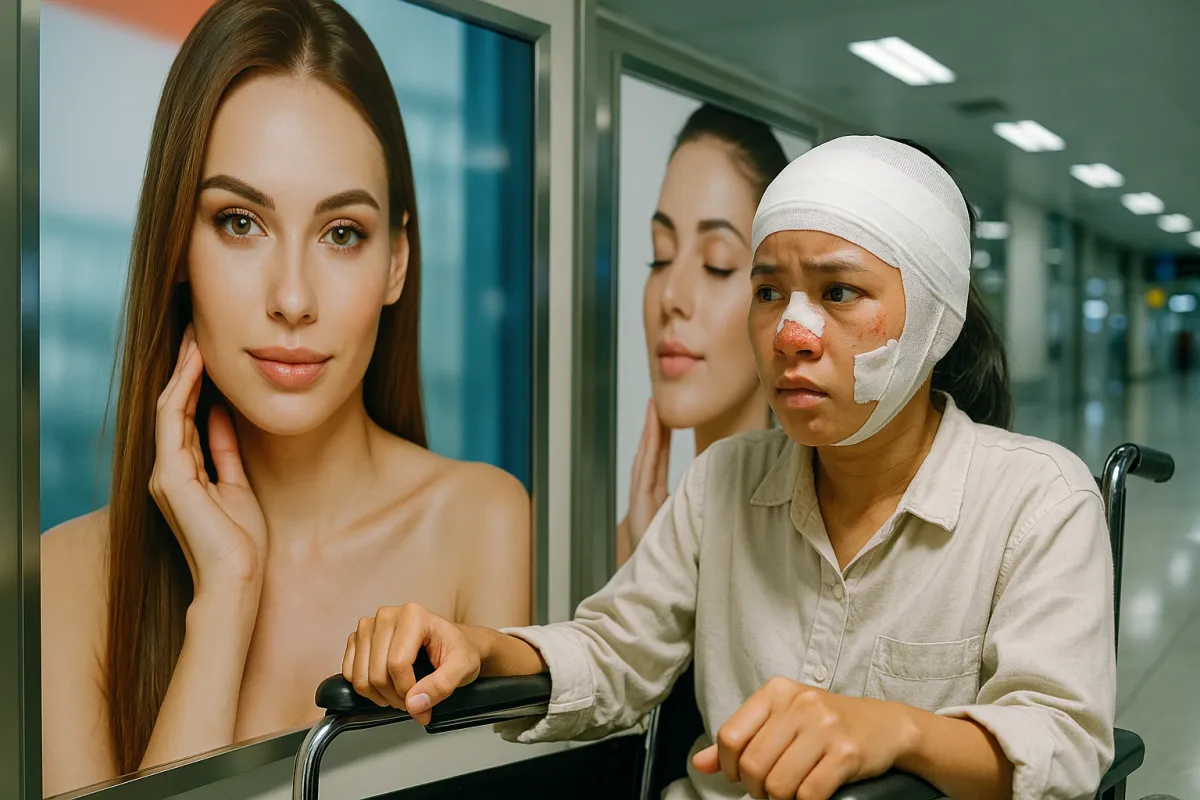
A 31-year-old mother is on life support after traveling to Vietnam for cut‑price plastic surgery, reportedly hoping to mirror Kylie Jenner’s dramatic transformation. The story, now circulating widely in international media, is a stark reminder that in 2025, the pursuit of a certain “look” has become a global industry—one that often blurs the line between aspiration and risk. For affluent travelers, it raises an uncomfortable question: when did luxury become synonymous with cheaper, faster, and further from home?
For Jet Ready readers, this isn’t just a cautionary tale—it’s a call to refine what “premium” really means in the age of medical tourism. As clinics from Ho Chi Minh City to Istanbul and Bangkok aggressively market “luxury makeover packages,” discerning travelers are quietly rewriting the rules: safety, discretion, and long‑term wellbeing are emerging as the new markers of true high‑end care.
Below, five insights for those who expect their aesthetic journeys to meet the same standards as their private aviation, five‑star hospitality, and asset‑class investments.
1. Beyond the Hashtag: Trading Celebrity Imitation for Personalized Aesthetic Mastery
The woman now fighting for her life in Vietnam reportedly pursued surgery to emulate Kylie Jenner’s signature look—a reminder of how celebrity‑driven aesthetics can overshadow medical reality. In the premium segment, however, the frontier of beauty has already shifted: bespoke, data‑driven, and culturally sensitive aesthetics are rapidly replacing one‑size‑fits‑all celebrity blueprints.
Leading clinics in cities like Seoul, Geneva, and New York now employ multidisciplinary teams—facial anthropologists, digital imaging specialists, even behavioral psychologists—to design outcomes that honor bone structure, ethnicity, age, and lifestyle. Instead of arriving with screenshots from Instagram, high‑net‑worth patients arrive with a different request: “Make me look like the most elevated version of myself—ten years from now.”
The luxury traveler’s edge lies in resisting trend‑chasing in favor of long‑horizon beauty. That means selecting practitioners who are willing to say no to the wrong procedure, who discuss how your face will age with time, and who treat each intervention as part of a coherent, multi‑year aesthetic strategy—not a single dramatic before‑and‑after reveal.
2. The New Due Diligence: Vetting Clinics Like You’d Vet a Family Office
The Vietnam case underscores what many surgeons have been warning for years: glossy Instagram feeds and “hospital‑like” interiors are not due diligence. Premium travelers already apply rigorous scrutiny to wealth managers, law firms, and aircraft maintenance providers; truly elevated medical travel demands the same discipline.
At the top end of the market, elite patients now insist on:
- Primary‑source credentials: direct verification of board certifications, surgical fellowships, and hospital privileges via official registries—not screenshots sent by the clinic.
- Transparent complication statistics: serious providers will share anonymized data on revision rates, infection rates, and post‑operative ICU admissions, benchmarked against international norms.
- Third‑party accreditation: Joint Commission International (JCI) or equivalent—ideally for both the hospital and the specific department, not just the building.
- Admitting rights at a full‑service hospital: any surgeon performing major procedures should have clear, documented access to a high‑acuity facility if something goes wrong.
Many UHNW families are now engaging specialized concierge firms and medically trained advisors to pre‑screen international clinics in the same way they screen real estate or private equity deals. The lesson from Vietnam is harsh but clear: if you would not wire a seven‑figure sum based solely on a website and a WhatsApp chat, you should not entrust your body to them either.
3. Location Is Not Just a Backdrop: Why Geography Must Match Medical Complexity
Vietnam, Thailand, Turkey, and Mexico have all become hotspots for “affordable luxury” surgery packages, bundling five‑star hotels, private transfers, and procedures into a single price. For many, the temptation is obvious: the photographs look exquisite, the testimonials effusive, and the price frictionless. Yet sophisticated travelers now view location through a very different lens.
For low‑risk, non‑invasive treatments—injectables, light‑based therapies, minimal‑downtime skin work—established hubs such as Seoul, Tokyo, and select European capitals can be a compelling extension of a premium itinerary. But for major surgical interventions requiring general anesthesia, transfusion capabilities, or the possibility of ICU care, the calculus changes. Here, proximity to internationally ranked hospitals, robust emergency transport infrastructure, and reliable access to advanced critical care become non‑negotiable.
Luxury travelers are quietly adopting a new rule:
- Complex surgery close to home or within an established medical ecosystem (London, Zurich, Singapore, Los Angeles, Dubai).
- Refinement and maintenance treatments abroad, where the trip itself becomes part of a larger wellness or cultural escape.
The tragedy in Vietnam throws a harsh spotlight on a key premium insight: a five‑star hotel does not compensate for a two‑star emergency plan.
4. Recovery as a Ritual: Designing a Post‑Op Experience Worthy of Your Investment
Many medical tourism packages still market recovery as an afterthought—“three nights in a luxury hotel” tacked onto a procedure. The Vietnam case illustrates why post‑operative care is not a footnote but a crucial determinant of survival and long‑term outcome.
The emerging gold standard for high‑end patients looks more like a curated residency than a generic hotel stay. Think:
- Medically supervised recovery suites within or adjacent to the hospital, with 24/7 nursing staff, on‑call anesthesiologists, and immediate access to imaging and labs.
- Nutrition designed for healing, with anti‑inflammatory, protein‑rich menus created by clinical dietitians but executed at a gastronomic level.
- Integrated physiotherapy and lymphatic support, especially after body contouring, carefully timed to surgical milestones.
- Digital continuity with home‑based physicians, ensuring that your primary doctor is looped in on medications, lab results, and early complications.
The most sophisticated clinics now see recovery as an opportunity to orchestrate a complete environment: scent, sound, light, bedding, and privacy are optimized to reduce cortisol and support immune function. In this framing, the “premium” is not the marble bathroom; it is the fact that if a clot, infection, or respiratory issue emerges at 3 a.m., the response is instantaneous and expert.
5. From Secrecy to Strategy: Making Discretion a Health Asset, Not a Risk
Part of the appeal of flying to Vietnam—or any far‑flung destination—for surgery has been discretion: no curious neighbors, no prying colleagues, no paparazzi if you live in a public‑facing world. But secrecy can quietly become a safety liability if your inner circle and medical team are excluded from the process.
The most refined approach today is not radical secrecy, but controlled confidentiality. That can mean:
- Pre‑trip consultations between your chosen surgeon and your primary care physician or private clinic at home.
- A discreet family member, PA, or professional medical chaperone traveling with you, empowered to advocate on your behalf if complications arise.
- Secure, encrypted documentation of your full operative report, anesthesia notes, and imaging—ready to be shared instantly with any hospital worldwide if an emergency landing or diversion becomes necessary.
The Vietnam case, with a young mother now on life support far from home, is a sobering emblem of what happens when the desire to quietly transform outruns the infrastructure to safely support that transformation. For the Jet Ready traveler, discretion should feel like wearing an exquisite, perfectly cut coat: invisible to others, but meticulously constructed on the inside.
Conclusion
The story of the 31‑year‑old woman in Vietnam is not just another tabloid tragedy—it is a mirror held up to a culture that often equates luxury with spectacle, distance, and dramatic change. In reality, the most premium expression of aesthetic travel in 2025 is something else entirely: rigorous, data‑driven, medically anchored, and deeply personal.
As private jets, black‑card memberships, and on‑demand concierges make the world more accessible than ever, the true hallmark of a Jet Ready life is not how far you can go for a procedure—but how intelligently you choose where, with whom, and why. When beauty crosses borders, the most powerful luxury you can carry with you is discernment.
Key Takeaway
The most important thing to remember from this article is that this information can change how you think about Premium Lifestyle.