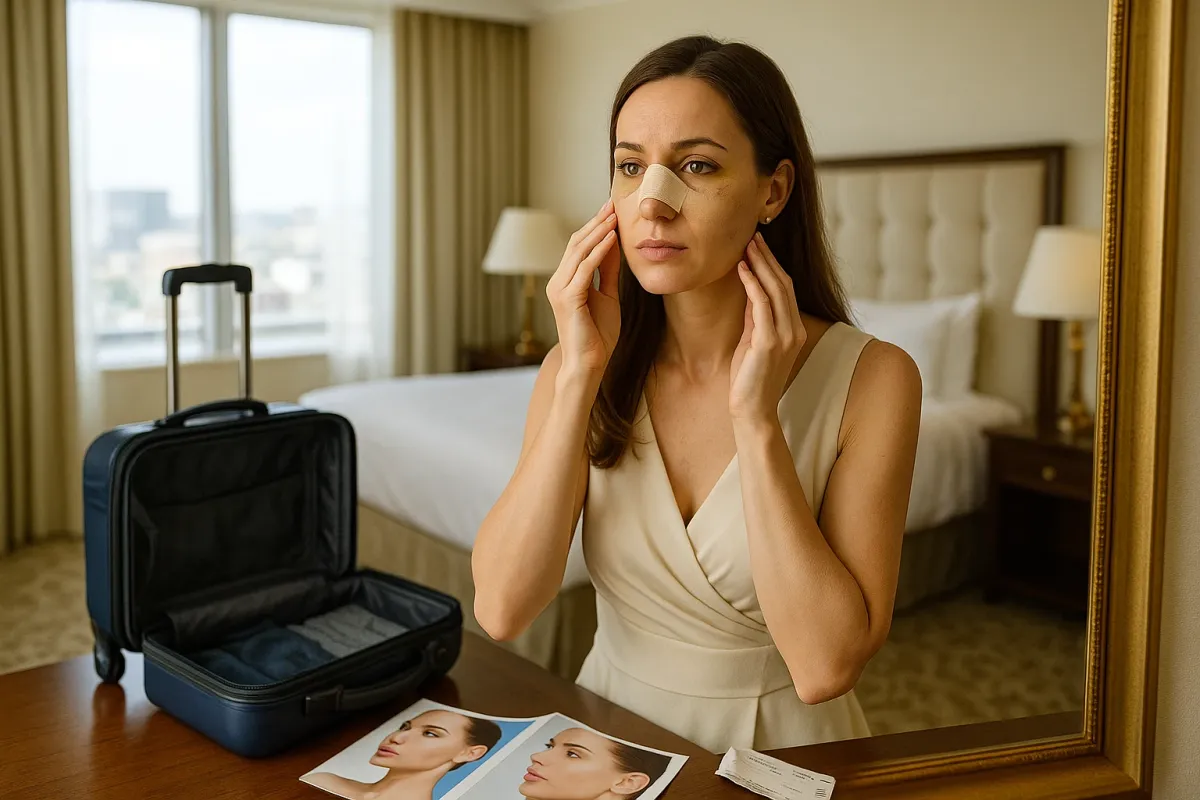
A 31-year-old mother on life support after flying to Vietnam for plastic surgery is not the story most luxury travelers expect to see alongside their holiday plans. Yet this real headline, now circulating widely, is reshaping how affluent travelers think about medical tourism, aesthetics, and what it truly means to upgrade one’s appearance abroad. For the high-net-worth frequent flyer, the conversation is no longer just about “where” to go, but “how” to curate beauty, safety, and privacy with the same precision you bring to your jet and your itinerary.
As low-cost clinics around the world market aggressive “transformation packages” to price-conscious clients, a very different ecosystem is quietly evolving at the upper end of the market: bespoke aesthetic retreats, physician-led residencies, and wellness-centric itineraries designed as meticulously as a private yacht charter. The tragedy in Vietnam is a stark reminder that in luxury travel, “premium” isn’t a spa-like waiting room or glossy Instagram feed—it’s governance, credentials, and contingency plans you never have to use.
Below are five timely, under-the-radar insights for discerning travelers navigating this new era of cross-border beauty and wellness.
Redefining “Beauty Trips”: From Discount Surgeries to Curated Aesthetic Residencies
The Vietnam case—reportedly involving a traveler inspired by Kylie Jenner’s dramatic transformation—highlights a hard truth: mass-market cosmetic tourism often trades safety for spectacle and price. At the opposite end of the spectrum, ultra-high-net-worth travelers are moving away from one-off “fly-in, operate, fly-out” procedures and toward multi-week aesthetic residencies coordinated by top-tier clinics and trusted travel advisors.
In London, Dubai, Seoul, Beverly Hills, and select European capitals, leading surgeons now collaborate with luxury hoteliers and private aviation firms to create discreet door-to-door experiences: pre-operative consultations via encrypted telehealth, clinical-grade recovery suites with ICU-level equipment on standby, and private-floor accommodations managed by medically trained staff rather than standard butlers. The operation itself becomes only one chapter in a broader narrative—preceded by genetic and hormonal profiling, and followed by nutrition, sleep, and lymphatic protocols designed to protect both outcome and overall health. For the elite traveler, the value proposition is not a cheaper facelift, but an orchestrated transformation where risk is controlled as obsessively as comfort.
Why Hospital Privileges Matter More Than Hotel Photos
Many mid-market clinics in medical tourism hubs lean on immaculate interiors to signal quality—marble lobbies, designer chairs, and rooftop pools. Yet in the wake of the Vietnam story, seasoned travelers are paying far less attention to décor and far more to a quietly critical detail: the surgeon’s hospital privileges and the clinic’s emergency pathways.
At the luxury level, due diligence is becoming non-negotiable. Ultra-cautious travelers now routinely request verification that their surgeon operates in, or holds admitting rights at, a JCI-accredited or top-tier local hospital—not just a standalone aesthetic center. They ask which hospital they would be transferred to in the event of complications, how quickly an ambulance team could access the clinic, and whether intensive care specialists are available on call. Savvy advisors are also cross-referencing malpractice histories and professional society memberships across jurisdictions rather than taking a clinic’s bio at face value. In this environment, the true luxury is not a scented candle in recovery—it is a vetted, documented safety net you may never see, but absolutely feel.
The New Status Symbol: Quiet Recovery in Wellness‑Grade Hideaways
In the past, cosmetic procedures were something to be scheduled around business calendars and social seasons, often squeezed into a long weekend. Now, particularly after high-profile cautionary tales, affluent travelers are treating recovery itself as a phase worthy of investment and design. Instead of rushing home on a commercial flight, they are booking two to four weeks in ultra-low-key wellness hideaways that feel more like private residences than hotels.
These properties—often on discreet islands, alpine villages, or vineyard estates—specialize in low-impact, medically supervised living: customized anti-inflammatory menus, hyperbaric oxygen sessions for certain post-surgical cases, in-room physiotherapy, and sleep-optimized suites with circadian lighting and hospital-grade air filtration hidden behind handcrafted finishes. Some partner with world-renowned clinics to host “off-grid convalescence” programs: no lobby, no press, no prying eyes—just a private entrance, a dedicated nursing team, and the option to arrive and depart via helipad or seaplane. In an image-driven era, the ultimate statement is not staging a reveal on social media; it’s orchestrating a recovery so comfortable and well-supported that your transformation never looks like hard work.
Private Jets, Public Risks: Why Evacuation Planning Is Becoming Standard
Elite travelers often assume that private aviation automatically equates to superior safety—particularly when combining surgery with travel. The reality is more complex. Certain procedures significantly increase the risk of deep vein thrombosis and pulmonary embolism for days, even weeks. Combine that with a long-haul flight at altitude—even on a Gulfstream—and the risk profile changes dramatically.
In response to cases like the Vietnam incident, top-tier travel planners are embedding medical risk assessments directly into trip design. For some procedures, this means structured ground transfers or short-hop flights between recovery stops instead of a single 14-hour leg. For others, it means integrating time in a city with a world-class hospital before continuing on to a remote villa. Medically trained flight staff, aircraft stocked with emergency equipment appropriate to the specific surgery, and pre-cleared medical evacuation corridors are becoming part of the discreet checklist. The new luxury standard is not just a beautifully catered flight, but a route and aircraft plan quietly aligned with your current hematology profile and surgical history.
From Imitation to Individuality: The Rise of “Performance Aesthetics”
The Vietnam tragedy was reportedly fueled by a desire to emulate a celebrity’s dramatic aesthetic. At the luxury level, that trend is rapidly losing ground. High-net-worth travelers—used to commissioning bespoke yachts, tailored investment portfolios, and custom fragrance—are increasingly rejecting “copy-and-paste” faces in favor of what top clinicians are calling performance aesthetics.
This approach treats aesthetic interventions the way elite trainers treat performance: calibrated, incremental, and deeply personal. Instead of chasing a Kardashian profile in a single overseas trip, clients work repeatedly with cross-border teams—dermatologists in Switzerland, oculoplastic surgeons in Seoul, regenerative medicine experts in the U.S.—over months or years. Genetic markers, bone structure, and long-term aging patterns guide decisions, not a single reference photo. Travel then becomes an elegant circuit of periodic tune-ups: a biannual visit to a Swiss clinic for skin longevity protocols woven into a ski week; a discreet stop in Seoul for ultrafine adjustments paired with a design and gastronomy tour. The end result is not that you look like anyone else, but that wherever you land, you look unequivocally and effortlessly like the best version of yourself.
Conclusion
The story of a young mother now fighting for her life in Vietnam is a sobering counterpoint to the glossy promise of global beauty tourism. For luxury travelers, it underscores a pivotal shift: true privilege in this space is not the ability to fly anywhere for anything—it is the power to say no to poorly governed options, to align travel with world-class medicine, and to insist that safety and subtlety sit at the center of every aesthetic decision.
As the world’s most discerning travelers rewrite the rules of transformation abroad, one principle is becoming clear: luxury is no longer the most dramatic change for the lowest price. It’s the quiet confidence that every detail—from surgeon selection to flight altitude—has been curated with the same rigor you demand of your most valuable assets, including your health and your future face in the mirror.
Key Takeaway
The most important thing to remember from this article is that this information can change how you think about Luxury Travel.