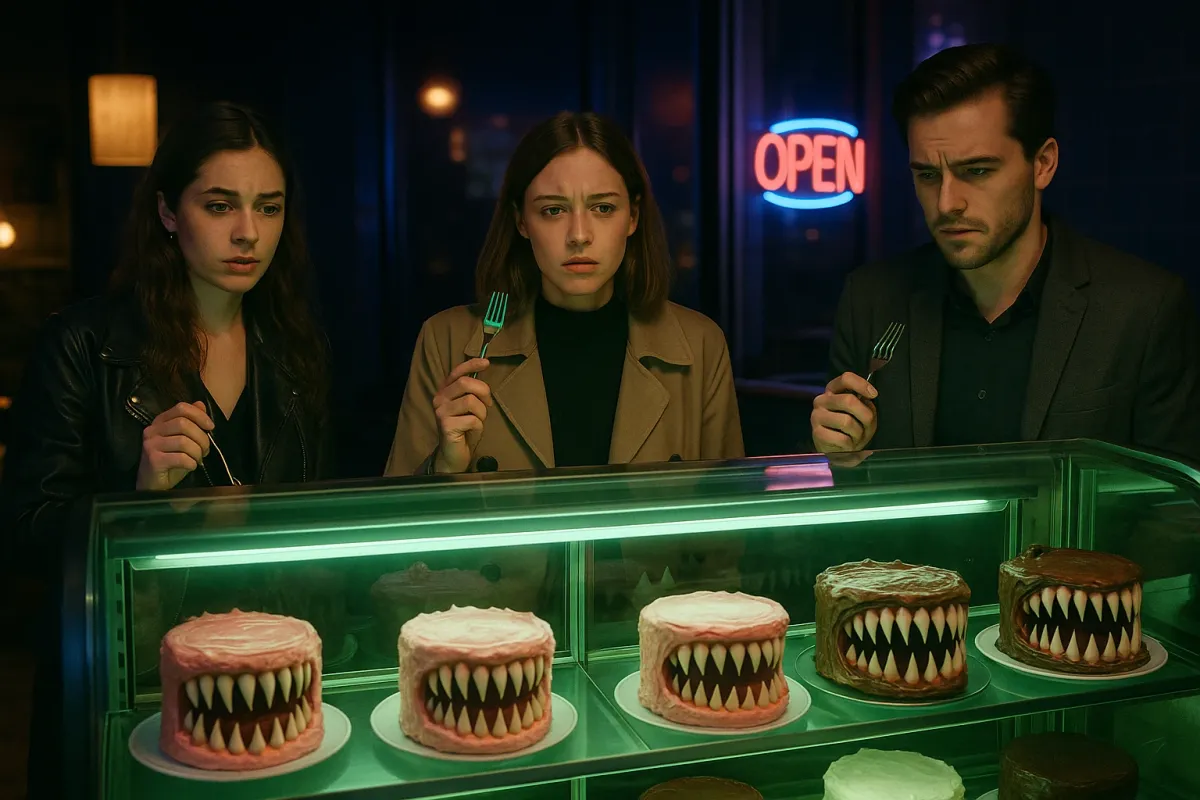
In a week when social feeds are overflowing with cursed confections from the viral “Cakes With Threatening Auras” trend, haute patisserie has found itself in an unexpected spotlight. The internet may be laughing at lopsided frosting and deeply unsettling fondant faces, but behind the memes lies a revealing contrast: in an era of chaos baking and shock-value desserts, the world’s most serious pastry kitchens are doubling down on restraint, technical precision, and quietly radical flavor.
For luxury travelers who curate their itineraries around tasting menus and chef’s counters, this cultural whiplash is more than entertainment—it’s context. As “bad cakes” go viral, a new generation of fine-dining pastry chefs is redefining what it means for dessert to be truly memorable, moving beyond Instagram spectacle toward something far more enduring: emotional resonance, terroir-driven storytelling, and an almost couture‑like obsession with detail.
Below, five discreet but powerful shifts in the high-end dessert world that discerning travelers should have on their radar right now—especially as the internet embraces cake at its most unhinged.
The New Luxury: Desserts That Refuse to Perform for the Camera
As cursed cakes dominate trending lists, top pastry programs in Paris, New York, Tokyo, and Copenhagen are quietly taking the opposite route: desserts designed for the palate first, and the lens second. At restaurants like Disfrutar in Barcelona or Alchemist in Copenhagen, plated sweets may appear deceptively simple—minimalist forms, subdued color palettes, no towering sugar sculptures—but their flavor architecture is anything but.
This is a deliberate response to the last decade of hyper-Instagrammable desserts, from overflowing freakshakes to rainbow-tinted pastries. Where the meme cakes rely on visual shock and chaos, contemporary fine dining is embracing understatement as the ultimate flex. A single quenelle of sorbet with an almost austere garnish conceals weeks of R&D, layered infusions, and precise textural engineering. Luxury travelers in the know are shifting their behavior accordingly, choosing to experience dessert in the moment rather than through the intermediary of a phone screen. The new mark of connoisseurship isn’t the perfect shot—it’s the ability to recognize when a dish has been composed to seduce the senses rather than the algorithm.
From Showpiece to Epilogue: Desserts as the Restaurant’s Final Argument
The “threatening auras” meme works because the cakes feel strangely purposeless—decoration for decoration’s sake, often divorced from any real culinary intention. In contrast, the world’s top tasting menus are treating dessert as the narrative epilogue of the entire meal: a final, decisive statement of what the restaurant believes in.
At places like Noma’s successor pop-ups, or three-star Parisian grand maisons, the pastry course increasingly mirrors the savory philosophy. If the kitchen has spent the evening exploring hyper-local biodiversity, dessert might feature distilled flavors of a single orchard captured across multiple seasons—fermented pear, dried blossom, leaf-infused cream—rather than a generic chocolate dome. This narrative approach rewards travelers who book specifically for the full menu progression, not just a headline main course. It also means that skipping dessert is no longer an elegant exit; it’s walking out before the final scene. Those who appreciate fine dining as a complete work, rather than a sequence of highlights, are finding unprecedented creative depth in the closing chapters of the meal.
Extreme Restraint: The Rise of Negative Space on the Dessert Plate
Where the viral cakes cram every inch of surface with visual noise—threatening eyes, chaotic piping, gratuitous figurines—high-end pastry is moving toward a kind of architectural purity. Negative space has become as important as the components themselves. A single, meticulously glazed element on a wide porcelain plate signals confidence: nothing to hide behind, nowhere for technical flaws to recede.
For the luxury traveler, this minimalist visual language is a useful cue. Sparse plating often indicates a kitchen that trusts its technique and sourcing. An apparently “simple” tartlet might use heritage grains in the pastry, carefully controlled caramelization curves in the filling, and fruit selected not just by provenance but by precise ripeness window. The art lies in removing everything that is not strictly necessary. Just as a bespoke suit is defined as much by what has been edited away as what remains, these desserts broadcast luxury through discipline. In a world obsessed with maximalism, austerity has become a quiet, insider signal.
Hyper-Specific Provenance: When a Single Orchard Becomes the Star
Meme cakes anonymize ingredients entirely—no one asks where the vanilla came from when the frosting is shaped like a screaming clown. At the top of the fine-dining pyramid, the opposite is true: provenance is not a footnote but the headline. Leading pastry chefs are now treating chocolate, fruit, and even dairy with the same terroir‑sensitivity once reserved for wine.
You’ll see this in tasting menus that specify not just “strawberry” but a single grower, a single plot, or even a particular harvest week whose flavor profile the kitchen has documented over seasons. Japan’s luxury fruit culture, with its impeccably bred melons and strawberries, has long set the standard; now European and American restaurants are catching up, forming direct relationships with micro‑producers for stone fruit, citrus, and nuts. For travelers, the reward is a dessert that could not easily be replicated elsewhere, because its flavor depends on a deeply local supply chain. The difference between “a good peach dessert” and a transcendent one is increasingly the difference between commodity fruit and a named, traceable tree that the chef knows intimately.
Quiet Theatrics: Precision-Engineered Moments Instead of Gimmicks
The appeal of the “threatening” cake is that it feels out of control—chaotic, accidental, almost feral. Fine dining, by contrast, is leaning into a subtler kind of theatre: designed not to shock, but to create a single, indelible moment of hospitality. Instead of sparklers and molten centers, luxury restaurants are choreographing temperature shifts, texture reveals, and tableside finishing that feel intimate rather than performative.
Think of a server grating a specific-season cacao over your plate tableside, explaining how its fermentation profile changes the aroma as it warms; or a sorbet poured at the last second over a fragile meringue so it cracks with an audible, intentional sound. These gestures are small, but they are deeply calibrated—part of an orchestrated sensory arc that starts when the dessert menu appears and ends only when the mignardises arrive with coffee or tea. For high-net-worth travelers accustomed to spectacle, this controlled, almost cinematic precision offers something rarer: the sense that time has slowed and attention has narrowed to a single, unforgettable bite.
Conclusion
As the internet delights in cakes with genuinely menacing personalities, the upper echelon of dessert culture is embracing the opposite virtues: calm, control, and a refusal to pander to the camera. For luxury travelers navigating a dining landscape shaped as much by memes as by Michelin, understanding this contrast is a quiet advantage. It helps you recognize when a pastry kitchen is chasing virality—and when it is pursuing something more enduring.
The most interesting desserts in the world right now are not the loudest. They are the ones that treat sweetness as a medium for narrative, terroir, and craft, and that trust the diner to notice the difference. In an age of threatening auras, the true indulgence is a plate that doesn’t need to shout at all.
Key Takeaway
The most important thing to remember from this article is that this information can change how you think about Fine Dining.